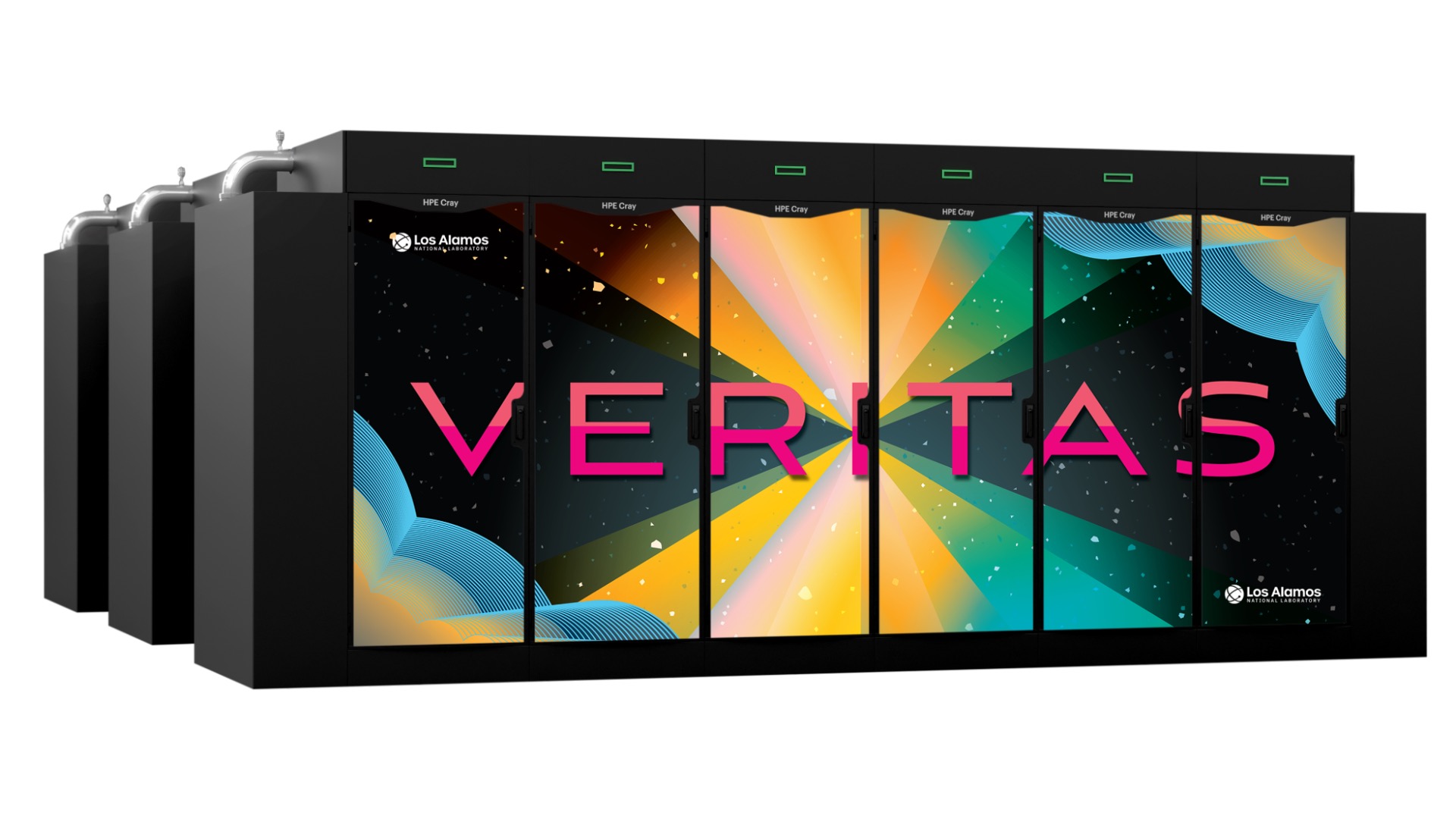
The landscape of high-performance computing is evolving, with NVIDIA Vera CPUs emerging as a key enabler for more intelligent and autonomous scientific workflows. Los Alamos National Laboratory’s upcoming supercomputers, built on the HPE Cray Supercomputing GX5000 architecture, are set to incorporate these CPUs, promising to redefine the boundaries of what is possible in AI-driven research.
At the heart of this development is the NVIDIA Vera Rubin platform, which combines NVIDIA Vera CPUs with advanced software and hardware optimizations. This integration is designed to accelerate complex computational tasks, from simulations to data analysis, while also supporting more sophisticated AI applications—such as agentic AI—that can operate with greater autonomy in scientific environments.
Key Specifications and Capabilities
- CPU Architecture: NVIDIA Vera CPUs, part of the Vera Rubin platform, are engineered to deliver high performance for both traditional HPC workloads and AI-driven tasks.
- Platform Integration: The HPE Cray Supercomputing GX5000 architecture serves as the foundation, providing a scalable and efficient framework for these supercomputers.
- AI Optimization: The platform is designed to support agentic AI workflows, where AI systems can make decisions with minimal human intervention, particularly in scientific research scenarios.
The NVIDIA Vera CPUs are not just about raw performance; they also introduce new capabilities for handling heterogeneous workloads. This means that researchers can seamlessly integrate CPU-based tasks with GPU-accelerated computations, creating a more cohesive and efficient computing environment. The platform’s ability to support agentic AI—where AI systems can autonomously manage tasks like data preprocessing, simulation execution, or even hypothesis generation—could be a game-changer for scientific discovery.
Context: Why This Matters
The shift toward more intelligent supercomputing is not just about speed; it’s about rethinking how AI can augment human expertise. Traditional HPC systems have long been the backbone of scientific research, but the addition of agentic AI introduces a new layer of capability. Researchers no longer need to manually intervene at every step; instead, AI can handle routine tasks, leaving scientists free to focus on higher-level problem-solving.
That’s the upside—here’s the catch: integrating such advanced systems into existing workflows requires careful planning. The NVIDIA Vera platform is designed with this in mind, offering compatibility with established HPC environments while pushing the envelope for AI-driven research. However, the full potential of agentic AI will depend on how well these systems can be trained and deployed without introducing bottlenecks or inefficiencies.
Implications for the Future
The implications of this development are far-reaching. For one, it could democratize access to advanced computational resources, allowing smaller research teams to leverage AI capabilities that were previously reserved for large-scale facilities. Additionally, the ability to run agentic AI workloads on these supercomputers could accelerate discoveries in fields like materials science, climate modeling, and nuclear research.
Yet, the real-world impact will hinge on how quickly researchers can adapt to these new tools. The NVIDIA Vera platform is a step toward more autonomous scientific workflows, but its success will depend on whether it can deliver on its promises without overpromising what’s currently feasible. For now, Los Alamos National Laboratory is poised to set a new standard for AI-driven research, and the rest of the HPC community will be watching closely.
The NVIDIA Vera CPUs, combined with the HPE Cray Supercomputing GX5000 architecture, represent more than just an upgrade—they signify a fundamental shift in how AI can be integrated into scientific workflows. Whether this will unlock truly agentic AI for science remains to be seen, but one thing is clear: the stage is set for a new era of computational research.