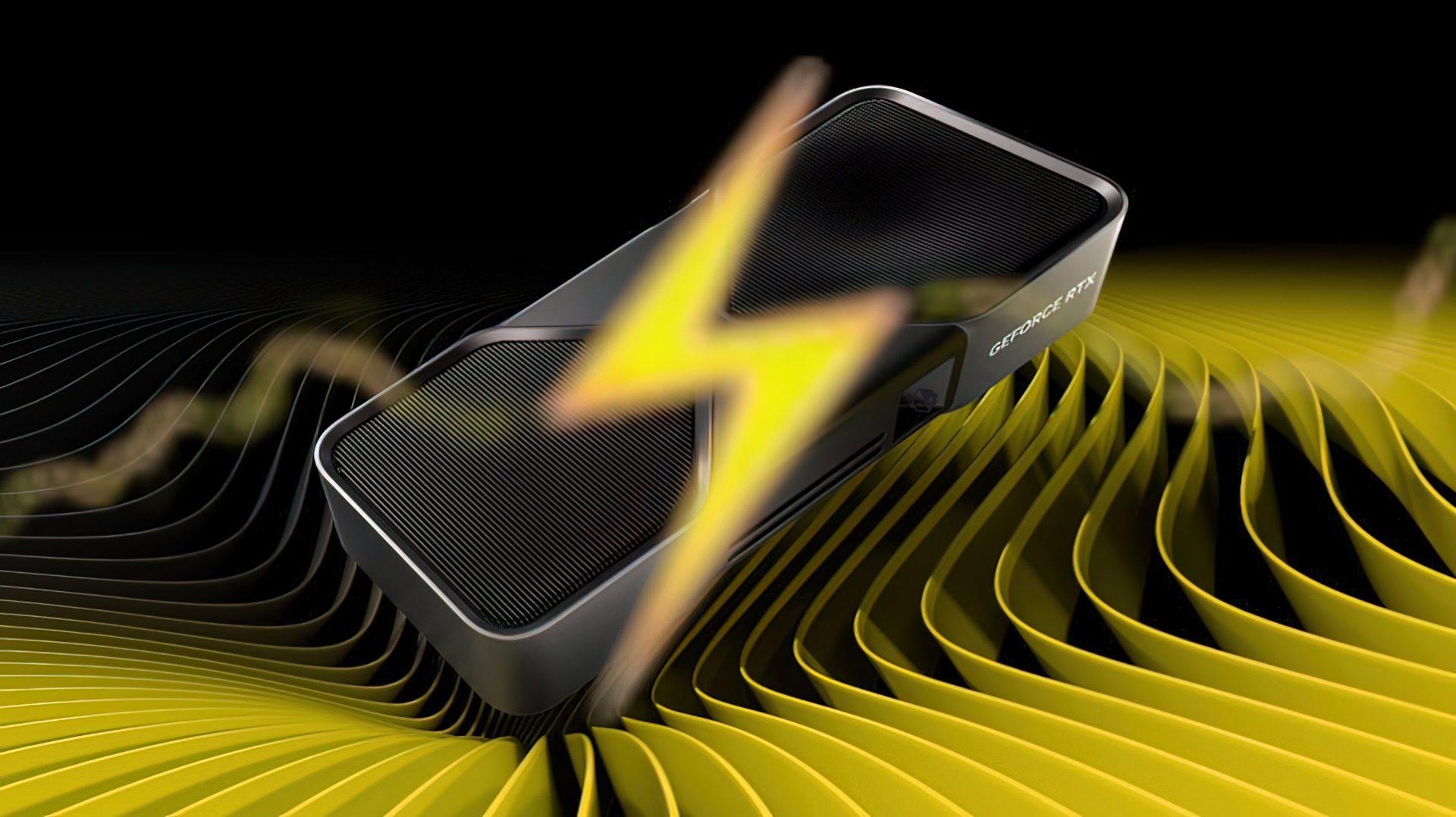
NVIDIA's latest GeForce Game Ready driver has introduced a significant shift in how RTX 50 GPUs operate under load. The new version enforces stricter voltage limits, which aims to enhance stability but may restrict overclocking for performance enthusiasts. This adjustment is particularly notable on the flagship RTX 5090 and the mid-range RTX 5070, both leveraging NVIDIA's Blackwell architecture.
Under manual overclocking settings—+200 MHz core and +2000 MHz memory—the RTX 5090 now operates within a narrower voltage range of 1.005V to 1.010V, down from the previous driver's range of up to 1.030V. Even in stock configurations, the GPU's voltage is capped around 1.015V, compared to the earlier range of 1.03V–1.04V.
For Gaming
The primary impact of these changes is on gaming performance. While the new driver has stabilized some titles and reduced artifacts, it also means users cannot push their GPUs as aggressively as before. The core clock, for instance, is now capped below 3 GHz under manual overclocking, down from a previous high of 3015–3030 MHz. This shift reflects NVIDIA's focus on stability and longevity over raw performance tuning.
For Creators and Work
Professional workloads, such as 3D rendering or AI-driven content creation, may also be indirectly affected. The Blackwell architecture is designed for high efficiency, but the new voltage limits could restrict power draw in demanding scenarios. A creator working with large datasets or complex AI models might find their GPU's performance plateaus earlier than expected, especially if they rely on overclocking.
For Everyday Use
Everyday users, who prioritize smooth gameplay and stability without delving into overclocking, may not notice a significant difference. The RTX 5070 remains a strong performer in its price bracket, but the voltage restrictions could slightly lower power efficiency or thermal thresholds compared to previous drivers. For mainstream gamers, this change might go unnoticed, but it signals a shift in NVIDIA's approach to performance tuning.
Availability and Future Outlook
The new driver is already available through official channels, with no indication that the voltage limits will be relaxed. Whether these restrictions are temporary or permanent remains uncertain, but they raise questions about the future of overclocking on the RTX 50 series. If NVIDIA continues to enforce these limits, users who rely on aggressive tuning may need to adapt their approach or explore other GPUs that offer more flexibility.
The Blackwell architecture, with its promise of high efficiency and power, remains a strong contender in the GPU market. However, this latest driver change serves as a reminder that even cutting-edge hardware can be constrained by software decisions aimed at stability and reliability. For now, users will need to navigate these new limitations while monitoring future updates for potential adjustments.