NVIDIA has unveiled a pair of tools designed to accelerate AI integration in industrial settings: the Vera Rubin DSX AI Factory reference design and the Omniverse DSX Digital Twin blueprint. These offerings promise to simplify the deployment of AI-driven workflows, particularly in manufacturing environments where scalability and interoperability are critical.
The Vera Rubin DSX is built around NVIDIA's DGX systems, featuring 480GB of HBM3 memory and a 128-core NVIDIA Grace CPU. It targets data-intensive workloads such as generative AI, large language models (LLMs), and high-performance computing (HPC). The design includes a modular architecture that supports both single-node and multi-node configurations, enabling organizations to scale from small-scale prototyping to large-scale production.
The Omniverse DSX Digital Twin blueprint, on the other hand, is focused on creating digital replicas of physical systems. It leverages NVIDIA's Omniverse platform to provide a unified environment for simulation, collaboration, and real-time rendering. This tool is particularly valuable for industries where digital twins are used to optimize operations, such as automotive, aerospace, and energy sectors.
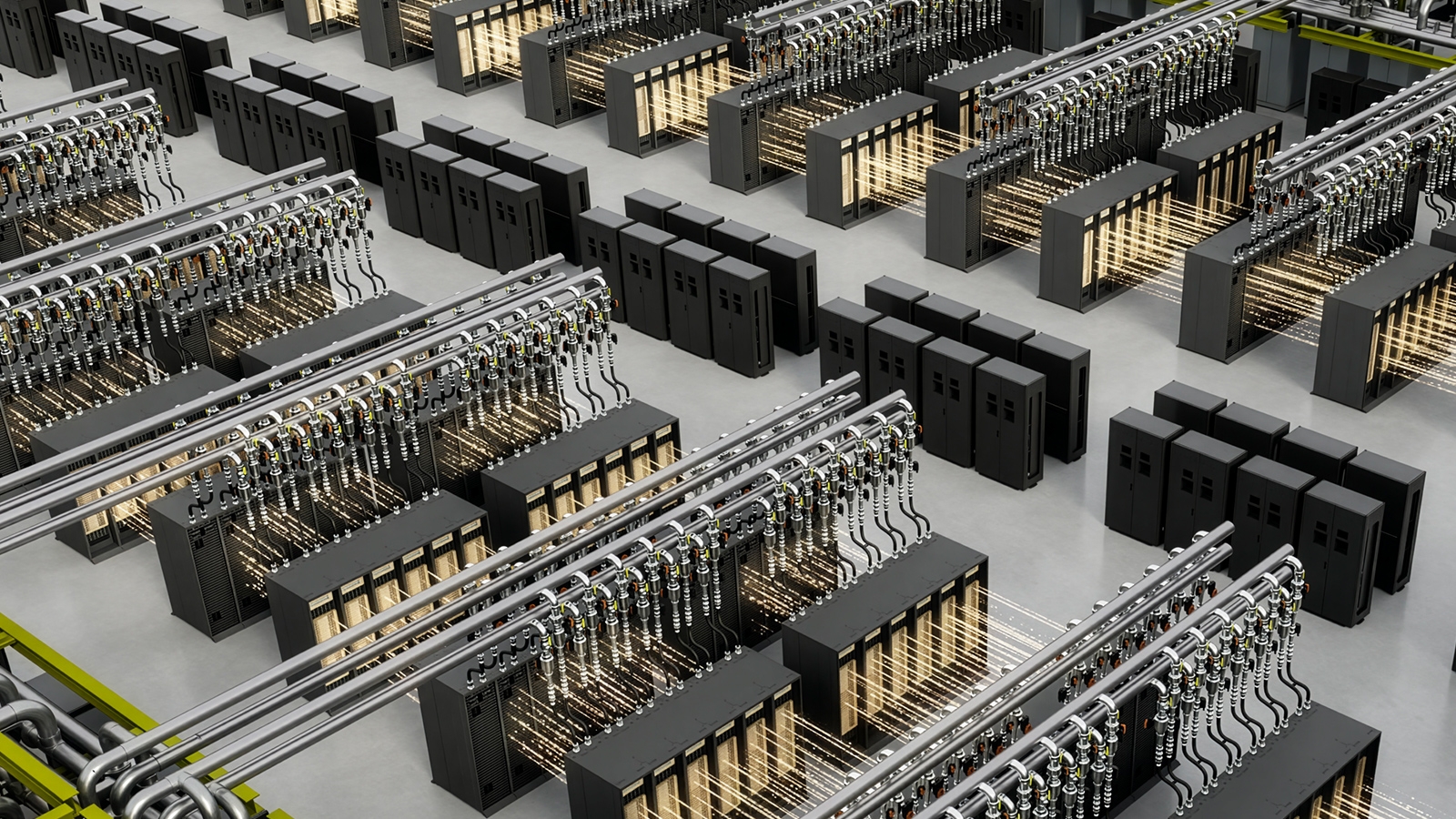
Both tools are backed by industry support from companies like BMW, Siemens, and Shell, signaling their potential to become standard components in AI-driven industrial workflows. The Vera Rubin DSX reference design is expected to be available through NVIDIA's partners, while the Omniverse DSX blueprint will be integrated into existing digital twin solutions.
For organizations looking to adopt AI at scale, these tools offer a pre-validated foundation that reduces the complexity of deployment. However, their effectiveness will depend on the organization's ability to integrate them with existing infrastructure and workflows. The Vera Rubin DSX is particularly suited for those with high-performance computing needs, while the Omniverse DSX blueprint is ideal for industries heavily invested in digital twin technologies.
The introduction of these tools underscores NVIDIA's commitment to making AI more accessible and practical for industrial applications. As AI continues to permeate manufacturing and operational workflows, solutions like these will play a crucial role in shaping the future of industry 4.0.