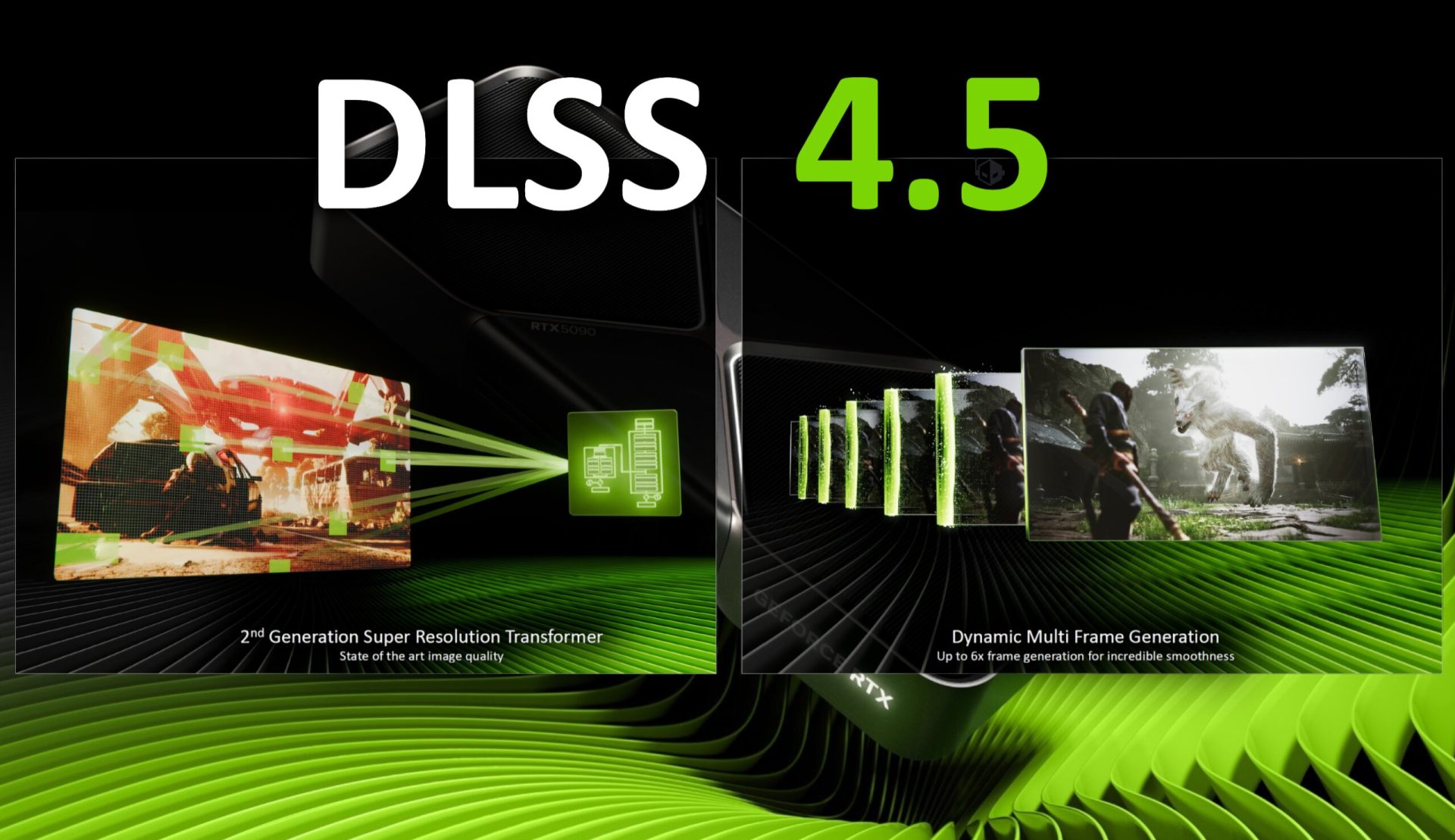
NVIDIA’s latest DLSS 4.5 SDK marks a significant advancement in real-time rendering, addressing two of the biggest challenges in modern game development: performance and image fidelity. By introducing ray reconstruction and dynamic frame generation, the update promises to smooth out gameplay while reducing the computational burden on GPUs—especially for RTX 40-series hardware.
Ray reconstruction works by intelligently filling in gaps in ray-traced frames, allowing games to maintain higher frame rates without sacrificing visual quality. Meanwhile, dynamic frame generation takes this a step further by creating intermediate frames between rendered ones, effectively doubling the perceived framerate on compatible titles. These features are particularly valuable for high-refresh-rate displays, where stutter can still be an issue even on powerful GPUs.
- Enhanced ray reconstruction reduces frame time in ray-traced scenes without compromising visual fidelity.
- Dynamic frame generation doubles effective framerate by interpolating frames, improving smoothness.
- AI upscaling improvements deliver sharper textures at lower resolutions, easing GPU and memory demands.
The SDK also deepens integration with NVIDIA’s Tensor Cores, making these performance boosts more accessible to games that weren’t originally optimized for DLSS. However, the effectiveness will depend on how well developers implement these features in their pipelines.
Impact on Developers and Players
For game studios, DLSS 4.5 could shift the paradigm of ray tracing adoption. Historically, enabling advanced rendering techniques has meant trading frame rates for visual quality, but this update aims to eliminate that trade-off. This could encourage more developers to experiment with real-time ray tracing without fear of crippling performance on mid-range hardware.
Players will benefit from smoother gameplay and better visuals at lower resolutions, particularly on high-refresh-rate monitors. Dynamic frame generation, for example, could make 144Hz or higher displays more accessible by reducing stutter—a persistent issue even with powerful GPUs. However, the full impact will depend on how many games integrate these features without introducing new stability issues.
Looking Ahead
The SDK is now available to game studios, but there’s no immediate consumer-facing release planned. Players won’t see changes right away, but the foundation for future improvements has been laid. As more titles adopt DLSS 4.5, the performance gap between entry-level and high-end GPUs may narrow, making advanced graphics more attainable without requiring a proportional leap in hardware costs.
NVIDIA’s move sets a new benchmark for performance efficiency in ray tracing, but adoption will be gradual. Developers must adapt their workflows to fully leverage the SDK’s potential, while players should expect incremental improvements rather than an overnight revolution. The real test will be how many games can integrate these features without introducing new issues—balancing visual gains with stability remains the key challenge.