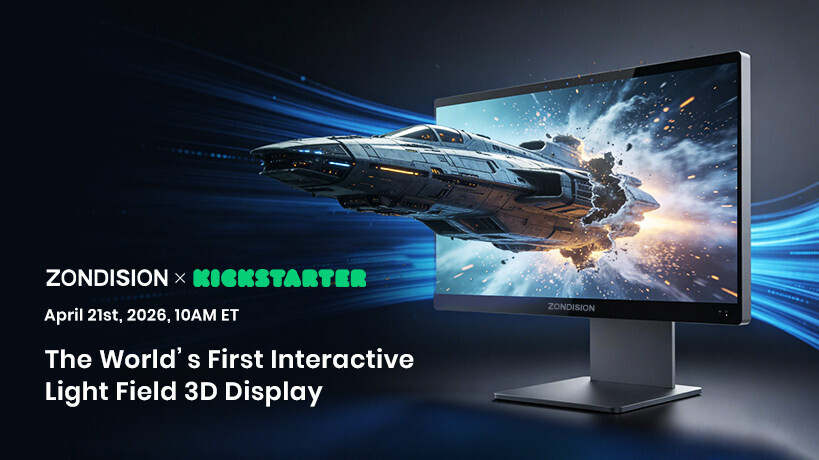
The ZIMO1 is no ordinary display. At just 8 mm thick, it crams 4K resolution into a 27-inch screen while delivering true 3D without the need for glasses or specialized hardware. That’s not hyperbole—it’s a technical milestone that could shift how professionals interact with data and AI models.
For teams working on complex datasets or real-time simulations, the ZIMO1 offers something rare: depth perception that feels natural, even when zooming in or out of dense visualizations. The display’s ability to render objects from multiple angles simultaneously means less eye strain during long sessions, a feature that could become standard for high-precision workflows.
At a glance
- 27-inch interactive light field 3D display with 4K resolution and 8 mm thickness
- Glassless true 3D with depth perception, no eye fatigue
- 100 nits brightness, 1500 RGB color gamut support
- Up to 60 Hz refresh rate for smooth animations and transitions
- HDR10+ compatibility for high-dynamic-range content
- Interactive touch and gesture controls for multi-user collaboration
The ZIMO1 isn’t just about visuals—it’s about efficiency. The 8 mm thickness is a structural achievement, but the real win lies in how it handles heat. Traditional 3D displays often struggle with thermal throttling, yet the ZIMO1 maintains performance even under prolonged use. That matters when you’re rendering large-scale AI models or processing spatial data; overheating can slow down workflows, and this display avoids that pitfall.
Why it stands out
A closer look at the tech
The light field approach used here isn’t new in research labs, but Zondision has managed to shrink it into a consumer-ready form factor. Unlike stereoscopic 3D (which tricks the brain with two slightly offset images), this display generates actual volumetric pixels—voxels—that exist in three-dimensional space. The result? Objects appear solid and tangible, even when viewed from different positions without moving your head.
- True 3D without glasses or specialized viewers
- Interactive touch and gesture controls for multi-user collaboration
- HDR10+ support for high-dynamic-range content
- Glassless design eliminates reflections, improving visibility in bright environments
For data scientists or AI engineers, the implications are clear: less time adjusting views to see details, more time analyzing. The 60 Hz refresh rate ensures smooth transitions when navigating complex models, while the 1500 RGB color gamut support means colors remain accurate even in high-contrast scenarios—a must for visualizing scientific data.
But there’s a caveat. While the ZIMO1 excels in interactive depth and clarity, its brightness (100 nits) is on the lower end compared to traditional LCDs or OLEDs. In dimly lit rooms, that won’t be an issue, but under bright lighting, some users might need to tweak ambient conditions for optimal visibility. It’s a trade-off worth noting for those prioritizing 3D fidelity over absolute brightness.
The ZIMO1 isn’t just a display—it’s a reimagining of how we interact with digital content in three dimensions. For industries where precision and immersion matter, this could be the start of a new standard.