A user trying to edit a complex legal document finds themselves stuck in a loop of slow rendering and occasional crashes when using Nitro PDF . The software promises speed and efficiency, but real-world usage reveals tradeoffs that enthusiasts and casual users should weigh carefully.
Nitro PDF has long been positioned as a faster, more affordable alternative to Adobe Acrobat, targeting both power users and everyday document workers. Its latest version delivers on some of those claims while introducing new challenges in workflow stability. The core appeal remains: a feature-rich PDF that doesn't require the full Adobe ecosystem.
Performance Under Pressure
The software excels in handling large, multi-layered documents with ease, outperforming expectations for basic tasks like text extraction and form filling. However, when pushed to its limits—such as processing heavily annotated legal files or merging hundreds of pages—the experience becomes erratic. This duality is a defining characteristic: Nitro shines in everyday productivity but struggles with edge-case workloads.
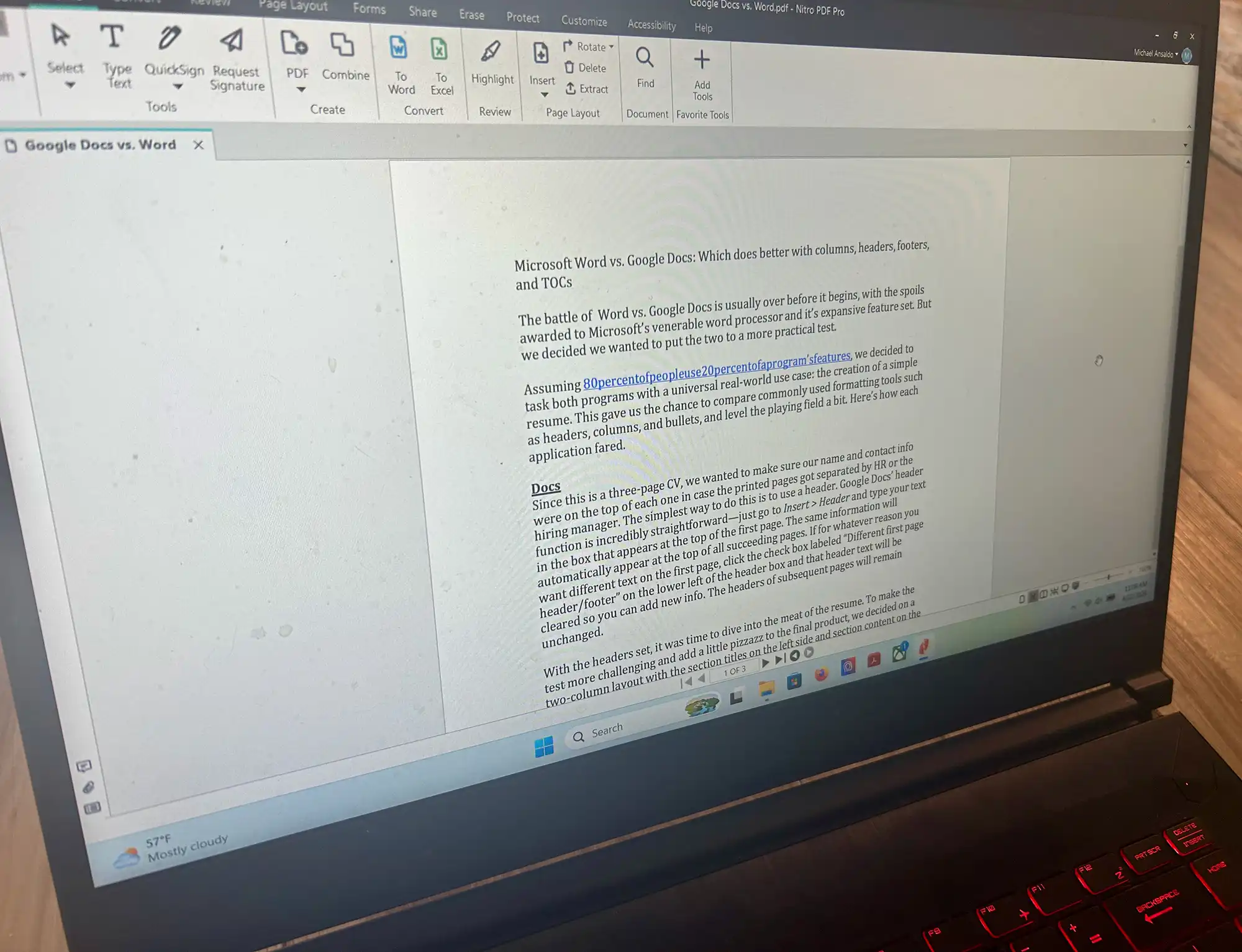
- Enthusiasts and power users:
- Advanced annotation tools that rival Acrobat's precision
- Batch processing for repetitive tasks, saving significant time
- Cloud integration for seamless collaboration, though with some limitations in offline mode
For everyday users, the tradeoffs are more pronounced. While the software is faster to install and run than Acrobat, its stability issues during intensive editing sessions can disrupt workflows. The learning curve is minimal, but the lack of deep customization options may leave some users craving the flexibility of Adobe's ecosystem.
Looking Ahead
Nitro PDF continues to refine its performance, but its long-term viability hinges on addressing stability in high-stakes document editing. While it confirms its place as a top alternative for general use, the future of advanced PDF workflows remains uncertain without more robust error handling and scalability improvements.