The Lian Li Vector V150 INF redefines compact gaming chassis with a fusion of high-end visuals and practical engineering. Its tempered glass front panel delivers an infinity mirror effect, transforming the case into a statement piece while maintaining clean cable management and optimized airflow. Built for microATX systems, it balances form and function without compromising on performance.
- Design: Tempered glass front with infinity mirror aesthetics
- Cooling: Two 140 mm ARGB PWM front fans + one 120 mm rear fan (all with matching hubs)
- Modularity: Side bracket for extra cooling or SSD storage; supports up to a 360 mm radiator
- GPU Support: Adjustable anti-sag bracket for GPUs up to 400 mm in length
- Connectivity: Back-connect motherboard support + GPU power cable passthrough
- Lighting Control: Wireless fan and ARGB management via L-Wireless controller (L-Connect 3 compatible)
- Availability: Black finish, priced at $84.99 / €84.90
The case's modular side bracket serves as the centerpiece of its versatility. Builders can choose between enhanced cooling solutions or expanded SSD capacity, adapting the chassis to their specific needs. The pre-installed GPU anti-sag bracket ensures stability for long graphics cards while maintaining a clean build aesthetic.
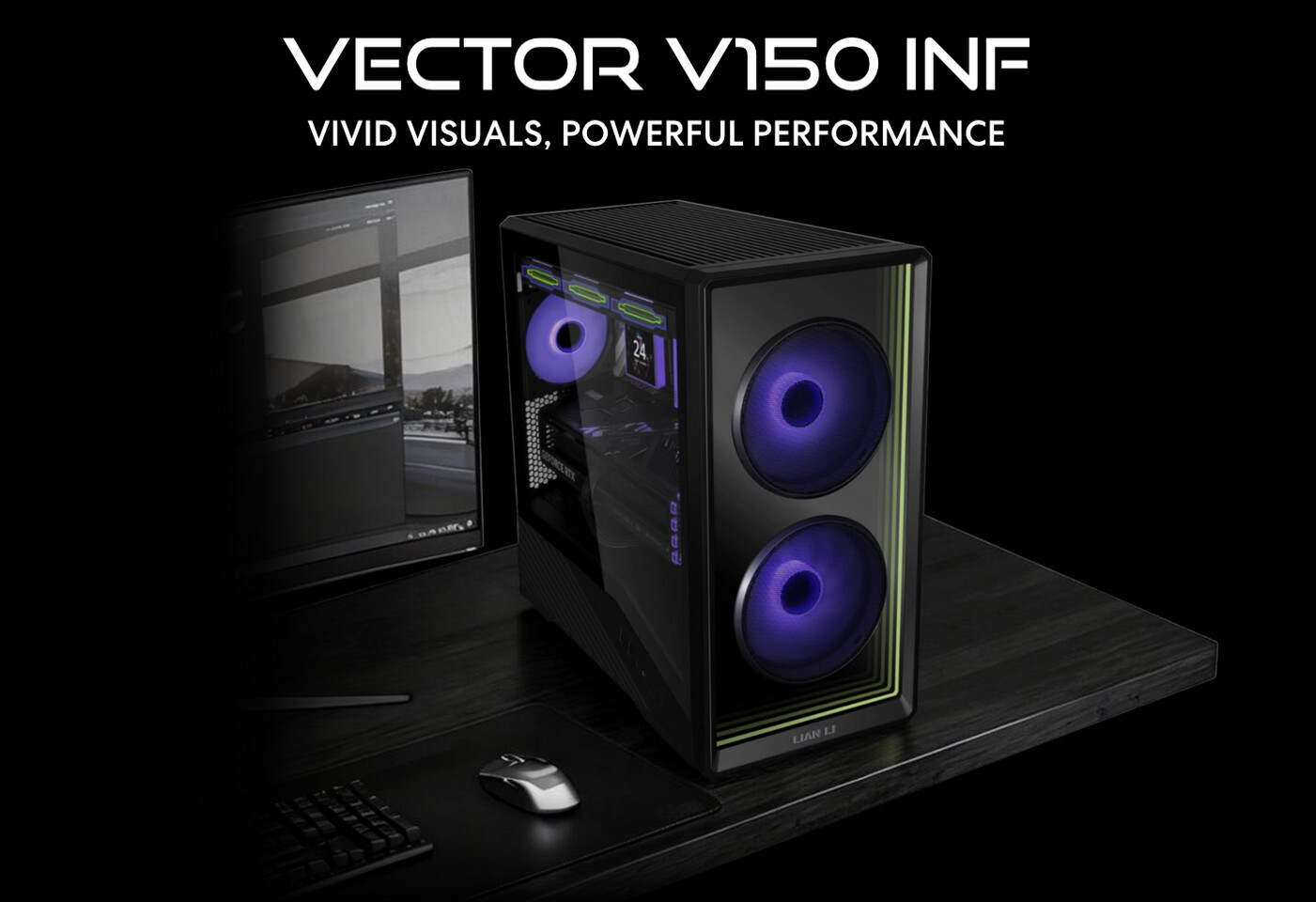
Wireless cooling integration sets this chassis apart from traditional designs. Through Lian Li's L-Connect 3 software, users gain full control over fan speeds and lighting effects without physical connections, streamlining setup and offering silent operation when needed. This makes it particularly appealing for gamers or content creators who prioritize both performance and customization.
With no additional color variants announced, the Vector V150 INF positions itself as a premium option for those seeking a compact yet feature-rich case. Its combination of infinity mirror design, modular storage, and wireless-ready cooling creates a compelling package that bridges the gap between visual impact and practical functionality in microATX builds.