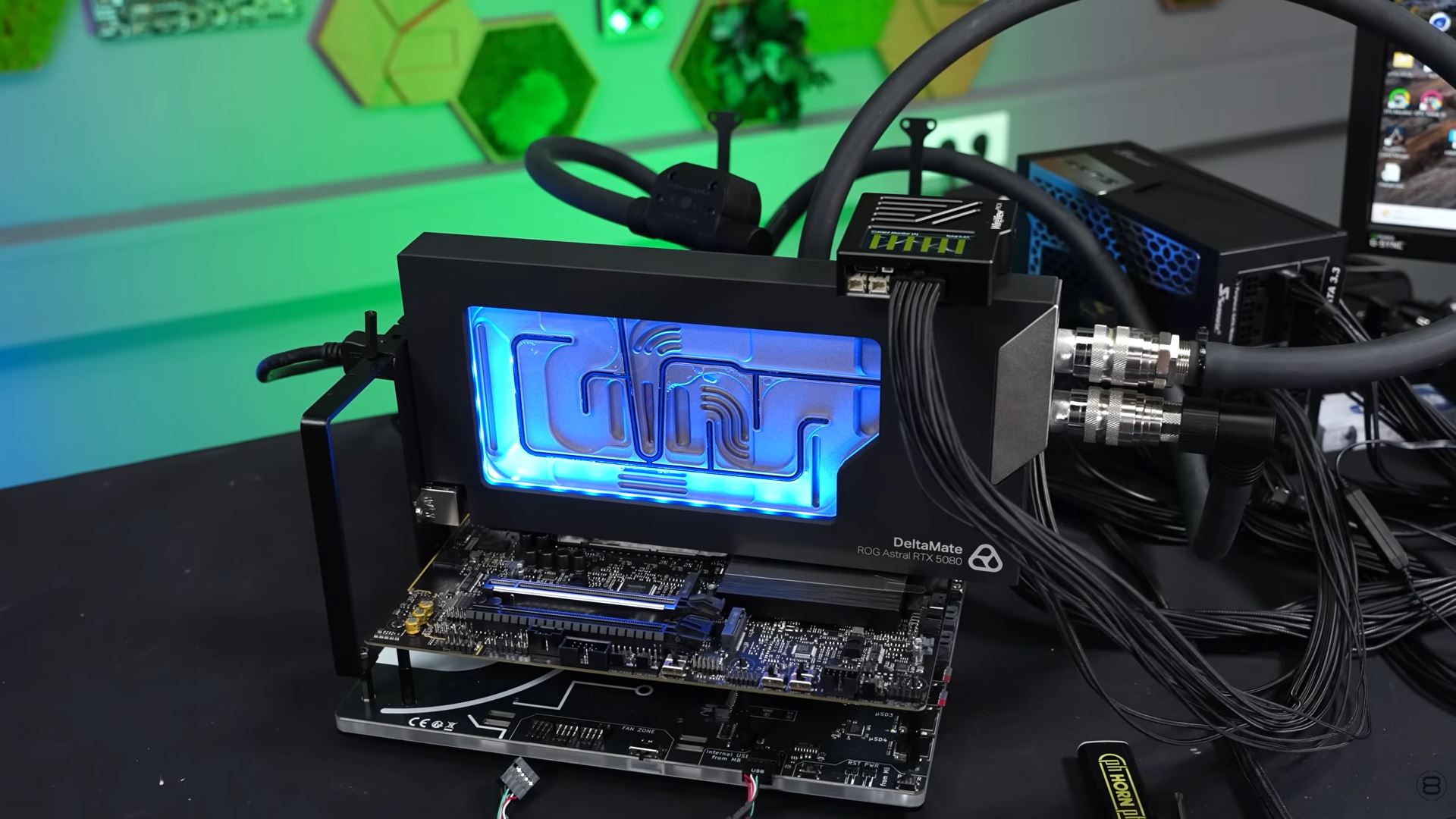
A new thermal solution for the ROG Astral RTX 5080 is set to redefine GPU cooling standards, delivering nearly 20°C lower peak temperatures under load. Developed by Thermal Grizzly, the Deltamate block goes beyond conventional cooling approaches, targeting high-performance scenarios where thermal efficiency directly impacts output and reliability.
Unlike traditional aftermarket coolers that focus on aesthetics or minor temperature drops, this block is engineered specifically for the RTX 5080’s power profile. Its copper-core design sits directly against the GPU die, creating a more effective heat dissipation path while maintaining compatibility with existing installation processes. The result is a measurable improvement in sustained clock speeds during extended workloads—critical for data center deployments or AI training setups where thermal throttling can cut into productivity.
Key Technical Details
- Cooling Mechanism: Direct-die copper baseplate with pre-applied thermal interface material (TIM)
- Temperature Reduction: Up to 19.8°C peak reduction verified on ROG Astral RTX 5080
- Compatibility: Exclusive to the ROG Astral RTX 5080 model; no cross-compatibility with other GPUs
- Installation: Drop-in replacement for stock cooler, requiring only minor adjustments (pre-cut mounting brackets included)
- Build: Copper baseplate core surrounded by aluminum fins, optimized fin density for airflow
The block’s impact extends beyond raw temperature numbers. For users running 24/7 data pipelines—whether for machine learning inference or large-scale rendering—the reduction in junction temperatures translates to more consistent performance and longer component lifespan. Early benchmarks suggest a 5-10% increase in sustained throughput during prolonged workloads, though the actual gains depend on the specific use case.
Pricing is expected to fall within the premium aftermarket cooling tier, likely ranging from $80 to $120, placing it at the higher end of the spectrum. Whether that investment pays off depends entirely on the application: for mission-critical data workloads where thermal stability is non-negotiable, this could be a transformative accessory. For single-GPU gaming or casual use, the marginal improvements may not justify the cost.
The solution’s availability remains under wraps, but Thermal Grizzly has signaled a phased rollout beginning in late 2023. If it lives up to its claims, this block could set a new benchmark for high-end GPU cooling—especially as AI-driven workloads continue to push thermal limits to unprecedented levels.