Lawn maintenance just got smarter—but not necessarily simpler. The Navimow i210 is the first lidar-equipped self-driving mower designed for small properties, promising to map, navigate, and trim grass without manual intervention. Yet its real-world performance reveals a familiar tension: automation that saves time may also demand more attention than traditional tools.
At its core, the i210 uses a 3D lidar sensor to create a 3D point cloud of the yard, allowing it to detect obstacles like trees, rocks, and even garden beds with millimeter precision. This level of detail is usually reserved for industrial or research-grade machines, but Navimow has adapted it for consumer use. The result is a mower that doesn’t just follow a pre-set path—it adapts in real time, avoiding collisions while maintaining consistent cutting height.
That’s the upside—here’s the catch. The i210 runs on a 48-volt lithium-ion battery with a claimed runtime of up to 90 minutes per charge, but actual performance depends heavily on terrain and obstacle density. A typical half-acre lawn might require two or three passes, meaning users will still need to monitor battery levels and plan sessions accordingly. Unlike gas-powered mowers that can run for hours, the i210’s autonomy comes with a runtime constraint that mirrors electric tools: more power means shorter stints.
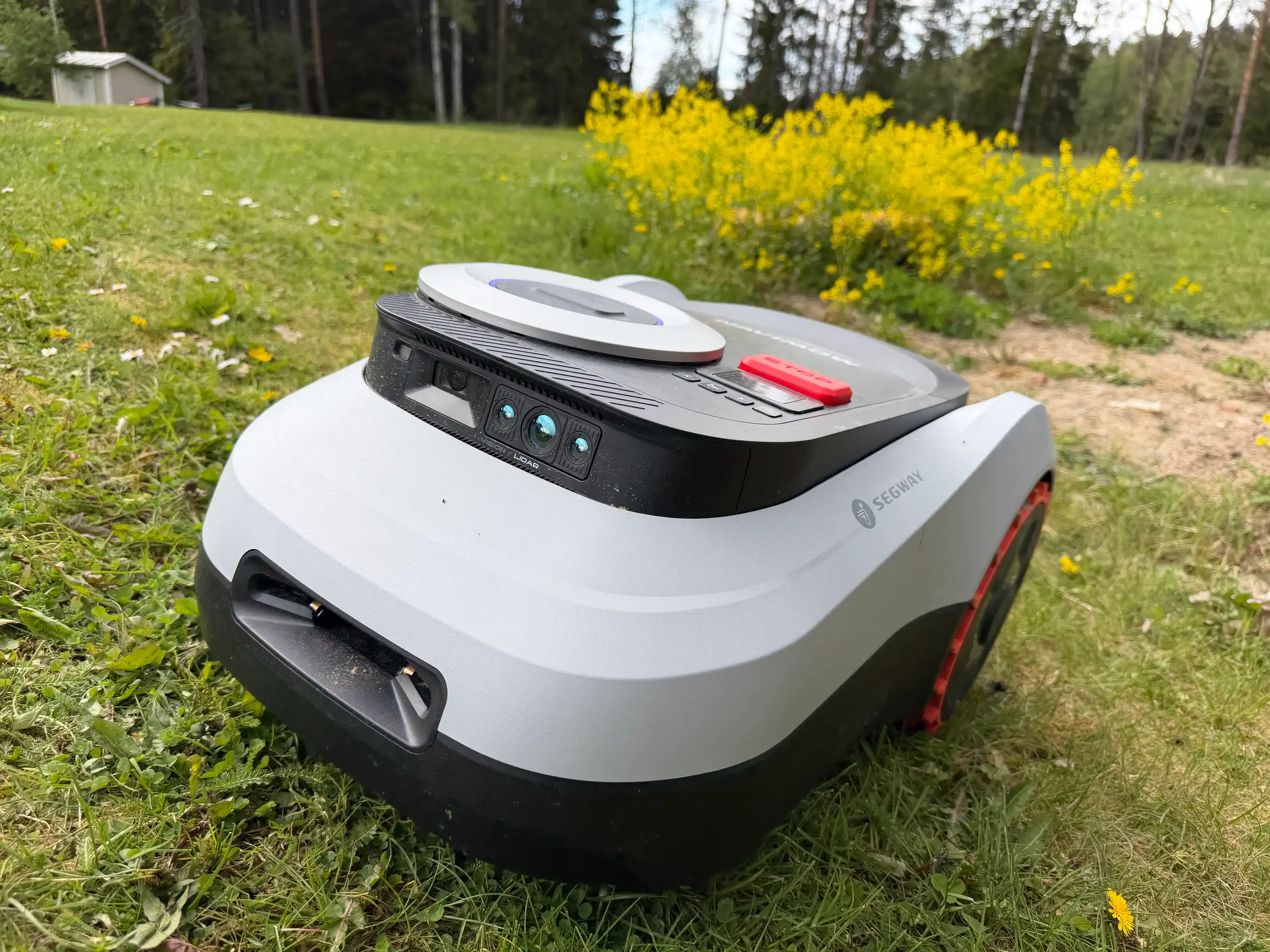
For small businesses managing multiple properties, this tradeoff matters. A landscaping crew using the i210 could see immediate gains in precision and labor reduction, but they’d also need to adjust workflows around charging infrastructure. The mower’s 14-inch cutting deck is narrow by design, which helps with maneuverability in tight spaces but may require more passes on larger areas compared to conventional mowers.
Beyond the battery, the i210’s lidar sensor introduces another layer of complexity. While it eliminates the need for GPS-based path planning (which can drift in open fields), it also demands clear visibility. Overcast conditions or heavy foliage may degrade performance, forcing users to stick to ideal weather windows—a limitation shared with other lidar-dependent systems.
The bottom line is simple: the i210 automates what used to be manual labor, but it doesn’t eliminate logistics. It’s not a replacement for a full-time groundskeeper, but for small businesses looking to streamline routine maintenance, it offers a glimpse of how automation can reshape workflows—if users are willing to adapt.