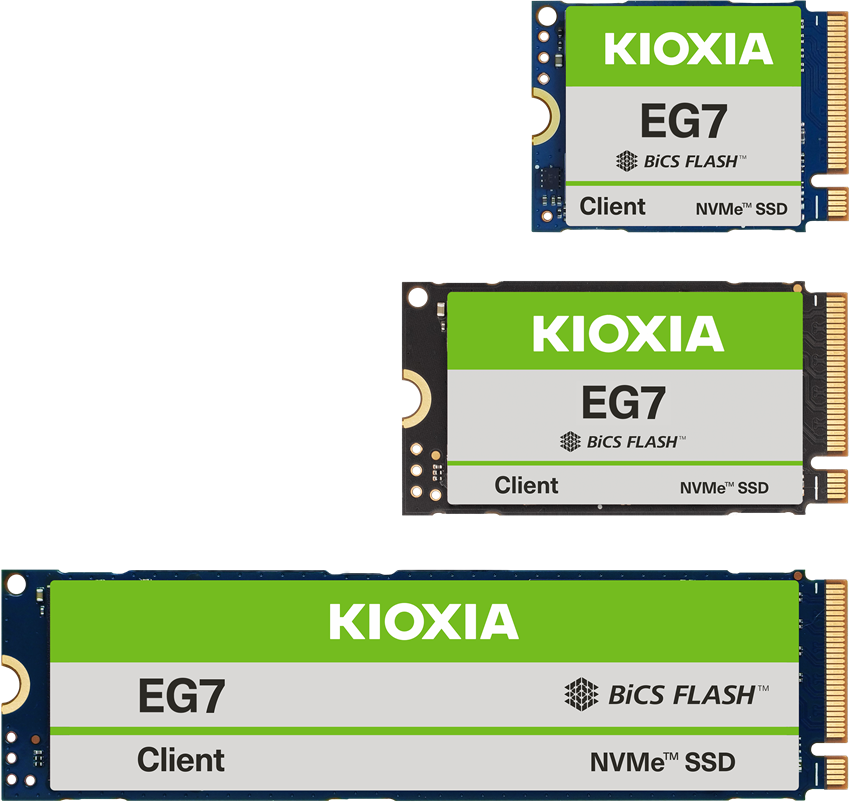
The Micron 3610 SSD represents an early foray into PCIe Gen5 client storage, leveraging Micron’s G9 QLC NAND alongside a power-conscious design. This drive aims to deliver the burst performance expected from the latest interface while maintaining efficiency for notebook deployments. Available in capacities ranging from 1TB to 4TB across various M.2 form factors – with this review concentrating on the 2TB 2280 single-sided model – the 3610 seeks to balance Gen5 capabilities with a focus on power consumption.
Initial performance benchmarks reveal impressive sequential read speeds of 11,000 MB/s across all capacities. Write speeds reach 9,300 MB/s for the 2TB and 4TB models, indicating a solid foundation for demanding workloads. Furthermore, random IOPS have seen a significant uplift, peaking at 1,500K for reads and 1,600K for writes – a substantial improvement over previous generations.
However, this performance comes with trade-offs. The DRAMless architecture and QLC NAND implementation result in a more nuanced performance profile compared to drives utilizing TLC or higher-tier NAND. Our testing highlights these distinctions
- Sequential Read/Write: The 3610 achieves impressive sequential speeds (11,000 MB/s read, 9,300 MB/s write) across the board.
- Random IOPS: Peak random read and write IOPS reach 1,500K and 1,600K respectively, demonstrating strong responsiveness for demanding applications.
- DirectStorage Performance: In DirectStorage scenarios – where the GPU bypasses the CPU to access storage data directly – the 3610 demonstrates a notable advantage, particularly in GDeflate compressed workloads. It achieves an average of 20.29 GB/s, outperforming many TLC drives.
- QLC Tradeoffs: Conversely, when subjected to more general application testing, the 3610 lags behind other QLC drives and even some Gen4 options. Its sequential read speed (6,839 MB/s) is lower than that of competitors like the Crucial P510 and PNY CS2150, highlighting a potential bottleneck for workloads reliant on sustained high-speed reads.
Specifications at a Glance

- Capacity: 2TB
- Form Factor: M.2 2280 (22mm x 30mm, 22mm x 42mm, 22mm x 80mm)
- Interface: PCIe Gen5, NVMe 2.0d
- Sequential Read: 11,000 MB/s
- Sequential Write: 9,300 MB/s
- Random Read IOPS (4K): 1,500K
- Random Write IOPS (4K): 1,600K
- Micron G9 QLC NAND: Utilizing Micron’s latest generation of QLC NAND technology.
- Phison E31 Controller: Powered by the Phison E31 controller for optimized performance.
- Host Memory Buffer (HMB): Leveraging HMB to minimize physical footprint and power consumption.
- Endurance Ratings: Offering robust endurance ratings ranging from 400 TBW for the 1TB model up to 1600 TBW for the 4TB version.
- Security Features: Incorporating DICE (Device Identifier Composition Engine) and DOE (Data Object Exchange) protocols for enhanced firmware integrity.
Market Positioning: The Micron 3610 occupies a niche position within the Gen5 SSD landscape, competing with entry-level Gen5 drives and high-end Gen4 TLC drives. It’s positioned as a disruptive option for users prioritizing burst speed and modern interface support alongside notebook efficiency.
- Capacity: 2TB
- Interface: PCIe Gen5 NVMe
- Performance (Sequential Read): 11,000 MB/s
- Performance (Sequential Write): 9,300 MB/s
- Random IOPS (4K Read): 1,500 KIOPS
- Random IOPS (4K Write): 1,600 KIOPS
The Micron 3610 represents an early step in the Gen5 SSD evolution. While its performance capabilities are noteworthy, particularly within DirectStorage environments and for burst-oriented tasks, it’s crucial to acknowledge the inherent tradeoffs associated with QLC NAND. Further testing will continue to refine our understanding of this drive's suitability across a broader range of use cases.