Framework has long championed modularity in laptops, but with the introduction of the OCuLink Dev Kit, it takes a bold leap toward desktop-level expansion without sacrificing portability. Unlike traditional eGPU setups that rely on Thunderbolt or USB4, this solution brings PCIe 5.0 ×8 bandwidth—128 GT/s—to an external port, promising performance that rivals stationary desktops. Yet, the practicality of this approach remains untested, as users will need compatible hardware and may face cable latency concerns.
Breaking the Chassis Barrier
The OCuLink Dev Kit effectively moves a laptop’s internal expansion slot outward, allowing for external GPUs, capture cards, or networking modules. This isn’t just about adding power—it’s about rethinking how laptops handle high-performance tasks. While Thunderbolt 5 docks focus on speed and compatibility, Framework’s approach prioritizes modularity, letting users swap hardware without permanent modifications. For professionals who switch between travel setups and desktop workloads, this flexibility could be a game-changer.
What’s Inside the Dev Kit
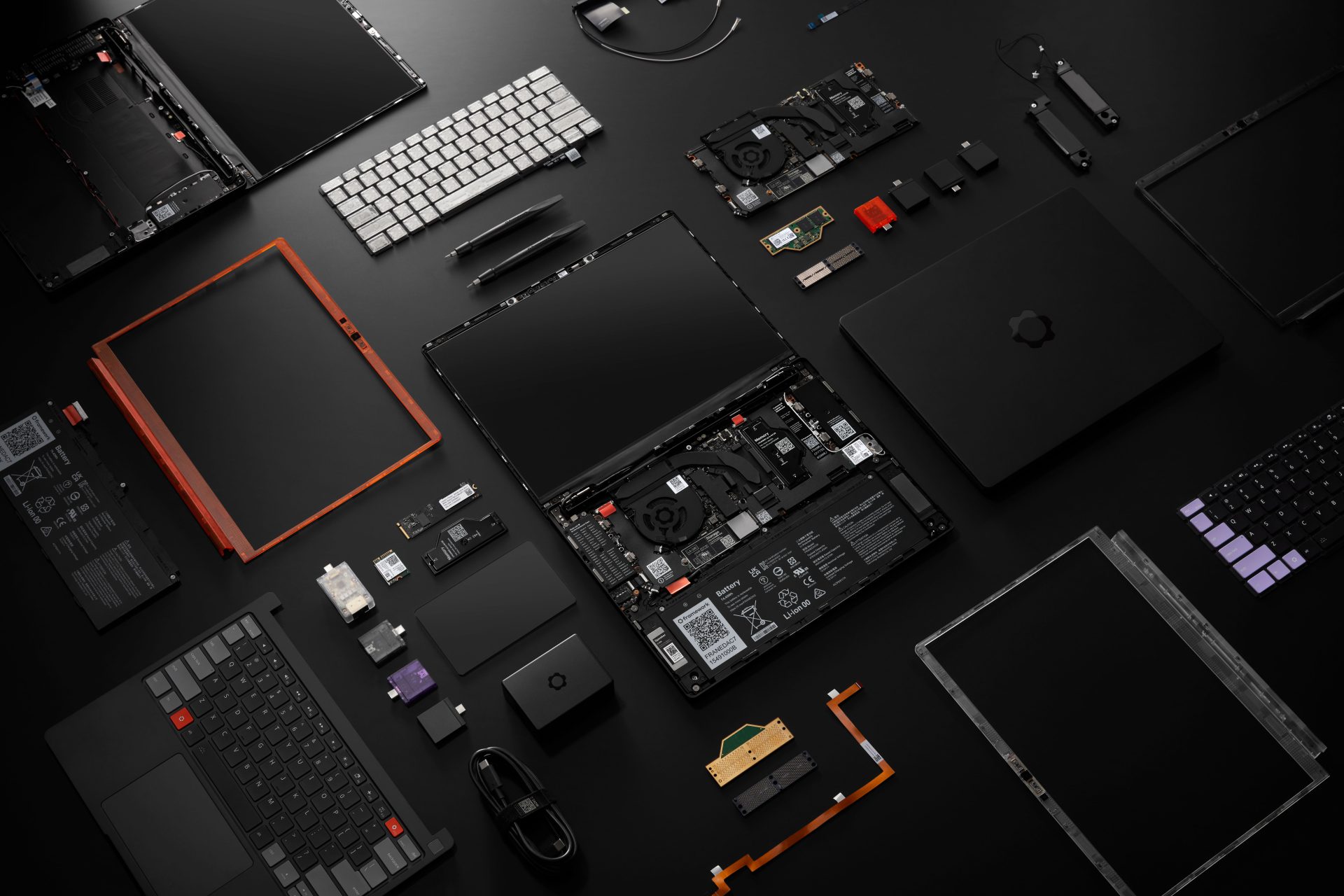
- Expansion Bay Adaptor: Fits inside the Laptop 16, routing PCIe signals to an external OCuLink port.
- Graphics Module Dock: Mounts the laptop’s dGPU externally for eGPU configurations.
- PCIe OCuLink Dock: Features a full-size PCIe slot for third-party hardware, including GPUs and capture cards.
- OCuLink 8i Cable: The high-speed connection between the dock and laptop, designed to handle the full bandwidth without significant latency.
The tradeoff? Users must supply their own desktop power supply, as Framework doesn’t include one. Additionally, OCuLink lacks USB4 charging capabilities, meaning dual-cable setups—one for power and one for data—become necessary. This undercuts some of the convenience factor, but it aligns with Framework’s ethos of user-driven customization.
Who Benefits Most?
The primary audience for this kit is creative professionals and developers who demand high-performance GPUs without being tied to a single setup. However, adoption hinges on two critical factors: the availability of OCuLink-compatible hardware and the ecosystem’s maturity around external expansion. High-end GPUs designed for such docks are still rare, so early adopters may find themselves in a catch-22—purchasing expensive components only to discover limited compatibility.
The Future of Modular Expansion
Framework’s modular approach suggests that upgrades could be easier than with competitors, assuming the market delivers on OCuLink’s promise. The Dev Kit is available alongside the Laptop 16, though pricing details remain undisclosed. For now, users must weigh portability against performance: a laptop that can transform into a desktop, but only if they’re prepared to carry extra cables and hardware. Whether this tradeoff proves worthwhile remains an open question—one that will shape the future of portable power.