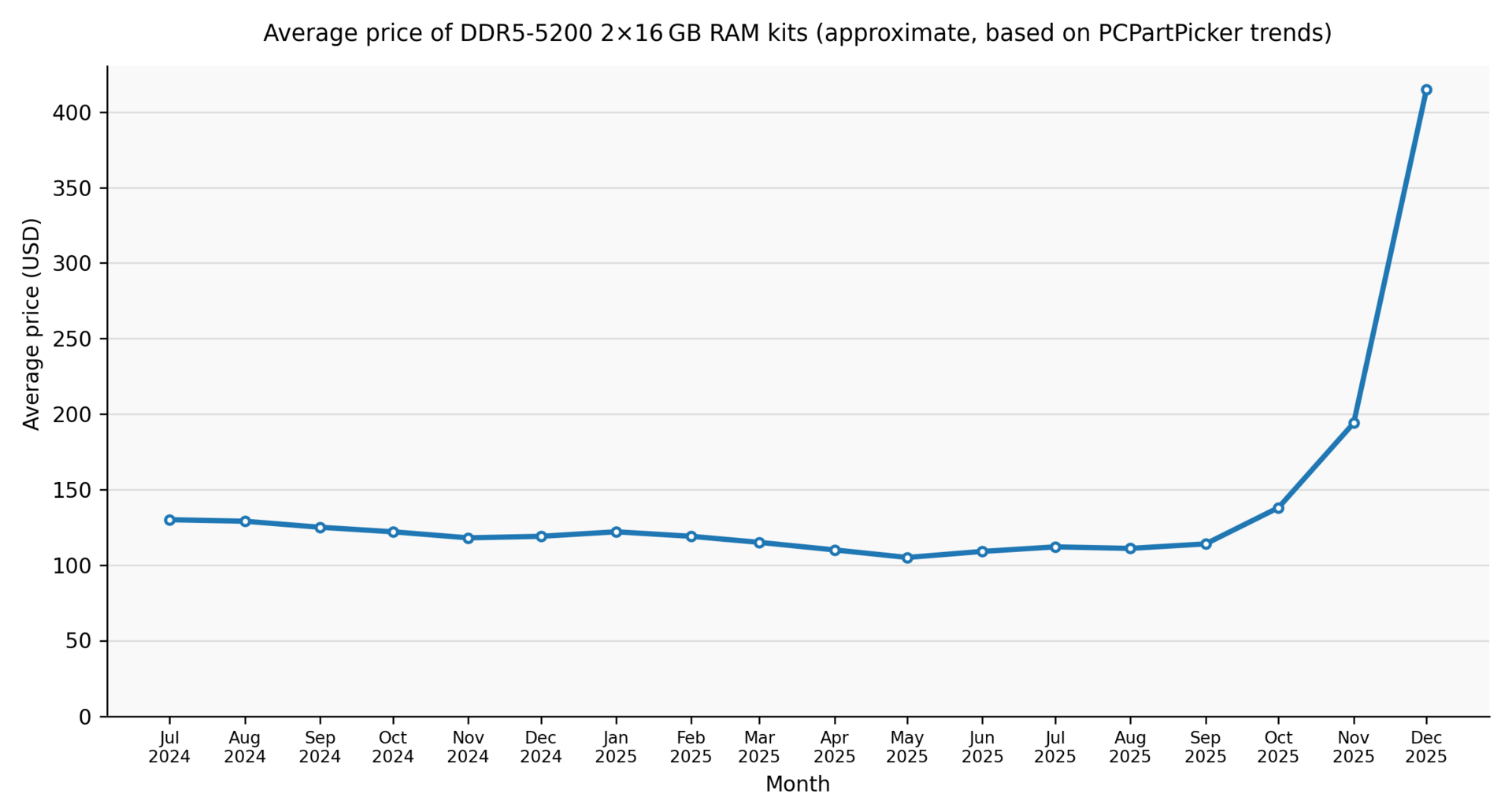
The 2026 PC market is facing significant upheaval as memory and storage costs surge ahead of expectations. Prices for these components have risen sharply—memory prices by nearly five times and storage costs by three times since the first quarter of 2025. This sharp increase, driven largely by AI-driven data center expansion, is putting pressure on vendors to adjust pricing while maintaining profitability.
Initial shipment data for the first quarter of this year shows a modest 3% growth in global PC shipments, reaching 64.8 million units. Notebooks saw a slight increase of 2.6%, while desktops grew by 5.4%. Analysts suggest that this growth may represent a peak before further contraction, as supply chain pressures intensify later in the year.
The rise in component costs is not limited to memory and storage. CPU prices are also projected to increase by 10-25% in the coming quarters, adding another layer of pressure on vendors. This cost inflation is expected to force PC manufacturers to pass along price increases to channel partners and end-users, potentially squeezing margins further.
- Memory: Prices up nearly five times since Q1 2025
- Storage: Costs tripled in the same period
- CPU Prices: Projected to rise 10-25% in Q2
The impact of these cost increases is already being felt in regional markets. North American channel partners, for example, appear to have absorbed as much inventory as possible before end-user prices rise. Meanwhile, Japan’s market is showing signs of downturn, influenced by a high shipment volume base from early 2025 and severe supply pressures in the education segment.

Despite these challenges, some vendors are performing well. Lenovo maintained its leadership position with an 8.7% year-over-year growth, reaching 16.5 million units shipped. Dell also showed strong momentum with a 7.8% increase, while Apple expanded its market share to 11%, driven by solid MacBook Air sales and the introduction of the MacBook Neo. ASUS continued its double-digit growth trajectory.
Looking ahead, the combination of rising component costs and supply chain constraints is expected to reshape the PC market landscape in 2026. Vendors will likely focus on protecting shipments, revenue, and gross margins by pulling deliveries forward, but the long-term sustainability of this strategy remains uncertain as cost pressures continue to build.
For small businesses, these developments could mean higher costs for hardware upgrades while demand for AI-driven workloads grows. Compatibility risks may also arise if vendors struggle to balance pricing with performance, particularly in memory-intensive applications.