Roguelike deckbuilders have long thrived on clever twists to familiar mechanics, but few have dared to pair them with the sheer spectacle of giant mechs battling kaiju-sized monsters. Mechborn does just that, blending the tactical depth of a card-based strategy game with the high-stakes action of a mech combat sim—and the result is a genre-defying experience that rewards exploration, experimentation, and a willingness to stomp on enemies like a 200-ton Mario.
The game’s core concept is simple yet bold: players control a customizable mech, navigating a sprawling open map to engage in turn-based battles against increasingly formidable foes. Unlike traditional linear roguelikes, movement isn’t just a means to an end—it’s a strategic puzzle. Fuel, health, and credits become finite resources that demand careful allocation. Do you push toward a distant refueling station to extend your journey, or cut through a tougher region for better loot? The choices feel weighty, turning progression into an active decision rather than a passive march toward the boss.
Combat, too, subverts expectations. Instead of a traditional hand of cards, players work with a conveyor-belt system where played cards shuffle to the right, creating dynamic synergies. A card with no inherent effect might boost adjacent attacks, forcing players to rearrange their deck mid-combo. The Drifter card takes this to another level—each time it’s shifted along the belt, it toggles the mech between flying and grounded states, unlocking stance-specific abilities. The payoff? A devastating shockwave that slams into enemies every time the mech lands, turning battles into a frenzy of aerial maneuvering and stomping.
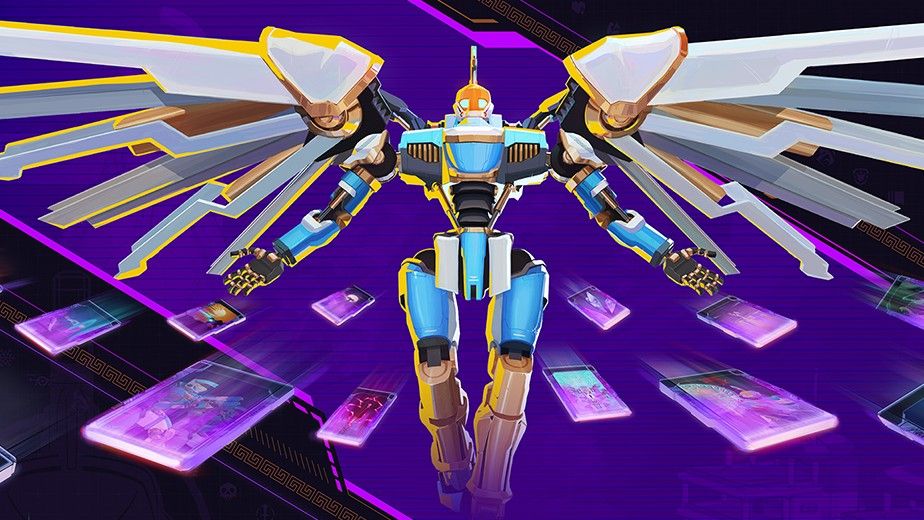
At first glance, the early game might feel familiar—basic attacks, shields, and buffs mirroring titles like Slay the Spire. But as players unlock new regions, harder enemies, and deeper mechanics, the game’s identity sharpens. The visuals, steeped in ‘90s anime aesthetics and punctuated by a soundtrack evoking Pacific Rim, reinforce the spectacle without overshadowing the strategy. What starts as a roguelike shell becomes a playground for experimentation, where every run feels distinct.
- A non-linear map where exploration is as critical as combat, with fuel, health, and credits creating meaningful trade-offs.
- A conveyor-belt card system that encourages deck manipulation beyond simple turn order, with cards like Drifter enabling fluid, high-risk plays.
- Stance-based combat where flying vs. grounded states unlock unique abilities, culminating in stomp attacks that deal area damage.
- A pre-alpha build available now, with a full release targeted for winter 2024.
The game’s early accessibility might lull players into a false sense of familiarity, but its depth lies in the layers it adds. Whether it’s optimizing routes for loot or crafting decks that exploit the conveyor belt’s quirks, Mechborn demands adaptability. And for those who embrace its chaos, the reward is a combat system that feels as dynamic as the mechs themselves—where victory isn’t just about outmaneuvering the enemy, but turning the battlefield into a stomping ground.
For developers and players alike, Mechborn serves as a reminder that roguelikes don’t need to reinvent the wheel to stand out—they just need to add a little weight. In this case, that weight comes in the form of 200-ton mechs, and the results are undeniably thrilling.