When AMD unveiled the Ryzen 7 9850X3D, it didn’t introduce a radical redesign or a breakthrough architecture. Instead, it delivered what many might call a throwback: a CPU that feels like a polished refinement of a product released 15 months earlier. For a company that thrives on innovation, this was an unusual move—but one that underscores a deeper evolution in how AMD builds its chips.
The 9850X3D isn’t just a rehash of the Ryzen 7 9800X3D with a higher price tag. It’s the first mainstream consumer CPU to fully embrace a second-generation 3D V-Cache design, where the extra L3 cache sits beneath the core complex rather than above it. This seemingly small change unlocks higher clock speeds and better overclocking potential—yet the performance boost in real-world gaming is surprisingly modest. For AMD, the real win isn’t just speed; it’s proving that its cache-layering technology has matured into a reliable, scalable solution.
But for gamers weighing their options, the question remains: Is a $20 premium over the 9800X3D worth the marginal gains? The answer depends on whether you prioritize raw performance, power efficiency, or simply owning the fastest gaming CPU on the market—even if it’s only marginally faster.
What You Might Expect
If you’re familiar with AMD’s past updates, you’d likely assume the 9850X3D would bring meaningful improvements over the 9800X3D. After all, a 400 MHz boost in boost clock speed—from 5.2 GHz to 5.6 GHz—sounds substantial on paper. Combined with the same 96MB of L3 cache (tripled from the non-3D V-Cache 9700X), the expectation would be for noticeable frame rate jumps in CPU-bound games like Baldur’s Gate 3 or Homeworld 3.
Yet history suggests caution. The first-gen 3D V-Cache chips, like the 9800X3D, were limited by heat constraints when the cache sat above the cores. Overclocking was difficult, and stock speeds were conservative. AMD’s solution? Flip the design. By placing the cache beneath the core complex, the 9850X3D gains better thermal performance and the ability to sustain higher clocks without throttling.
The catch? In gaming benchmarks, the difference between the 9800X3D and 9850X3D is often measured in single-digit percentages—hardly a generational leap. Where the 9800X3D could hit 5.58 GHz with relative ease, the 9850X3D’s stock boost clock is now 5.6 GHz, but real-world performance gains rarely justify the extra $20.
What’s Actually Changing
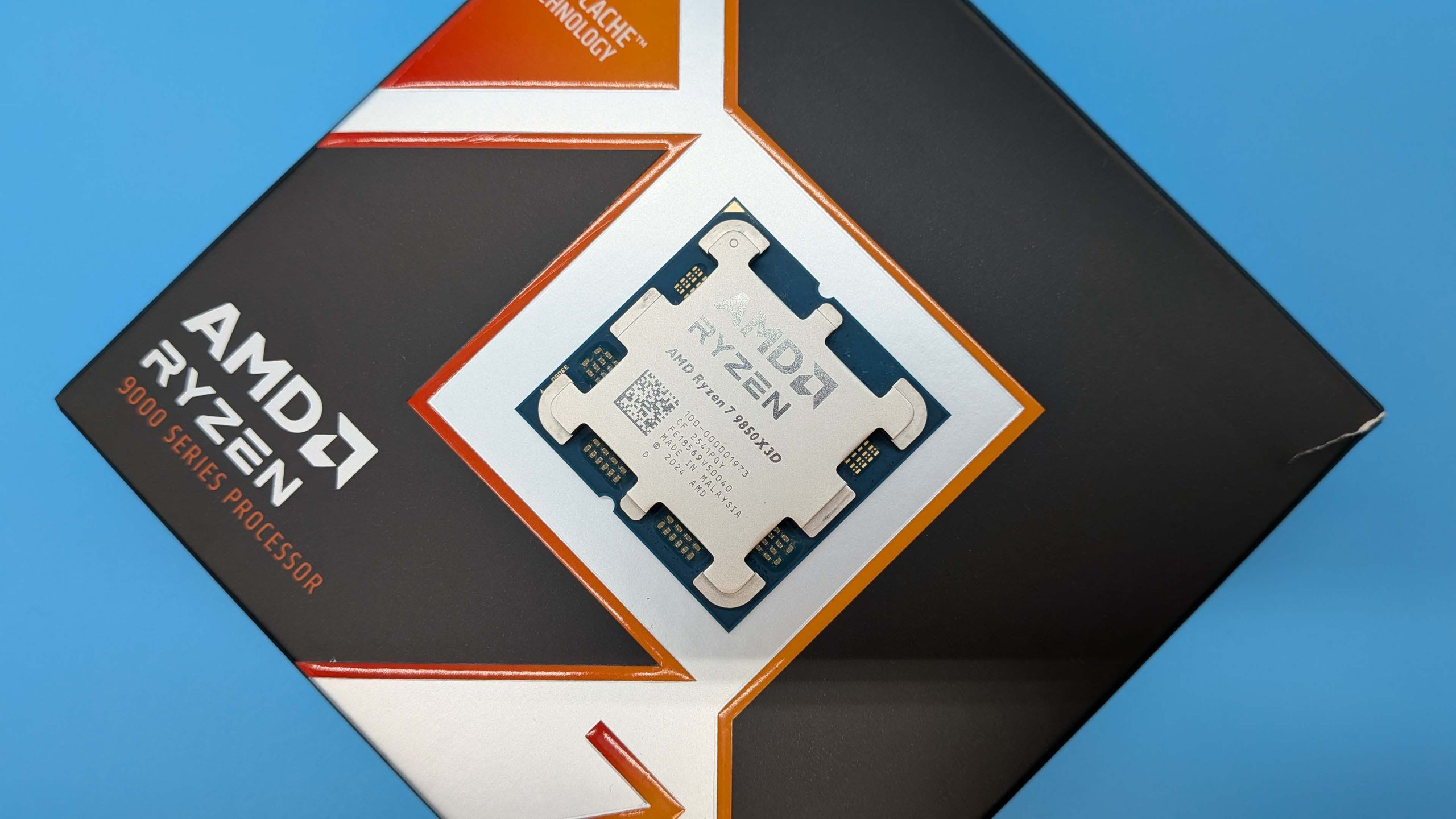
- Architecture: Zen 5 (identical to 9800X3D)
- Process: 4nm TSMC (no change)
- Cores/Threads: 8 cores / 16 threads (unchanged)
- L3 Cache: 96MB (same as 9800X3D, triple the 9700X’s 32MB)
- Base Clock: 4.7 GHz (unchanged)
- Boost Clock: 5.6 GHz (+400 MHz over 9800X3D’s 5.2 GHz)
- TDP: 120W base, 162W peak (unchanged)
- Price: $499 (up from $479 for the 9800X3D)
- 3D V-Cache Gen 2: Cache now sits beneath cores, improving thermal efficiency and overclocking headroom
The 9850X3D’s most significant advancement isn’t in raw specs but in how those specs are achieved. By reversing the cache placement, AMD eliminated the thermal bottleneck that once limited clock speeds. This isn’t just an incremental update—it’s a validation of the 3D V-Cache approach, proving it can now support higher performance without compromising reliability.
Yet for gamers, the math is simple: a 2% frame rate improvement in titles like Baldur’s Gate 3 comes at the cost of a 43% higher power draw during gaming loads. That’s not a misprint. While the CPU itself draws the same base power (120W), the peak gaming power jumps from 162W to an estimated 230W in some scenarios—a figure that could stress even high-end cooling setups.
Who Should Care?
The 9850X3D isn’t for everyone. It’s a chip designed for enthusiasts who demand the absolute fastest gaming performance, even if the gains are incremental. If you’re upgrading from a 9700X or an older Intel chip, the jump to either the 9800X3D or 9850X3D will feel substantial. But if you already own a 9800X3D and can find one at stock prices, the upgrade path is less compelling.
For data centers and workstation users, the 3D V-Cache technology remains a game-changer, but its benefits in gaming are more nuanced. AMD’s focus here is clear: refine, optimize, and push the boundaries of what’s possible with stacked cache—even if the consumer impact isn’t earth-shattering.
Availability for the Ryzen 7 9850X3D is expected to align with existing stock cycles, with no confirmed retail launch date. Pricing remains at $499, a $20 increase over the 9800X3D’s $479 MSRP.