Intel has quietly unlocked a major performance boost for its Arc B580 discrete GPU, but not without a twist. The latest driver update introduces XeSS 3 with multi-frame generation (MFG)—a feature designed to enhance rendering efficiency by generating multiple frames in parallel—but its rollout to the B580 is being staged. While Core Ultra 300 mobile processors and other integrated solutions already benefit from the upgrade, the B580 will receive it next month, leaving older Arc models like the B570 and Alchemist-series GPUs still waiting.
The delay underscores Intel’s layered approach to feature distribution, prioritizing newer platforms first. Core Ultra 300 chips, which debuted with the Panther Lake-H architecture, have been the primary beneficiaries so far, with their integrated Arc B390 iGPUs already leveraging XeSS 3 MFG. This setup has already proven capable in early benchmarks, such as outperforming AMD’s Radeon RX 580 in Cyberpunk 2077 on a Samsung Galaxy Book6 Pro running the Core Ultra 7 358H.
A Feature That Demands Patience
XeSS 3 MFG is a cornerstone of Intel’s push to compete in real-time ray tracing and upscaling, but its adoption has been staggered. The Arc B580, which packs a Core Ultra 3 discrete GPU, will finally join the party next month, though the RTX 5080 SUPER and RTX 5070 SUPER remain far ahead in raw performance. For now, the B580’s upgrade is a step toward bridging the gap with NVIDIA’s latest offerings, which have long dominated in upscaling and AI-driven rendering.
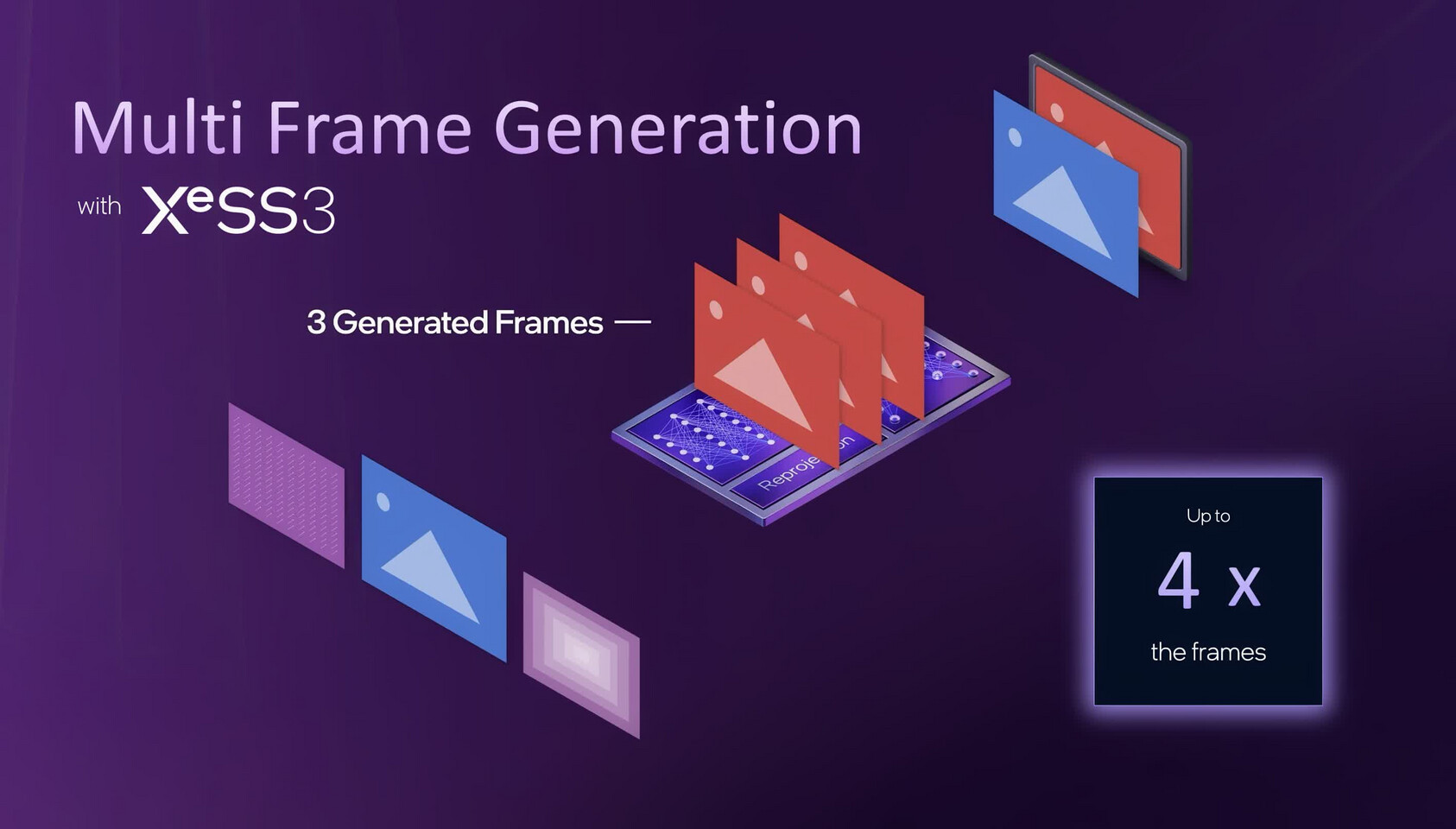
Intel’s strategy appears to be twofold: first, solidify support for its newest platforms, then gradually expand backward compatibility. The Arc B570 and older Alchemist-based GPUs may follow, but no timeline has been confirmed. Meanwhile, Intel is also eyeing emerging markets—particularly gaming handhelds—where Arc graphics are poised to play a larger role in 2026.
Who Stands to Gain?
The immediate winners are users of Core Ultra 300 laptops and notebooks, which now have access to a more refined upscaling solution. For discrete GPU owners, the B580’s upgrade is a delayed but welcome improvement, though it won’t redefine high-end gaming. The real test will come when XeSS 3 MFG trickles down to older hardware, but for now, Intel’s focus remains on pushing its latest architectures forward.
With CES 2026 on the horizon, expectations are high for further Arc advancements—especially as Intel prepares to unveil new hardware and possibly expand its gaming handheld ambitions. For now, though, the B580’s upgrade is a reminder that even flagship GPUs must wait their turn.