A new generation of edge systems is emerging, built around Intel’s Wildcat Lake processors. These systems, introduced by AAEON, are designed to handle the most demanding computational tasks at the edge, with a focus on memory capacity and thermal efficiency that could redefine what’s possible in compact form factors.
The centerpiece of these platforms is support for up to 48 GB of LPDDR5 memory—a significant leap from previous generations. This memory configuration is paired with Intel’s latest processor family, which brings improvements in core performance and power efficiency. The systems are aimed at developers and enterprises looking to deploy AI inference, real-time data processing, or other high-throughput workloads without sacrificing space or thermal management.
Thermal design is a critical focus for these edge systems. AAEON has implemented advanced cooling solutions that allow the platforms to maintain stability under sustained loads, which is essential for applications where heat dissipation can be a limiting factor. The systems also feature ruggedized components, making them suitable for deployment in challenging environments.
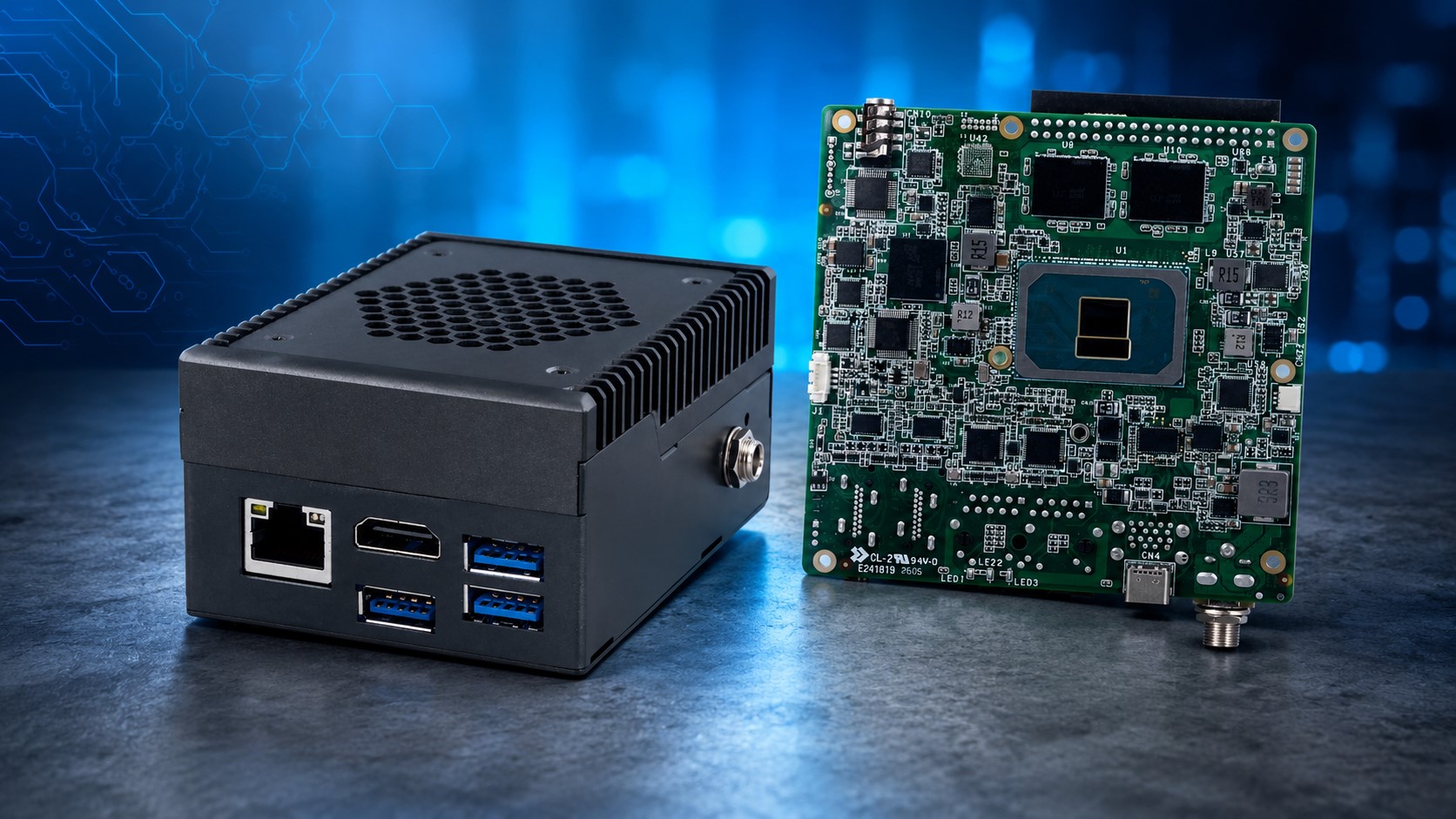
The Wildcat Lake-based platforms include both developer boards and full edge computing systems, catering to different stages of product development. For developers, the inclusion of high-density memory and robust thermal management tools means that prototyping complex algorithms or testing AI models can be done without the usual trade-offs between performance and power consumption.
While the exact roadmap for these systems remains unclear, Intel’s focus on edge computing suggests that future iterations will continue to push the boundaries of what’s achievable in terms of performance per watt. For now, the introduction of these platforms marks a notable shift toward more capable, efficient edge solutions that could influence how developers approach hardware design for AI and real-time processing tasks.