Hewlett Packard Enterprise (HPE) has expanded its ProLiant server platform with models specifically engineered for edge AI and data processing tasks in rugged conditions. This development reflects a strategic shift in enterprise computing, where the demand for on-premise or peripheral data handling—outside traditional data centers—is growing rapidly. Industries such as manufacturing, retail, and outdoor infrastructure are increasingly relying on edge solutions to reduce latency and improve operational efficiency.
The new ProLiant servers are designed to operate effectively in harsh environments, including exposure to dust, extreme temperatures (up to 40°C), and mechanical vibrations. These conditions often pose challenges for standard data center hardware, which is optimized for controlled settings. By addressing these operational constraints, HPE aims to support AI inference, real-time analytics, and edge data storage without compromising performance or reliability.
Performance and Durability in Edge Deployments
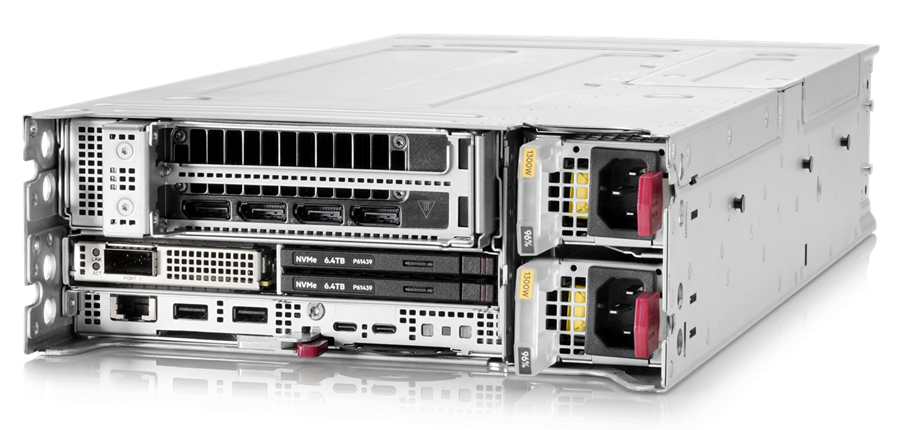
The updated ProLiant lineup incorporates several technical advancements to meet the dual requirements of ruggedness and computational power. The servers feature reinforced chassis construction, enhanced cooling mechanisms to sustain operation in high-ambient temperatures, and vibration resistance rated for industrial-grade durability. Internally, they support the latest Intel Xeon Scalable processors (up to the 3rd generation), up to 12TB of DDR5 RAM, and dual-socket PCIe 5.0 slots for AI accelerators such as GPUs or FPGAs.
- Key Technical Specifications:
- Processors: Intel Xeon Scalable (up to 3rd Gen)
- Memory: Up to 12TB DDR5-4800 ECC RDIMM/LRDIMM
- Storage: Up to 64TB NVMe SSD per server, with support for hot-swap and RAID configurations
- Accelerators: Dual-socket PCIe 5.0 slots for GPUs or FPGAs
- Cooling: Liquid-cooled options available, extended temperature range (up to 40°C)
- Durability: Vibration resistance up to 0.5G peak
These specifications position the ProLiant servers as capable platforms for AI-driven tasks such as image recognition, predictive maintenance, and real-time sensor data processing. However, the design also introduces trade-offs. For instance, while RAM and processor options are robust, the maximum local NVMe storage is limited to 64TB per server. This constraint may push organizations toward distributed storage solutions or cloud connectivity for managing larger datasets, balancing the need for edge processing with practical limitations.
Industry Implications and Trade-offs
The rugged design of these servers comes with inherent compromises that could influence their adoption in specific industries. While the chassis is built to withstand vibrations and high temperatures, it does not match the advanced liquid-cooling systems found in high-end data center models, which can handle even greater thermal loads but at a higher cost and complexity. Similarly, the vibration resistance, though improved, may not fully meet the requirements of highly mobile or transportation-based edge deployments.
For industries like smart manufacturing or autonomous logistics, where edge computing is becoming essential, the ability to process data closer to its source reduces latency and minimizes bandwidth demands. However, organizations must carefully evaluate whether the performance benefits of rugged hardware justify the investment compared to repurposed data center equipment or cloud-based alternatives. The long-term viability of these servers will depend on HPE's ability to refine the balance between durability, cost, and performance.
Future Outlook for Edge AI Infrastructure
The introduction of these ProLiant models underscores a broader trend in enterprise computing: the increasing importance of edge AI workloads and the need for hardware that can reliably operate across diverse environments. As industries continue to migrate from centralized data centers to distributed computing models, the ability to deploy servers in non-standard conditions will play a pivotal role in shaping future data infrastructure. HPE's focus on this segment suggests a growing recognition of the market's demand for solutions that combine ruggedness with advanced computational capabilities.
For now, the new ProLiant lineup offers a practical middle ground—sufficient power for AI tasks, durability for edge conditions, and flexibility to adapt to evolving workload requirements. Whether it becomes a standard choice for edge deployments remains to be seen, but its presence signals a significant step forward in addressing the complex demands of modern data processing.