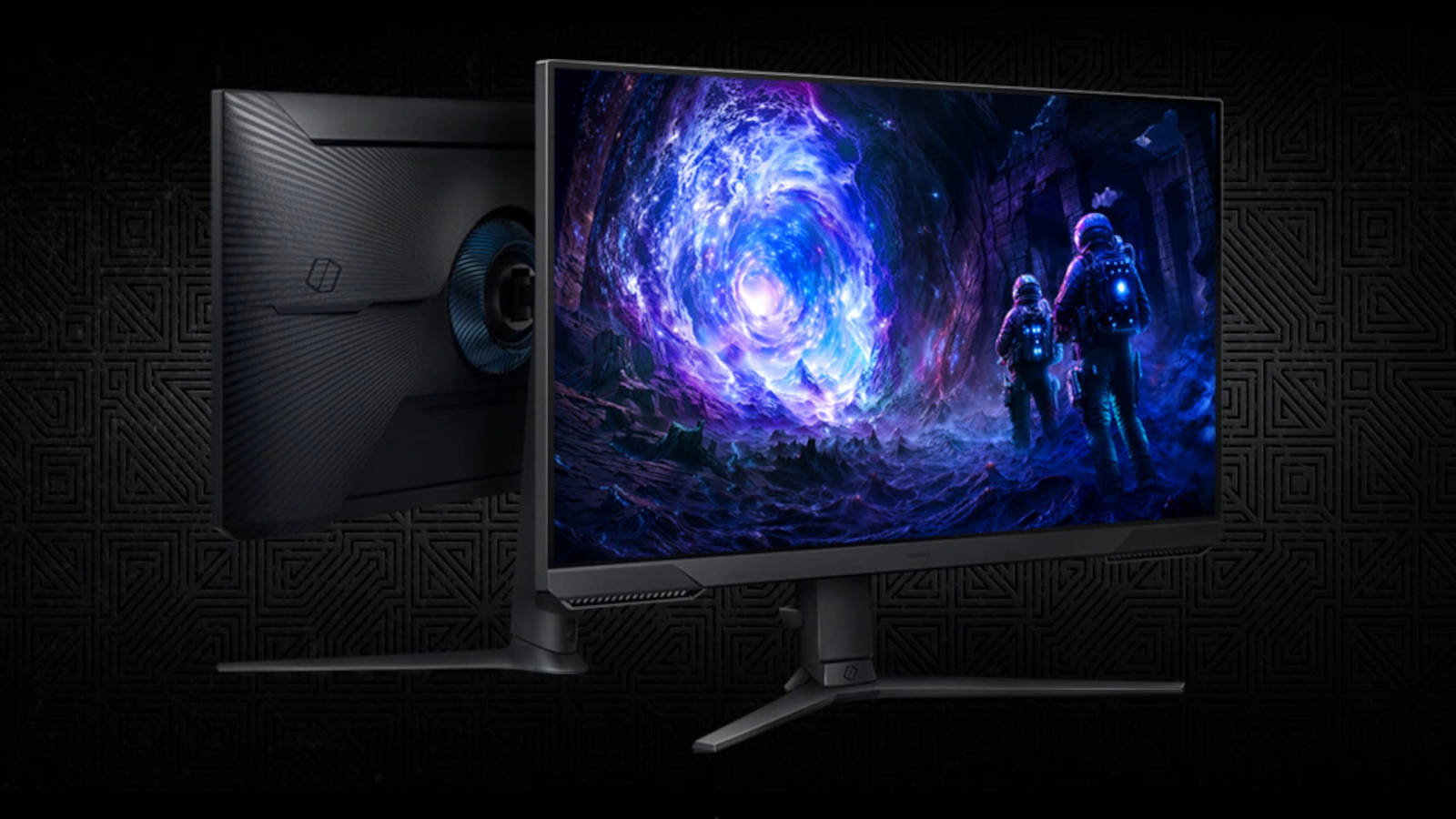
The MO27Q28G arrives at a moment when OLED’s reputation for high-end performance is being challenged by lower-cost alternatives. It does not break every barrier—some compromises remain—but it comes close enough to make the choice less about budget and more about when, not if, to upgrade.
Until now, entry-level OLED monitors have been rare, often overshadowed by VA or IPS panels that offer decent colors without the premium price tag. The MO27Q28G changes that dynamic. It is not the first OLED monitor on the market, nor is it the most powerful, but it stands out by offering what was once considered a luxury—true blacks and high brightness—in a package that enterprise buyers can justify.
What Was Expected vs. What Arrived
Before its release, expectations were modest: a 27-inch panel with QHD resolution (2560×1440), 90 Hz refresh, and OLED’s signature contrast. The MO27Q28G meets those benchmarks but goes further in practical areas. For example
- Brightness: 350 nits peak, which is lower than high-end OLEDs but sufficient for most office environments without local dimming artifacts.
- Response time: 1 ms (gray-to-gray), ensuring smooth motion even at 90 Hz.
- Color accuracy: 85% sRGB coverage, meeting the needs of content creation and general productivity without requiring calibration.
The monitor also includes a 4K@60 Hz upscaling mode, which is useful for extending displays or handling lower-resolution sources. However, it does not support HDR, a notable omission in a category where such features are increasingly expected even at entry levels.

Where the Compromises Lie
The MO27Q28G is not without trade-offs. Its 90 Hz refresh is capped at 1440p, limiting its appeal for competitive gaming or high-refresh tasks. The absence of HDR means it cannot handle bright HDR content, which may be a dealbreaker for some creative professionals. Additionally, the stand and connectivity options are basic—no KVM, no USB-C with video output, and only one HDMI 2.0 port (the other is DisplayPort 1.4).
Why This Matters Now
For enterprise buyers, the MO27Q28G’s value lies in its balance of cost and capability. It is not a high-end workstation panel, but it delivers OLED’s strengths—deep blacks, wide viewing angles, and low input lag (0.5 ms)—at a price that was once reserved for mid-range IPS or VA displays. This shift could accelerate the adoption of OLED in offices where budget has been the primary constraint.
Looking ahead, the next step is clearer panel sizes and higher refresh rates at this tier. The MO27Q28G proves that entry-level OLED is viable, but it also highlights what’s still missing: more ports, better HDR support, and perhaps a push to 144 Hz in future iterations.