Drawing tablets aim to replicate the feel of pencil and paper, yet the underlying technology is surprisingly complex. For those interested in understanding how they work and undertaking a challenging DIY project, Project Patchouli presents an open-source solution for building your own EMR tablet from scratch.
Understanding Electromagnetic Resonance (EMR) Tablets
Project Patchouli, created by designer Yukidama, is documented extensively online. An EMR tablet utilizes electromagnetic resonance to detect pen input and translate it into digital signals. This technology enables a quick and responsive drawing experience; however, compatibility can be an issue as different pen manufacturers often employ varying frequencies.
How Project Patchouli Works
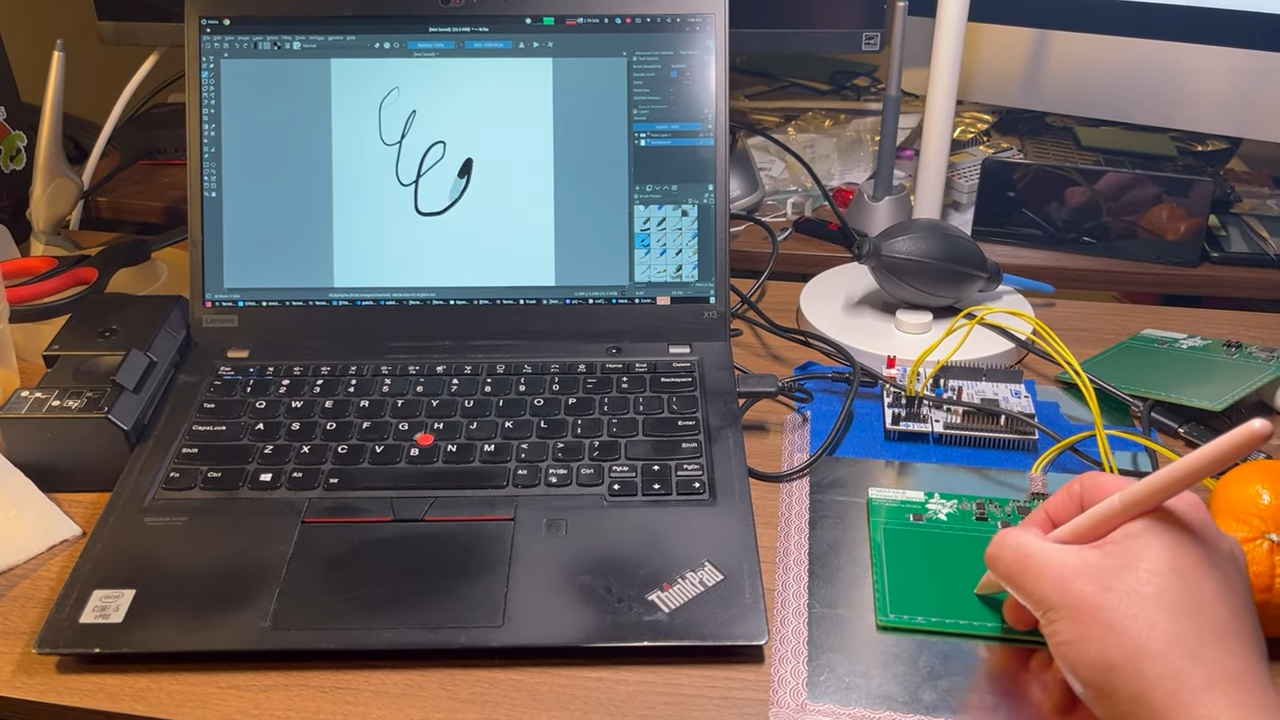
Yukidama's YouTube video illustrates the process: electromagnetic pencils contain coils and capacitors near their tips. A test board picks up these signals, which are then amplified and transmitted to a computer. An oscilloscope is used to measure the frequency of each pen as it interacts with the board, revealing distinct frequencies for different pens based on pressure applied.
Project Patchouli utilizes an array of coils within the tablet itself, aiming for broad compatibility across various commercial pens while maintaining low latency. This design allows for a customized hardware project that can potentially bypass limitations encountered with standard drawing tablets.
The Technical Details
The project's GitLab repository provides firmware and hardware designs necessary for construction. Detailed documentation, including helpful graphs and images, is available in the 'docs' section. Many of the hardware blueprints are presented as CAD files, necessitating their submission to a circuit board manufacturer for physical creation – highlighting the complexity involved.
Community Support and Future Development
Yukidama actively engages with the community through a dedicated Discord server (Project Patchouli Discord), seeking feedback and addressing questions to improve documentation for wider accessibility. While a complete understanding of the project requires technical expertise, Yukidama's YouTube video effectively explains the fundamentals of EMR technology and its benefits for artists.
Beyond a Direct Replacement
While Project Patchouli represents an impressive feat of engineering, it’s best viewed as a proof-of-concept rather than a direct replacement for commercially available drawing tablets. Modern tablets often incorporate advanced features like tilt control and pressure sensitivity, alongside larger form factors. However, the project's open-source nature empowers others to build upon its foundation and explore new possibilities.
A Learning Experience
For those with the technical inclination and willingness to engage a PCB manufacturer, Project Patchouli offers more than just a custom drawing tablet. It provides an opportunity to delve into the intricacies of EMR technology and gain a deeper appreciation for the devices we often take for granted. This project is not merely about creating hardware; it's about understanding the principles that drive modern digital art tools.