A user stumbles upon a familiar yet unfamiliar URL—Bored.com—and is immediately greeted by a grid of small, colorful squares, each leading to a different whimsical destination. This isn’t a throwback; it’s the re-emergence of an internet artifact that once thrived on curiosity and idle scrolling.
Bored.com’s return is more than nostalgia. It represents a strategic pivot in how platforms cater to casual users who seek novelty without the noise of mainstream content. The site’s design, stripped of traditional navigation, forces engagement through exploration. Each square—whether it leads to a random fact, a mini-game, or an absurd joke—is crafted to reward curiosity with small, unexpected delights.
Under the hood, the platform leverages lightweight web technologies optimized for quick loading and minimal resource use. It avoids heavy scripts that can bog down performance on slower connections, a practical choice given its audience’s diverse device usage. The backend is built to handle bursts of traffic without lag, ensuring that each click remains seamless.
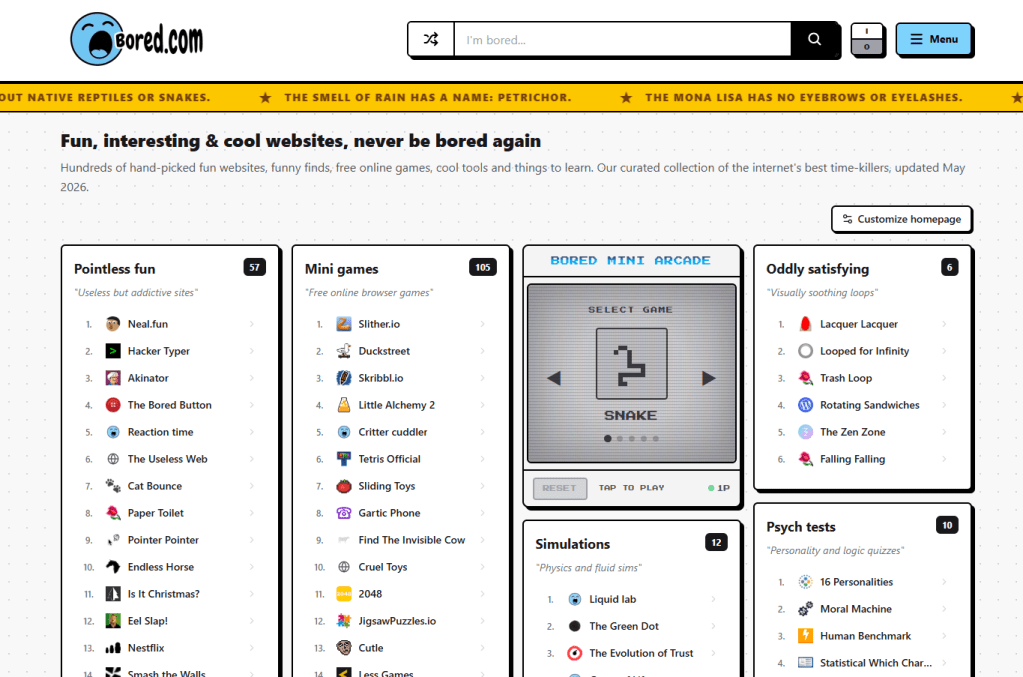
While the experience is delightful, it comes with caveats. The content lacks depth; interactions are fleeting, and there’s no persistent user data or personalization. For users accustomed to algorithm-driven feeds, Bored.com feels both refreshing and limiting—it doesn’t remember preferences, nor does it adapt over time. Its charm lies in its impermanence.
For the broader internet ecosystem, this revival raises questions about the future of niche platforms. Could sites like Bored.com inspire a wave of micro-experiences that prioritize engagement over data collection? Or will they remain curiosities, enjoyed briefly before fading back into obscurity?
The most significant change here isn’t just the return of a domain; it’s the reminder that the internet doesn’t need to be all about utility. Sometimes, it just needs to be weird.