The RUC-2000 series from ASUS is a bold step forward for edge AI, designed to thrive where most systems would fail. Unlike conventional edge devices that prioritize performance at the expense of durability, this platform treats ruggedness as a first-class requirement. It’s built to withstand extreme temperatures, vibration, and dust—conditions that would typically force other systems into early retirement.
At its heart, the RUC-2000 series packs a 16-core CPU paired with up to 32GB of DDR5 memory, delivering the muscle needed for AI workloads that demand both speed and reliability. But the real innovation lies in its thermal management. Active cooling keeps performance steady even when ambient temperatures soar past 40°C, a critical advantage for outdoor or industrial deployments where heat dissipation is often an afterthought.
Power for the Edge, Without the Bloat
The system’s architecture is where it truly stands out. It integrates a dedicated AI acceleration module that supports frameworks like TensorFlow and PyTorch without relying on external GPUs—a departure from many edge solutions that require add-on cards to handle heavy lifting. This integration simplifies deployment, but it also raises questions about scalability: Can it handle complex models beyond inference, or is it better suited for pre-trained workloads? For power users, this means a system that’s optimized for efficiency rather than raw compute flexibility.
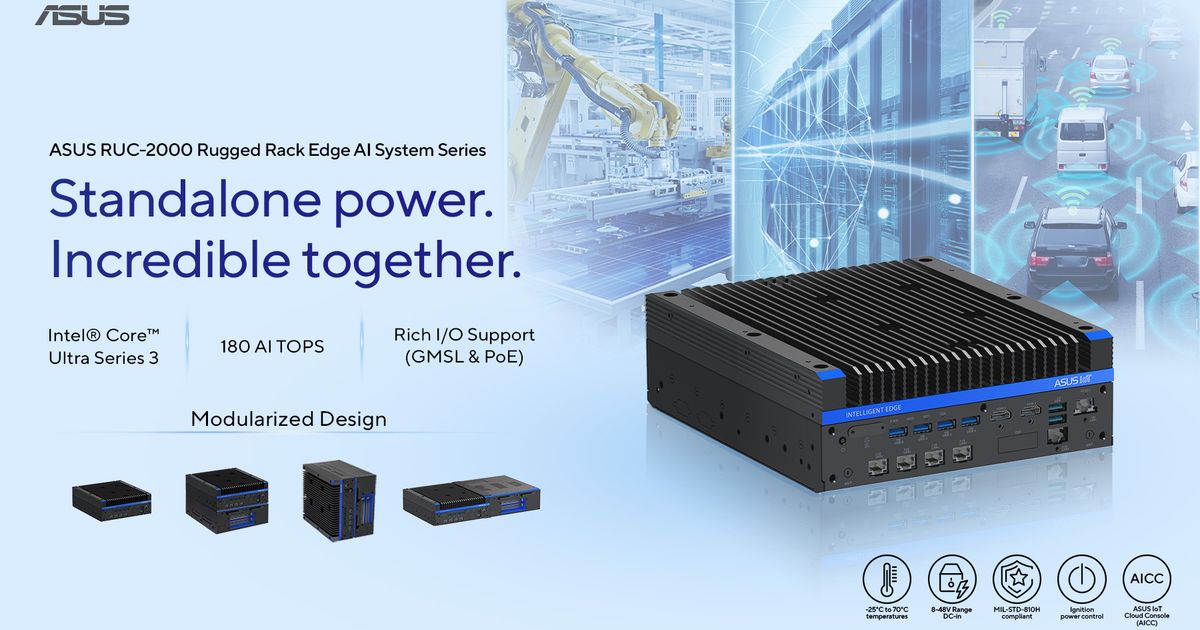
- 16-core CPU with up to 32GB DDR5 RAM, ensuring smooth operation under heavy AI loads.
- Dedicated AI acceleration module for TensorFlow and PyTorch, reducing dependency on external GPUs.
- Active cooling system maintains performance in extreme temperatures (up to 40°C).
- IP67 rating, vibration resistance, and rugged design for industrial and outdoor use.
A Balancing Act: Performance vs. Practicality
The RUC-2000 series is a cautious upgrade for those looking to move beyond traditional edge AI setups. Its compact 1U form factor makes it ideal for rack-mounted deployments where space is tight, and its power efficiency (65W TDP) allows for continuous operation on a single-phase power supply—no complex cooling or redundant power paths required. This is a game-changer for remote installations where maintenance access is limited.
However, the lack of GPU expansion slots means it’s not a drop-in replacement for high-end workstations or data centers. The trade-off is clear: prioritize integration and durability over raw compute flexibility. For creators and system integrators, this means choosing between a platform that excels in edge inference but may become a bottleneck for evolving AI models.
Looking Ahead: Strengths and Limitations
The RUC-2000 series shines in scenarios where power efficiency matters as much as performance. Its ability to run continuously without overheating or requiring complex cooling setups makes it a strong contender for industrial applications. But its limitations—such as the absence of PCIe slots and a max storage capacity of 1TB NVMe—suggest it’s not built for long-term data processing.
For now, the RUC-2000 series is a testament to what edge AI can achieve when engineered with ruggedness in mind. Its success will hinge on how well ASUS addresses its limitations without compromising its core promise: performance that doesn’t crack under pressure.