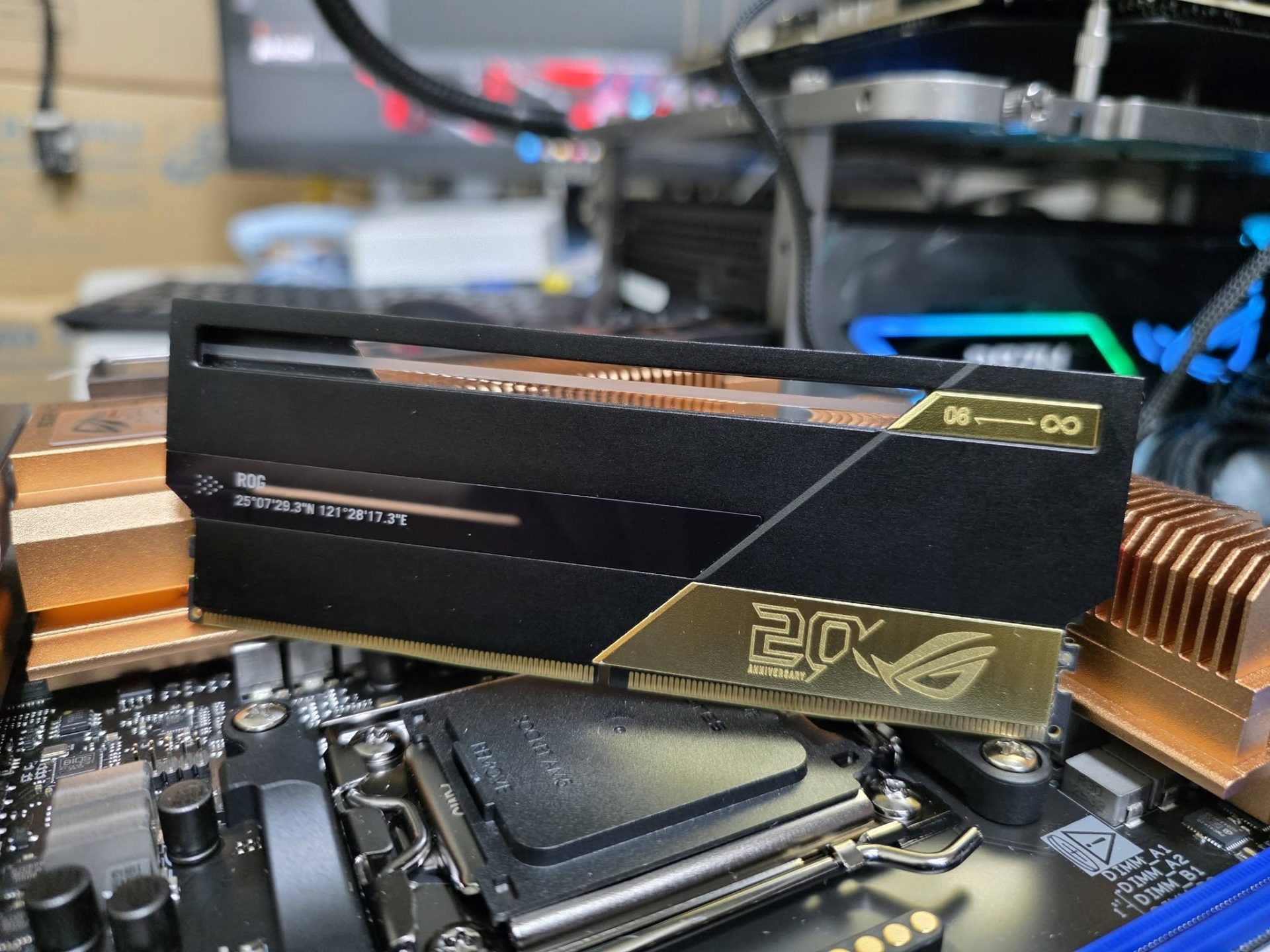
ASUS has demonstrated its first DDR5 memory module running at 8,800 MT/s, a milestone that underscores the rapid advancement of memory technology in high-end computing. This achievement, paired with ASUS's Crosshair X870E APEX motherboard, offers a glimpse into how future data workloads could be optimized for both speed and efficiency.
The DDR5 module, part of ASUS's ROG (Republic of Gamers) lineup, is designed to push the boundaries of what is possible with current memory technology. At 8,800 MT/s, it surpasses traditional limits, but this performance comes with tradeoffs that users and developers must consider. Stability at such high speeds requires careful engineering, balancing power consumption, thermal output, and system reliability.
For data-intensive applications, the implications are significant. Faster memory access can reduce latency in AI training, large-scale simulations, or real-time analytics. However, achieving this speed without sacrificing stability is no small feat. The module's performance suggests that future systems will need to integrate advanced cooling solutions and power delivery to maintain these extreme clock speeds over time.
ASUS's Crosshair X870E APEX motherboard serves as the platform for this demonstration, featuring a robust VRM design capable of handling the increased power demands of high-speed DDR5. The combination of this motherboard and the 8,800 MT/s memory module provides a testbed for exploring the limits of current hardware while also highlighting the challenges ahead.
In practice, users running workloads that demand low latency will notice the difference immediately. Tasks like AI model training or high-resolution data processing could see significant speedups, but only if the system can sustain such performance without thermal throttling or instability. This balance between raw speed and real-world usability is critical for both end-users and developers.
As memory technology continues to evolve, the focus will shift from sheer clock speeds to overall system efficiency. While 8,800 MT/s is a remarkable achievement, the next steps will involve optimizing power usage, thermal management, and long-term reliability. For now, this demonstration sets a new benchmark for what DDR5 can achieve, but it also serves as a reminder that pushing these limits requires careful consideration of the broader system design.
For those looking to integrate high-performance memory into their setups, the availability of such modules remains limited. However, ASUS's work here opens the door for future advancements, suggesting that even higher speeds may be possible with further refinements in both hardware and software.