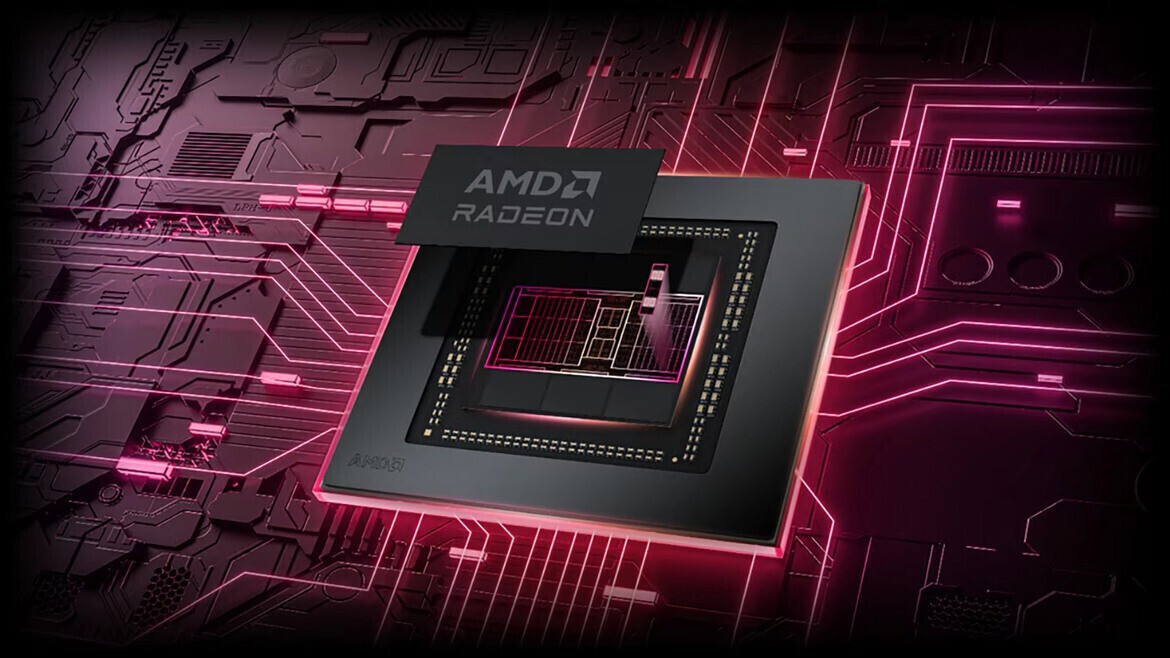
AMD’s next-generation APUs are breaking new ground, with the ‘Medusa Point’ series promising a significant upgrade in integrated graphics performance. Unlike the ‘Medusa Halo’ variants, which will leverage the more advanced RDNA 5 architecture, ‘Medusa Point’ is designed for budget-conscious laptops and mini PCs, featuring a modified RDNA 4m GPU built on a 4 nm process.
The RDNA 4m architecture is not just a rebranded RDNA 3.5. It introduces support for FSR 4, AMD’s latest frame-rate enhancement technology, which relies on machine learning-based upscaling and rendering optimizations. This shift is critical for integrated graphics, where performance has long been constrained by legacy architectures.
Under the hood, ‘Medusa Point’ will combine Zen 6 CPU cores with Zen 6c efficiency cores, similar to current Ryzen AI 300 and 400 series APUs. However, the memory subsystem sees a major upgrade: LPDDR6 support, offering a 50% bandwidth boost over today’s LPDDR5X. This change alone could significantly improve both CPU and GPU performance in demanding workloads.
Key Specs
- GPU: RDNA 4m (scaled-down RDNA 4 architecture, 4 nm process)
- GPU Features: FSR 4 support, WMMA/SWMMAC instruction extensions (indicating RDNA 3 upgrades)
- CPU: Zen 6 + Zen 6c cores (mix of performance and efficiency clusters)
- Memory: LPDDR6 (50% bandwidth increase over LPDDR5X)
- Platform: Desktop-exclusive RDNA 4m variant (laptops/mini PCs)
- Successor to: RDNA 3.5 iGPU (remaining in production until 2029 for mainstream SKUs)
The move to RDNA 4m is a strategic pivot for AMD. While the ‘Medusa Halo’ series will adopt RDNA 5, ‘Medusa Point’ fills a gap for entry-level devices that need better integrated graphics without the cost of a discrete GPU. The inclusion of FSR 4—previously limited to RDNA 4 and RDNA 5—ensures these APUs can handle modern games at elevated frame rates, even in 4K resolutions.
For consumers, this means a generational leap in iGPU performance without requiring a premium-priced chip. The LPDDR6 upgrade further sweetens the deal, future-proofing these APUs for memory-intensive tasks like AI workloads and high-resolution content creation. However, the tradeoff is clear: ‘Medusa Point’ is a mid-range solution, not a flagship. High-end users will still need to look toward ‘Medusa Halo’ or discrete GPUs like the Radeon RX 9070 or RX 9060 XT for maximum performance.
Availability details remain under wraps, but leaks suggest these APUs will target the latter half of 2026, aligning with AMD’s broader push to phase out RDNA 3.5 in mainstream products by 2029.