AMD has released updated performance metrics for its EPYC processors, focusing on agentic AI workloads where the company claims substantial advancements over NVIDIA's competing architecture. The latest data highlights a 2.37x performance lead for EPYC Turin, with Zen 6 Venice pushing that advantage further to 3.3x in specific benchmarks.
This update comes as part of AMD's broader strategy to strengthen its position in enterprise AI, particularly in scenarios where high throughput and efficiency are critical. The numbers suggest a notable shift in the balance of power between AMD and NVIDIA, though industry observers note that real-world performance can vary significantly depending on deployment context.
The EPYC Turin processor, built on Zen 4 architecture, has already shown strong performance in AI tasks, but the introduction of Zen 6 Venice appears to accelerate this momentum. The new generation is expected to bring additional improvements in power efficiency and core density, which could further solidify AMD's footprint in data center environments.
Key takeaways from the update include
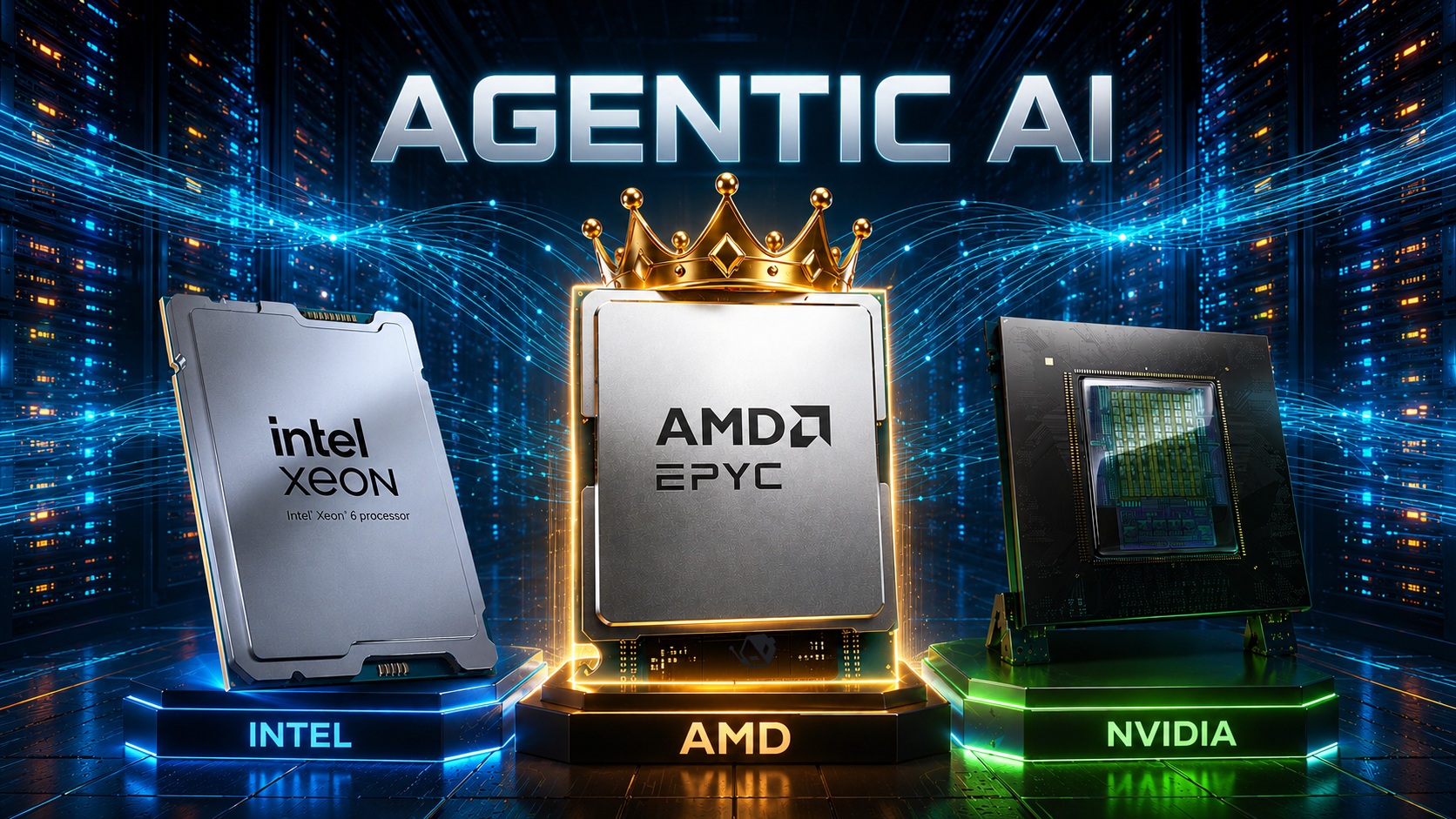
- EPYC Turin delivers a 2.37x performance advantage over NVIDIA's Vera in agentic AI tasks.
- Zen 6 Venice is projected to extend this lead to 3.3x, reflecting AMD's focus on iterative architectural improvements.
- The performance gains are particularly relevant for enterprise IT teams evaluating hardware for AI workloads, where platform lock-in and long-term roadmap stability are critical considerations.
Despite the promising metrics, challenges remain. For instance, NVIDIA's dominance in certain AI segments, particularly those leveraging specialized accelerators, means that AMD's progress must be measured against a backdrop of entrenched competition. Additionally, the practical implications of these benchmarks—such as power consumption, thermal behavior, and software ecosystem maturity—will need closer scrutiny before IT teams can fully assess their impact.
Looking ahead, the focus will shift to how quickly AMD can translate these performance gains into tangible benefits for enterprise customers. Pricing, availability, and compatibility with existing infrastructure will be key factors in determining whether this update marks a turning point or merely another step in a longer journey toward parity with NVIDIA.