For small businesses looking to maximize processing power without breaking the bank, AMD’s latest Ryzen processors with 3D V-Cache offer a compelling solution. These chips introduce a novel approach to memory hierarchy that delivers measurable gains in AI workloads, setting them apart from traditional CPU designs.
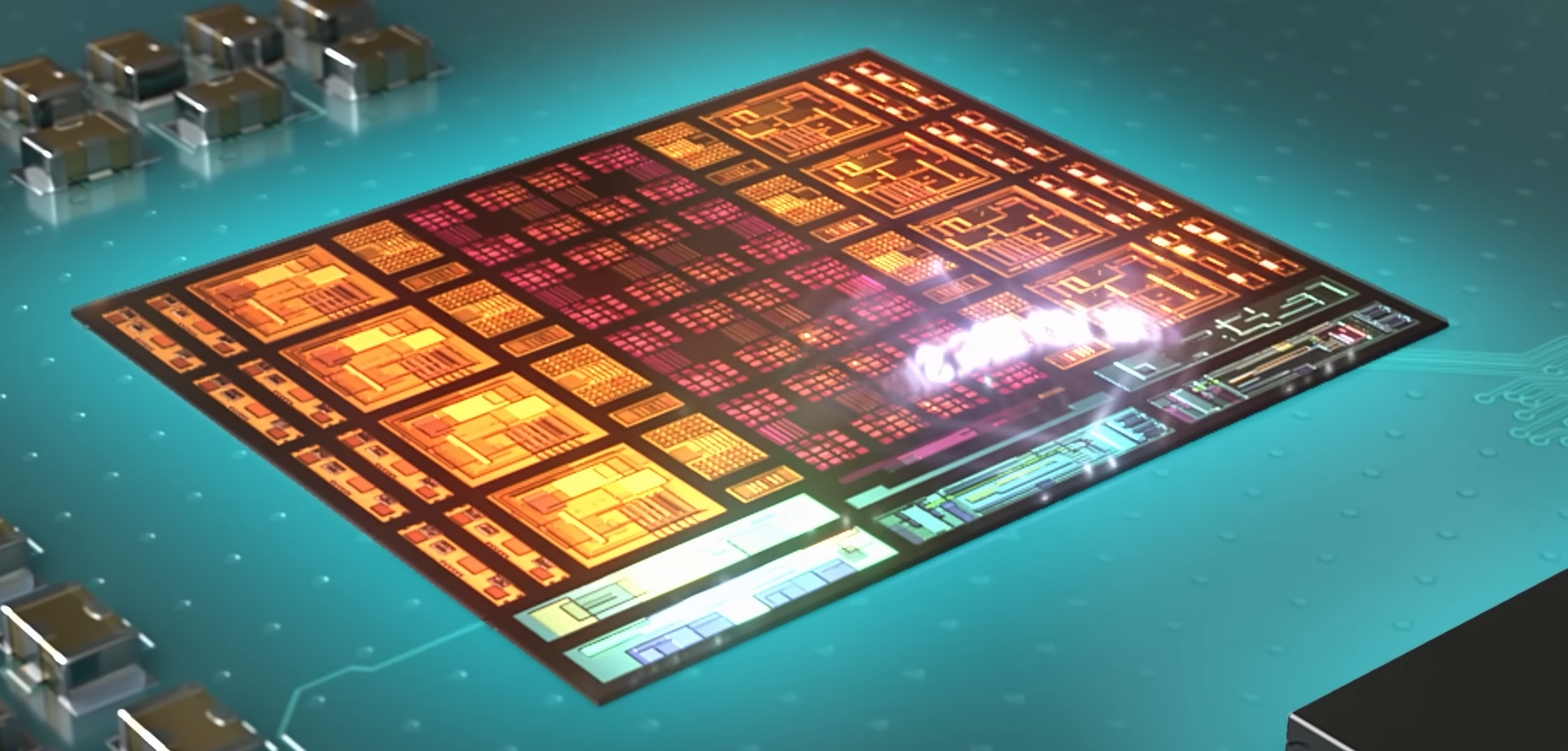
The core innovation lies in the 3D vertical cache stack, which sits above the CPU cores and connects via microbumps. This design allows for faster data access compared to conventional on-die cache configurations, reducing latency without increasing power consumption significantly. The result is a more efficient chip that can handle demanding tasks—such as AI model training or large-scale data processing—with greater speed.
Key Specifications and Tradeoffs
- Cache Architecture: 3D V-Cache with L3 cache stacked vertically, connected via microbumps for lower latency.
- Performance Boost: Up to an 88% improvement in AI-related workloads compared to non-X3D Ryzen processors.
- Power Efficiency: The additional cache layers do not significantly increase power draw, maintaining thermal performance within expected ranges.
The tradeoff is primarily one of cost. While the 3D V-Cache design adds complexity during manufacturing, the long-term benefits for AI and data-heavy applications make it a worthwhile investment for businesses that rely on these workloads. For tasks outside of AI, such as general computing or gaming, the gains are less pronounced but still notable.
Who Should Consider This?
Small businesses in fields like machine learning, data analysis, or content creation will find the most value in Ryzen processors with 3D V-Cache. These chips excel in scenarios where large datasets need to be processed efficiently, such as training AI models or running complex simulations. However, for those whose workloads are more balanced between AI and traditional computing, the decision may hinge on whether the premium is justified by their specific needs.
One remaining uncertainty is how this technology will scale in future generations of Ryzen processors. While AMD has demonstrated strong performance gains with current models, the long-term impact on power efficiency and thermal design remains to be seen as cache densities increase. For now, businesses evaluating CPUs should weigh these factors carefully—balancing immediate performance needs against potential future advancements.
The most significant change introduced by 3D V-Cache is its ability to dramatically improve AI workload performance without a proportional increase in cost or power consumption. This positions Ryzen as a strong alternative for small businesses seeking high-value processing solutions, particularly in emerging AI-driven fields.