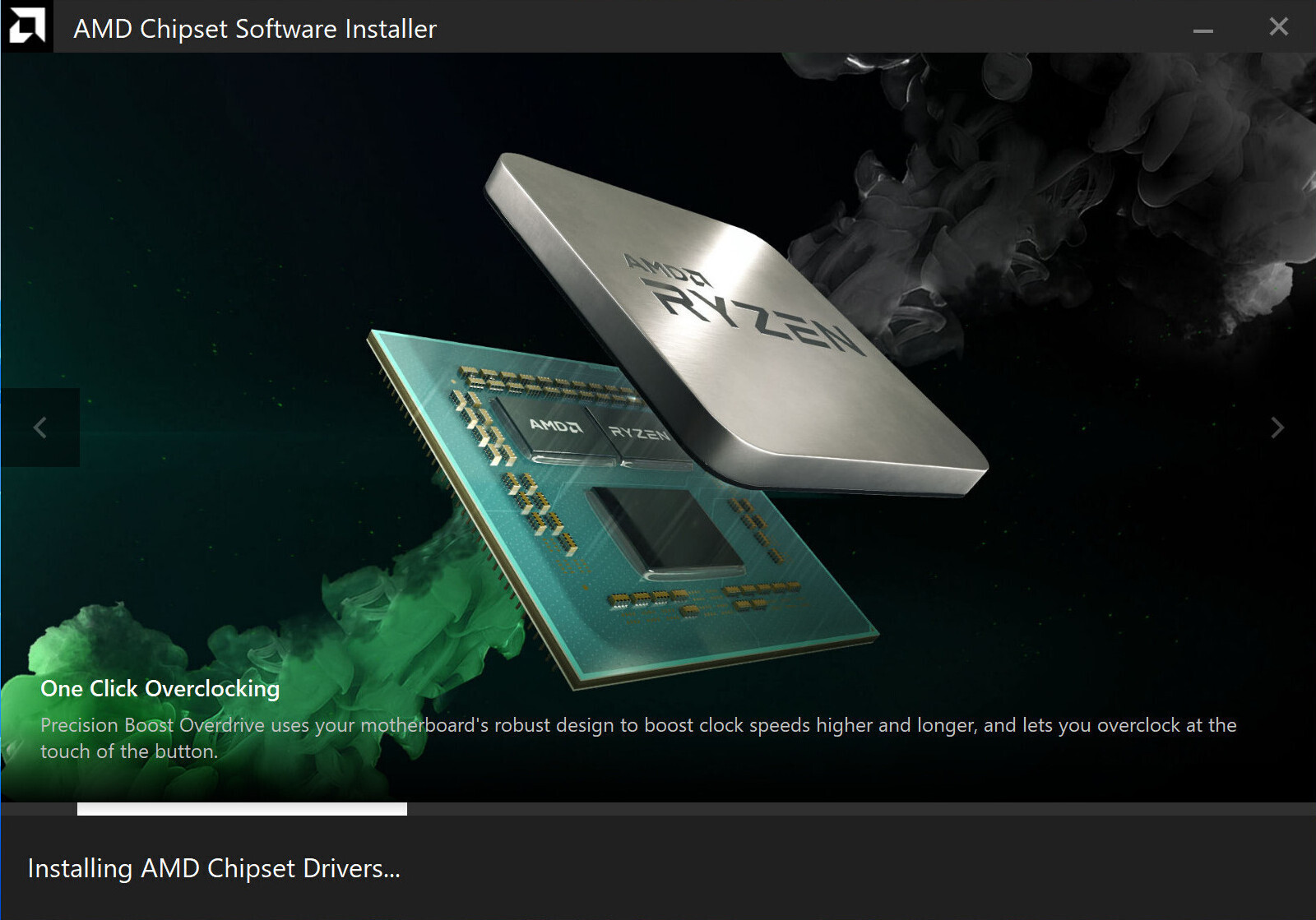
AMD has quietly rolled out a refined update to its Ryzen Chipset Software, version 8.01.20.513, marking a shift in how the drivers are packaged and deployed. While the changes may seem incremental to casual users, they reflect a deliberate push toward stability and modularity—particularly for systems relying on niche features like the AMS Mailbox or S0i3 filter drivers.
The update introduces a new installer wrapper, Install Shield, which replaces the previous deployment method. This isn’t merely a cosmetic change; it signals AMD’s move toward a more standardized installation framework, one that aligns with industry practices for driver distribution. However, the shift has a notable consequence: the AMS Mailbox and S0i3 filter drivers are no longer bundled by default. Users requiring these components—common in custom cooling setups or enterprise configurations—must now install them separately. Failure to do so could trigger system errors or unexpected behavior.
For those accustomed to rolling back to older driver versions, the update introduces a critical caveat. Systems updated to the latest 7.xx.xx.xx branch cannot revert to version 6.xx.xx.xx or earlier without first uninstalling the current software, deleting the Qt_Dependencies folder in the installation directory, and performing a clean reinstall. This workaround, while straightforward, underscores the complexity of managing driver stacks in high-performance or mixed-use environments.
Other known issues persist, including occasional failures in Ryzen PPKG installations and driver name discrepancies on non-English operating systems. AMD has acknowledged these as ongoing concerns, though no immediate fixes are outlined in the release notes.
Why It Matters
The update reflects a broader trend in AMD’s approach to driver management: balancing stability with flexibility. For most users, the changes will be transparent—bug fixes and minor optimizations under the hood. However, for enthusiasts or professionals relying on advanced features, the separation of core drivers from optional modules could streamline customization. The tradeoff is a slightly steeper learning curve for troubleshooting, particularly for those unaccustomed to manual driver installations.
This release also arrives at a time when AMD’s Ryzen 9000 series—including the recently announced Ryzen 9000X3D and Ryzen 7 9850X3D—is pushing the boundaries of performance. While the chipset software itself doesn’t directly impact CPU capabilities, its stability is critical for unlocking features like 192MB L3 cache in the upcoming Ryzen 9 9950X3D2 or ensuring smooth operation with high-TDP designs (up to 200W). The update may also hint at future optimizations for platforms leveraging AMD’s 2nm/3nm process nodes, though no concrete ties have been confirmed.
For now, the focus remains on ironing out the kinks in the software stack. Whether this translates to broader performance gains or simply a more polished user experience will depend on how widely these changes are adopted—and whether AMD addresses the lingering issues in subsequent releases.