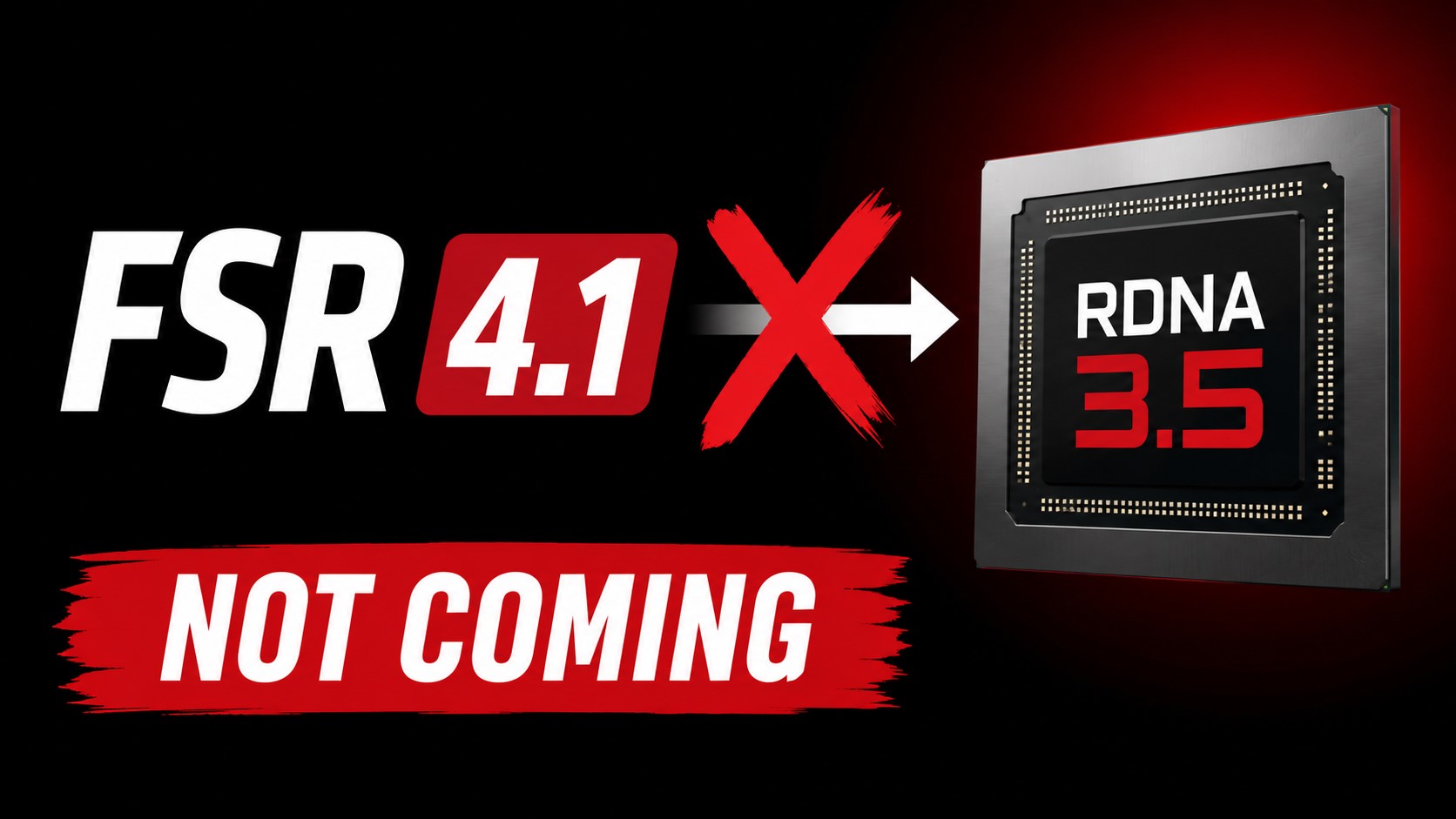
AMD’s RDNA 3.5 graphics cards will not include FSR 4, effectively sidelining the latest upscaling technology from its upcoming lineup. This decision leaves a gap in performance optimization for high-refresh displays, particularly at 120Hz and above.
The absence of FSR 4 means gamers and content creators relying on AMD hardware will miss out on the improved frame generation and temporal upscaling benefits introduced with the next-gen standard. Instead, RDNA 3.5 GPUs will default to FSR 3, which lacks the advanced AI-driven enhancements found in its successor.
This shift comes as AMD refines its focus on efficiency and thermal management in RDNA 3.5, a generation designed to balance raw performance with power consumption. The architecture is expected to push clock speeds higher than previous iterations, but without FSR 4, the tradeoff may leave users relying on older upscaling methods for smoother high-refresh gameplay.
Meanwhile, Ryzen AI 300 and 400 series APUs—integrated into laptops and desktops—will also remain compatible with earlier FSR versions. These chips, built on Zen 4 cores, were positioned as AI-ready but may now face limitations in upscaling performance compared to competing integrated solutions.
While AMD has not officially confirmed the exclusion of FSR 4, internal sources suggest this is a deliberate move to prioritize other optimizations in RDNA 3.5. The full implications for gaming and content creation will depend on how quickly alternative upscaling technologies emerge or if AMD revisits this decision in future updates.