A new wave of edge computing platforms from AAEON is set to redefine the balance between performance and power efficiency. The UP WCL and UP Nexus WCL boards, based on Intel's Wildcat Lake processors, are designed to deliver advanced AI capabilities without the thermal or energy demands typically associated with high-performance systems.
The key innovation lies in Intel's integrated heterogeneous compute architecture, which combines CPU cores optimized for low-power efficiency with an NPU capable of 40 TOPS. This combination allows AAEON's platforms to handle complex AI workloads while maintaining a compact footprint and lower power consumption than traditional HPC systems.
Memory and storage: a leap forward
- LPDDR5 capacity: 8 GB (standard), up to 48 GB on the UP Nexus WCL
- Storage: 256 GB UFS 3.1 (up from previous 64 GB eMMC)
The UP WCL and UP Nexus WCL break away from previous memory limitations, with standard configurations starting at 24 GB LPDDR5 for the former and scaling up to an impressive 48 GB on the latter. This addresses a long-standing constraint in embedded systems while maintaining compatibility with Intel's new memory speed requirements of 7,467 MT/s+.
Dual platform strategy: flexibility for different needs
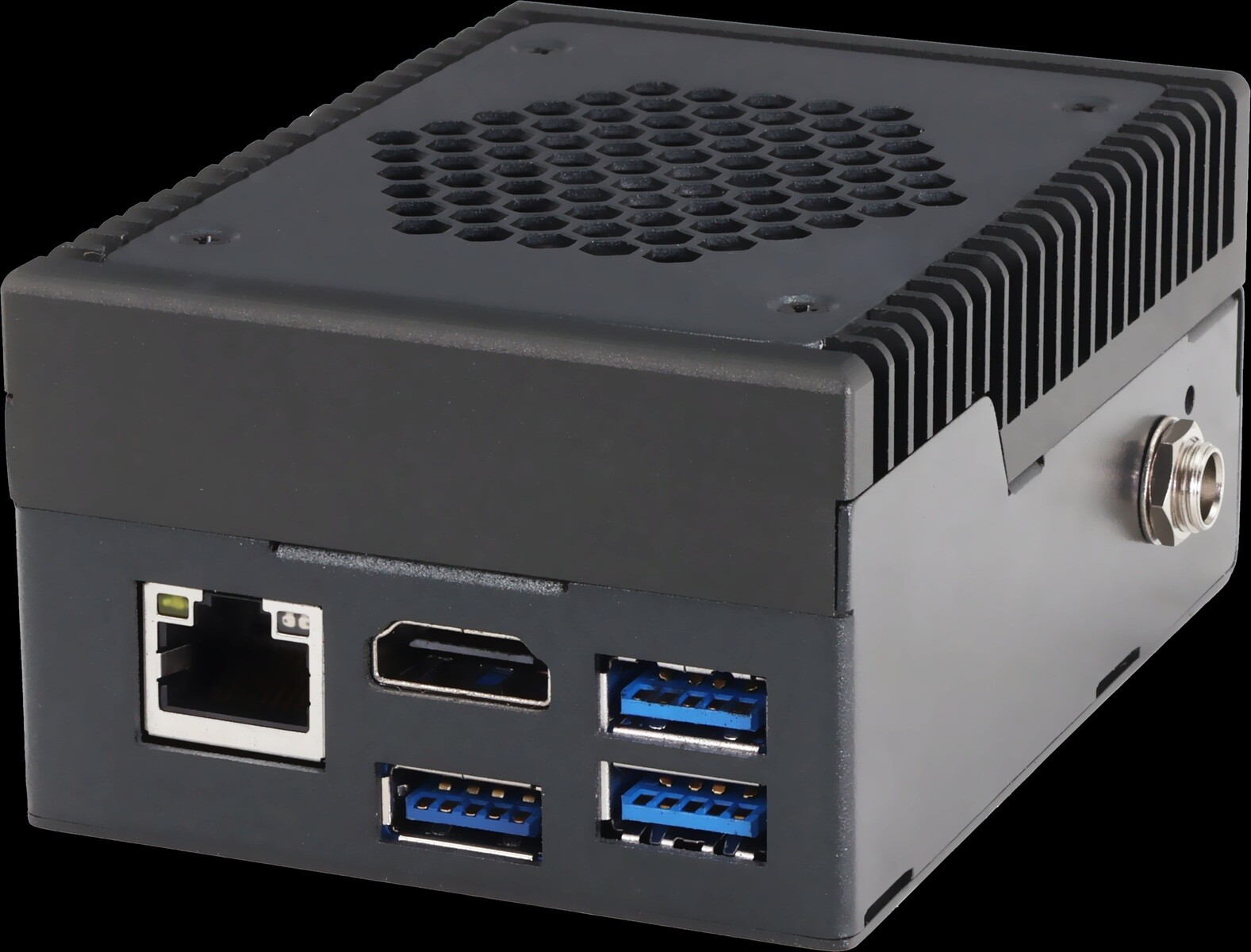
- UP WCL: Credit-card sized (101.6 mm × 73 mm), 8-bit GPIO, single 2.5GbE LAN port
- UP Nexus WCL: 101.6 mm × 101.6 mm form factor, dual 2.5GbE ports, expanded I/O with RS-232/422/485 headers and dual USB Type-C (Gen 2x2)
The two platforms serve distinct use cases while sharing the same core architecture. The UP WCL maintains the original UP board's compact form factor but adds substantial memory upgrades, making it ideal for space-constrained applications like industrial automation or IoT gateways. Meanwhile, the UP Nexus WCL expands connectivity with dual network interfaces and USB-C ports, catering to more demanding edge deployments where bandwidth and flexibility are critical.
Both platforms support Windows 11 LTSC and Ubuntu 24.04 LTS, ensuring compatibility with enterprise-grade applications while maintaining long-term stability. The shift from eMMC to UFS 3.1 storage further improves performance for AI workloads that require both capacity and speed.
Mass production is expected in late Q3 2026, positioning these platforms as the next generation of AAEON's UP brand. For enterprise buyers evaluating edge solutions, these boards represent a compelling alternative to specialized AI hardware, offering integrated performance without the cooling or power requirements of discrete GPU systems.