In the ever-evolving landscape of workplace design, the line between function and aesthetics is becoming increasingly blurred. A new concept in dual-purpose furniture takes this idea to its logical extreme—a PC desk that seamlessly integrates a live aquarium into its structure, promising not just productivity but also tranquility for users.
The workstation features a built-in desktop that houses a powerful configuration: an Intel Core i9 processor running at 3.7 GHz, paired with 64 GB of DDR5 RAM and a 2 TB NVMe SSD for storage. The system is designed to handle demanding tasks, whether it's multitasking through multiple virtual workspaces or rendering complex projects. The aquarium component, on the other hand, spans nearly half the desk’s surface, providing a serene environment for aquatic life while doubling as a display area.
For enterprise users, the appeal of such a setup is twofold. On one hand, it delivers the raw performance expected in professional settings—high-resolution monitors, ergonomic adjustments, and cable management that keeps clutter at bay. On the other, it introduces an element of biophilia, a growing trend in office design that leverages natural elements to reduce stress and boost creativity. The aquarium isn’t just decorative; it’s a dynamic ecosystem that can be customized with different species, from small schooling fish to more intricate setups with plants and coral.
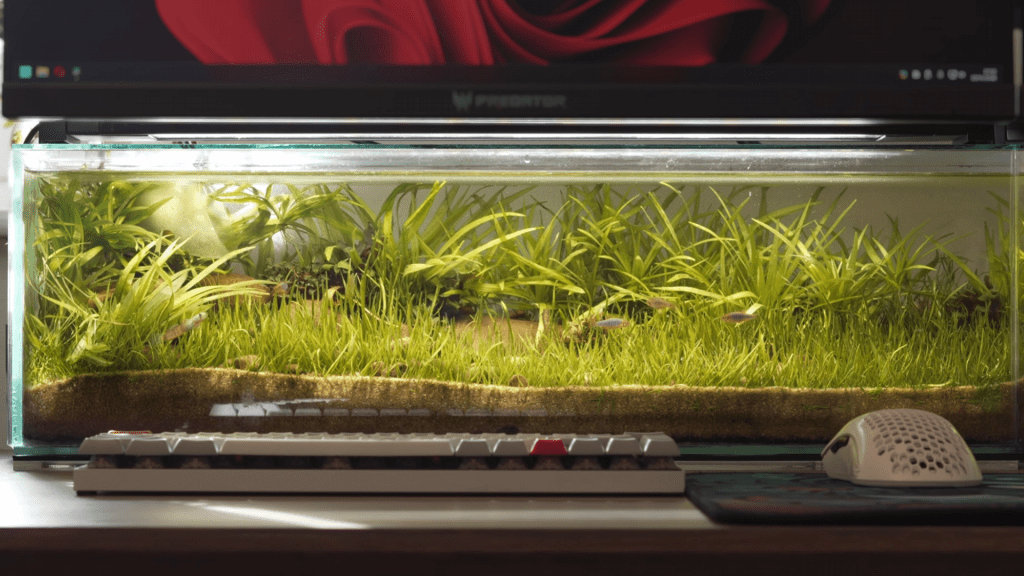
Practical considerations are also addressed thoughtfully. The desk is built on a sturdy frame that supports the weight of both the PC components and the aquarium, which holds up to 30 liters of water. The back panel is designed to conceal wiring, ensuring a clean look while maintaining accessibility for maintenance or upgrades. Additionally, the aquarium section can be tilted slightly backward to prevent any accidental spills from affecting the electronics below.
While the concept is undeniably innovative, its adoption in mainstream workplaces may hinge on factors beyond aesthetics. The initial cost—estimated at around $3,500—is significantly higher than traditional desks, though proponents argue that the long-term benefits for mental well-being and productivity could justify the investment. For businesses prioritizing employee comfort and creativity, this dual-purpose desk represents a bold step forward in redefining what a workstation can be.
The integration of technology and nature in this way challenges conventional notions of office furniture. It suggests that the future of workplace design may lie in merging the practical with the personal, creating spaces that not only facilitate work but also nourish the mind and spirit. Whether such desks become commonplace remains to be seen, but their existence signals a shift toward more holistic approaches to professional environments.