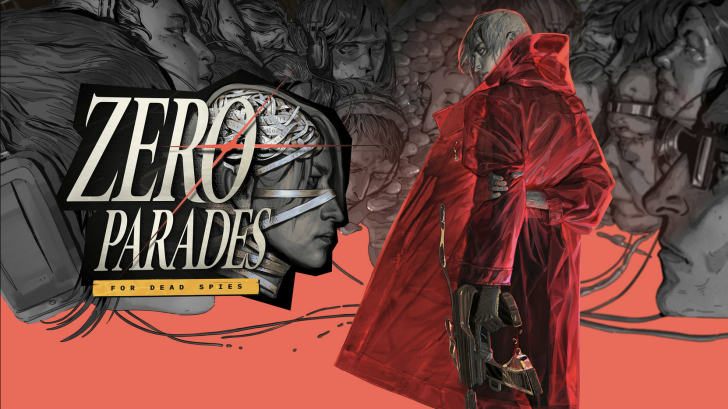
Zero Parades: For Dead Spies isn’t just another game trying to escape the shadow of Disco Elysium. It’s a deliberate attempt to redefine what a ZA/UM title can be—one that embraces failure, political paranoia, and the slow decay of a spy’s mind. After nearly six hours in the Steam Next Fest demo, it’s clear the studio hasn’t just survived its internal upheavals; it’s reinvented itself with a game that feels sharper, darker, and more immersive than its predecessor ever was.
The demo drops players into the cramped, decaying apartment of Hershel Wilk, a disgraced Superbloc operative pulled out of a five-year desk prison. The opening alone sets the tone: a distorted VHS-like feed, a muffled voice growling I once knew a spy,* and a world that feels like it’s holding its breath. Hershel’s back in Portofiro, a city of crumbling ideologies and betrayal, to pick up the pieces of a mission that went wrong—before it even began. Her ‘double,’ Psuedopod, lies half-dead in an armchair, unable to deliver his briefing. The player’s job isn’t just to uncover what happened; it’s to grapple with the weight of Hershel’s own failures.
What stands out isn’t just the narrative’s depth but how it’s delivered. The writing—dense, philosophical, and dripping with cold-war-era paranoia—feels like a direct descendant of Disco Elysium, even without direct involvement from its original core team. Dialogue choices ripple through the world, altering not just outcomes but the very atmosphere of the scene. A poorly timed joke might spike your character’s Anxiety meter, forcing a debuff that lingers like a hangover. Max it out, and you lose a skill point permanently. It’s a brutal but brilliant system that mirrors the psychological toll of espionage.
Then there are the Dramatic Encounters—a mechanic that turns tense conversations into high-stakes gambling. Roll the dice to bluff, intimidate, or charm your way through a standoff. It’s not combat; it’s the art of manipulation, and it’s exhilarating. The demo’s most gripping moments came when Hershel’s back was against the wall, her voice trembling as she tried to outwit an interrogator or a rival agent. These aren’t just dialogue trees; they’re pressure cookers.
The game’s flaws are noticeable, too. Hershel’s voice—plagued by a grating vocal fry—grates after the first playthrough. It’s not the actor’s fault; it’s a directorial choice that feels tonally inconsistent with the rest of the production. The other characters, thankfully, avoid this pitfall entirely, delivering performances that ground the world in realism.
Visually, Zero Parades leans into a gritty, semi-abstract aesthetic that feels like a cross between Disco Elysium’s surrealism and Cyberpunk 2077’s neon-noir. The art style isn’t just functional; it’s atmospheric, with textures that suggest decay and a color palette that shifts between the sterile blues of a spy’s world and the sickly yellows of paranoia.
Is it better than Disco Elysium*? That’s a comparison the demo deliberately avoids. But as a standalone experience, it’s already one of the most compelling narrative-driven games of the year—a spy thriller that doesn’t just tell a story but makes you feel the cost of every decision. If the full game delivers even half as much tension, political intrigue, and psychological depth as this demo, it won’t just be a success for ZA/UM. It’ll be a defining title for 2026.
- The game follows Hershel Wilk, a Superbloc spy pulled from a desk job to investigate a failed mission.
- Key mechanics include Dramatic Encounters (dice-based tension systems) and a Conditioning system that penalizes maxed-out emotions like Anxiety or Fatigue.
- The art style blends surrealism with cold-war aesthetics, emphasizing decay and paranoia.
- A controversial vocal delivery for the protagonist remains a divisive element, though other performances are praised.
- The demo suggests a narrative that’s as much about psychological unraveling as it is espionage.