For years, cloth mouse pads have dominated competitive gaming setups, offering a balance of speed and control. But for players who feel restricted by their fabric’s resistance, the QPAD Obsidian Glass represents a radical shift—not just in surface material, but in how precision aiming is achieved. Unlike traditional hard plastic pads that degrade over time, this 420mm square of tempered glass with a micro-textured coating delivers unmatched smoothness while resisting wear. The result? A surface that feels like gliding on air, though with a few trade-offs.
The Obsidian Glass isn’t just another hard pad. While earlier plastic alternatives suffered from accelerated slowdown as they wore down, glass retains its performance indefinitely. The matte finish, created through micro-etchings, ensures mice track accurately without sacrificing the tactile feedback that makes adjustments feel effortless. That said, the trade-off is a louder surface—one that demands attention in shared spaces.
Adapting to the glass took less time than expected. Initial sessions in Counter-Strike were marked by overshooting and awkward corrections, but within days, the pad’s consistency became second nature. The lack of friction means micro-adjustments—critical for flick shots—require almost no force. Even at medium sensitivities, stopping power isn’t an issue; the mouse stays planted thanks to the pad’s 1.5 kg weight and rubberized base.
Size matters, too. At 420mm, it’s narrower than the popular Wallhack Skypad 4 but spacious enough for most sensitivities. Players with very low settings might find the edges restrictive, though the trade-off saves desk space—a consideration for those with compact setups.
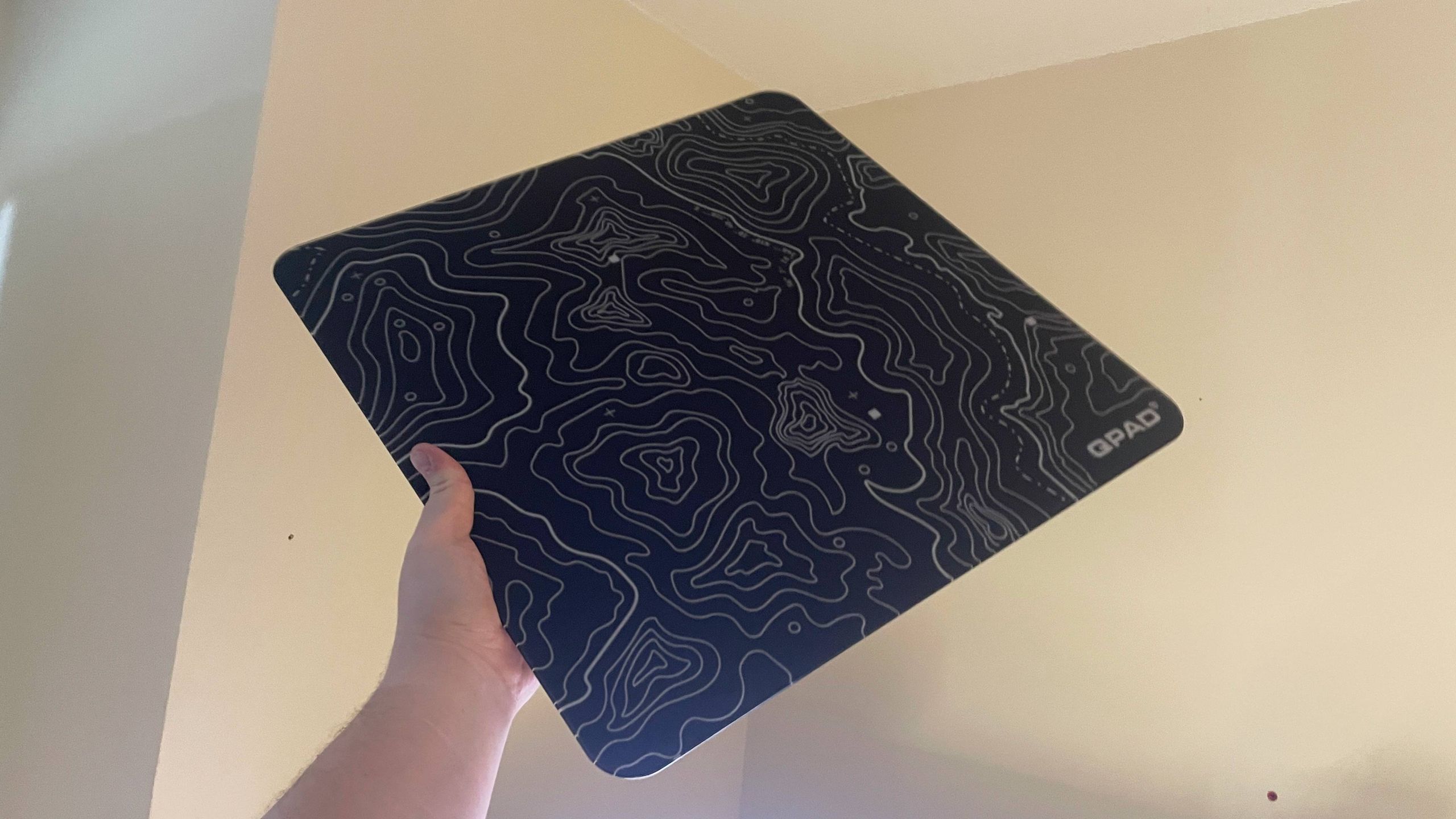
- Surface: Hard tempered glass with micro-textured coating (matte finish)
- Dimensions: 420 × 420 × 4 mm
- Weight: 1.5 kg
- Price: £100 (UK-exclusive)
- Best for: Competitive FPS players using medium-high sensitivities
- Requires: UPE or ceramic mouse feet (PTFE wears too quickly)
The biggest hurdle? The dreaded sticky forearm. In humid conditions or with sweaty arms, the glass can cause friction, disrupting smooth movement. A hoodie sleeve helps, but dedicated gaming sleeves—unpopular among most—are the gold standard. For low-sensitivity players, this is a dealbreaker; for others, a minor inconvenience.
Mouse feet are another consideration. Standard PTFE skates wear down in days; harder materials like UPE last longer but still require occasional replacement. Unlike cloth pads that slow with use, the Obsidian Glass maintains its speed indefinitely, needing only an occasional wipe to stay pristine.
Is it worth £100? For casual gamers, probably not. But for those who treat aim training like a sport, the Obsidian Glass could be the difference between a good flick and a great one. The question isn’t whether it’s better—it’s whether the trade-offs align with your priorities.