There’s a reason power strips are the unsung heroes of modern living: they turn one outlet into a lifeline for multiple gadgets. But not all devices are created equal—and some should never be plugged into a power strip at all. The consequences? Overheated cables, tripped breakers, and in the worst cases, electrical fires.
While power strips are convenient, they’re not designed to handle the same load as a dedicated wall socket. Most standard power strips max out at around 3,000 to 3,500 watts, a threshold that many household appliances routinely exceed—especially when used simultaneously. The result? Excessive heat buildup, degraded insulation, and a ticking time bomb for electrical hazards.
Here’s a breakdown of the most dangerous devices to avoid on power strips, along with the risks they pose and safer alternatives.
High-Risk Appliances: The Biggest Power Threats
Some devices draw so much power that even a single outlet can’t keep up. Plugging them into a power strip isn’t just inefficient—it’s a recipe for disaster.
- Electric cookers and stoves: These appliances can demand 5,000 to 10,000 watts when both the hob and oven are in use. A power strip’s wiring isn’t built to handle that kind of load, leading to overheating and potential fire hazards.
- Tumble dryers: With heating elements running continuously, these machines can draw 2,500 to 5,000 watts. The sustained high power draw pushes power strips beyond their safe operating limits.
- Older refrigerators and air conditioners: While they don’t always run at peak wattage, their inrush currents—the sudden surge when they power on—can temporarily exceed 3,000 watts. This spike is enough to trip a power strip’s protections or, in older models, cause long-term damage.
Everyday Devices with Hidden Dangers
Not all high-wattage devices are obvious. Some seem harmless until they’re combined with other appliances on a single power strip.
- Kitchen staples: Toasters, air fryers, and electric kettles often range from 1,500 to 3,000 watts. Individually, they might work fine—but plug in a coffee maker, blender, and microwave at the same time, and you’ve exceeded the power strip’s capacity.
- Power tools and grooming appliances: Drills, circular saws, and hairdryers generate high current spikes when starting up. These brief but intense bursts can overload a power strip, especially in damp environments like bathrooms where outlets are already risky.
- Microwaves and sandwich makers: While microwaves typically draw 1,000 to 1,500 watts, running them alongside other high-draw devices (like a toaster oven) can push a power strip to its limit.
The Domino Effect: Daisy Chaining and Overloading
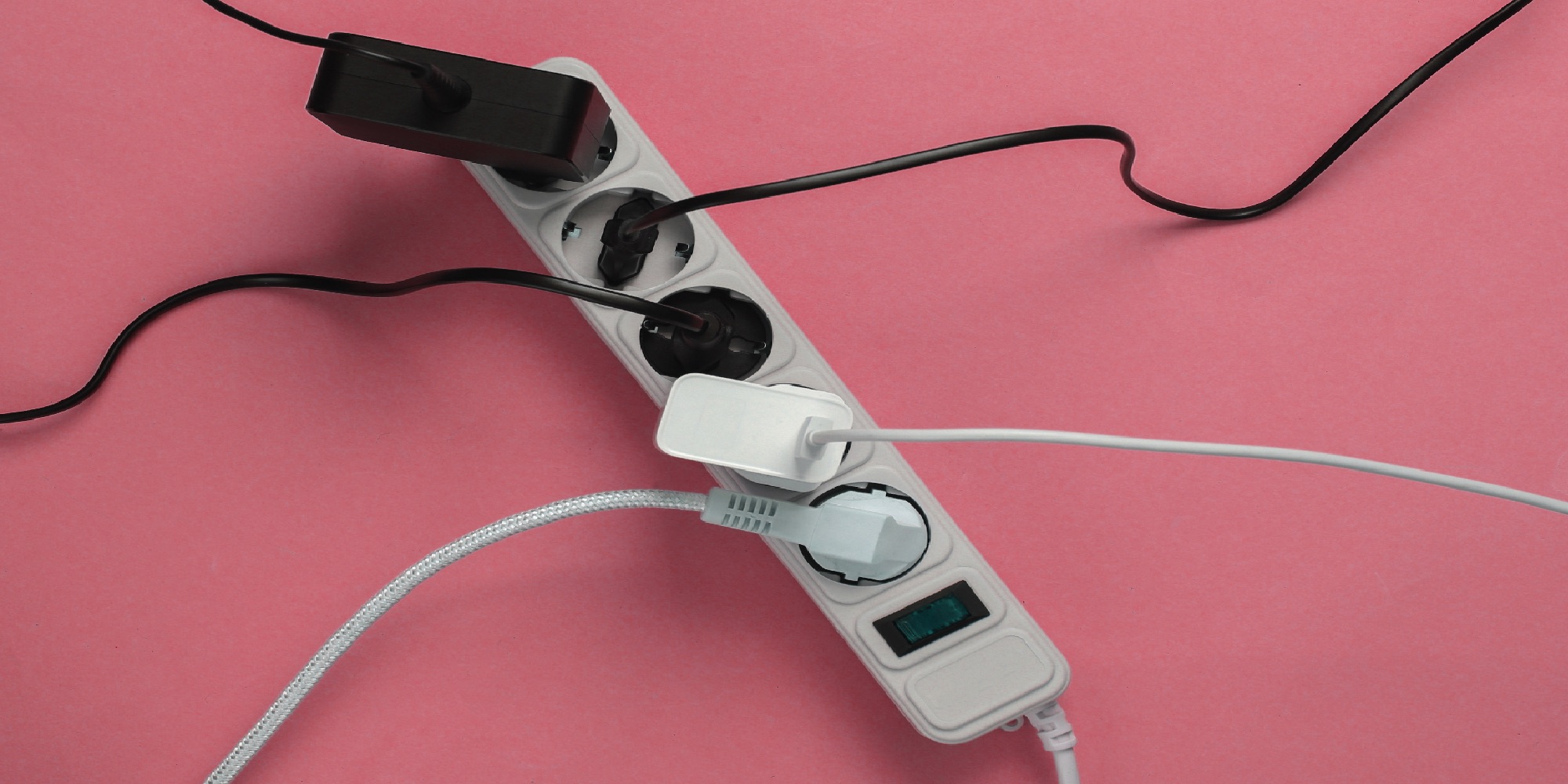
One of the most dangerous habits is daisy chaining—connecting multiple power strips together. This multiplies the risk of overload because each additional strip adds resistance and heat. A single power strip might handle a toaster, but three strips in a chain could fail when a space heater is added.
Even if your power strip hasn’t sparked or smoked yet, it may still be operating at dangerous temperatures. Over time, overheated wiring can degrade, leading to short circuits or insulation failure. The solution? Use extension cords for temporary setups and avoid stacking power strips.
How to Use Power Strips Safely
If you rely on power strips, taking a few precautions can prevent hazards
- Check the wattage rating on the power strip (usually printed near the plug or on the underside). Never exceed this limit.
- Avoid placing power strips in damp areas like bathrooms or near sinks. Moisture increases the risk of electrical shorts.
- Ensure power strips have proper ventilation. Don’t wedge them behind furniture or cover them with curtains—they need airflow to dissipate heat.
- Look for certifications like UL, CSA, or ETL. These marks indicate the product meets safety standards for power handling.
- Unplug power strips when not in use, especially if they’re connected to high-draw devices like laptops or monitors overnight.
The next time you reach for a power strip, ask yourself: Is this device safe for it? High-wattage appliances belong on dedicated outlets, not shared circuits. A little caution now can prevent a costly—and dangerous—electrical incident later.