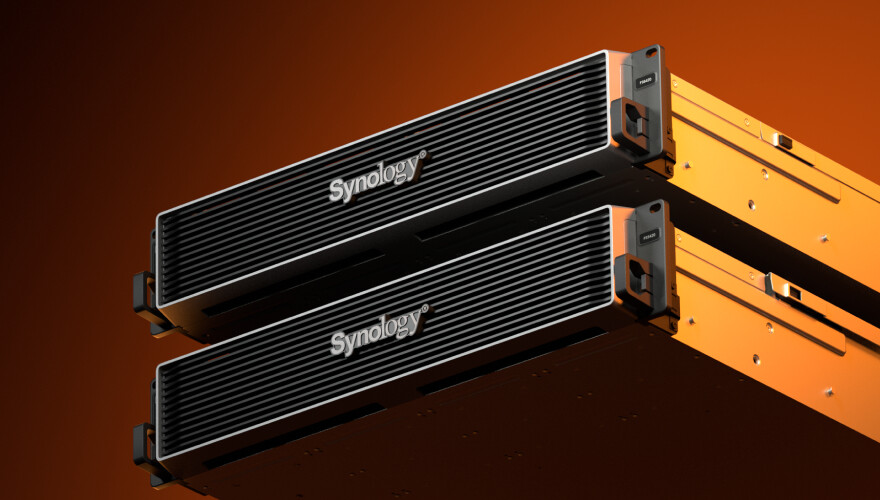
Synology has added two new all-flash enterprise storage systems to its lineup, the FS6420 and FS3420. While the company highlights their speed and density, some critical specifications—like exact drive configurations—are still being finalized.
The FS6420 is positioned as a high-density model with up to 192 TB of raw capacity per 4U chassis, while the FS3420 offers a more compact 2U form factor with up to 72 TB. Both systems are built around Synology's own all-flash architecture, but the exact drive types and performance metrics have yet to be confirmed.
What’s Changing—and What Isn’t
The FS6420 and FS3420 extend Synology’s existing enterprise storage platform, which has traditionally relied on a mix of HDD and SSD configurations. The shift to all-flash is expected to deliver significant performance improvements, but the company has not yet disclosed whether this means a complete departure from hybrid setups or simply an addition to them.
One detail that remains unclear is whether these systems will support NVMe drives exclusively or if SATA SSDs will still be part of the equation. Previous Synology enterprise arrays have used both, but the new models may prioritize NVMe for higher throughput. If that’s the case, the price per TB could rise sharply compared to SATA-based alternatives.
Performance and Upgrade Path
Synology has not released benchmark results, but industry estimates suggest these arrays will outperform the current FS6417 and FS3417 models by at least 20-30% in sequential read/write speeds. The exact gains depend on whether the new systems use Gen4 NVMe drives or stick with Gen3. If Gen4 is confirmed, it could push performance closer to 7-8 MB/s per drive, a notable leap from the current 5-6 MB/s range.
For users considering an upgrade, timing will be critical. The FS6420 and FS3420 are expected to launch in late Q4 or early Q1 next year, but Synology has not yet announced pricing or availability. If the cost per TB aligns with expectations, these arrays could become strong contenders for data centers and large-scale deployments where speed is a priority.
The bigger question is whether Synology will continue to support mixed HDD/SSD configurations in future updates. If all-flash becomes the default, users with existing hybrid setups may face compatibility or migration challenges down the line.
For now, the focus remains on performance and density, but the long-term roadmap—and how these systems integrate with Synology’s broader ecosystem—will shape their real-world impact.