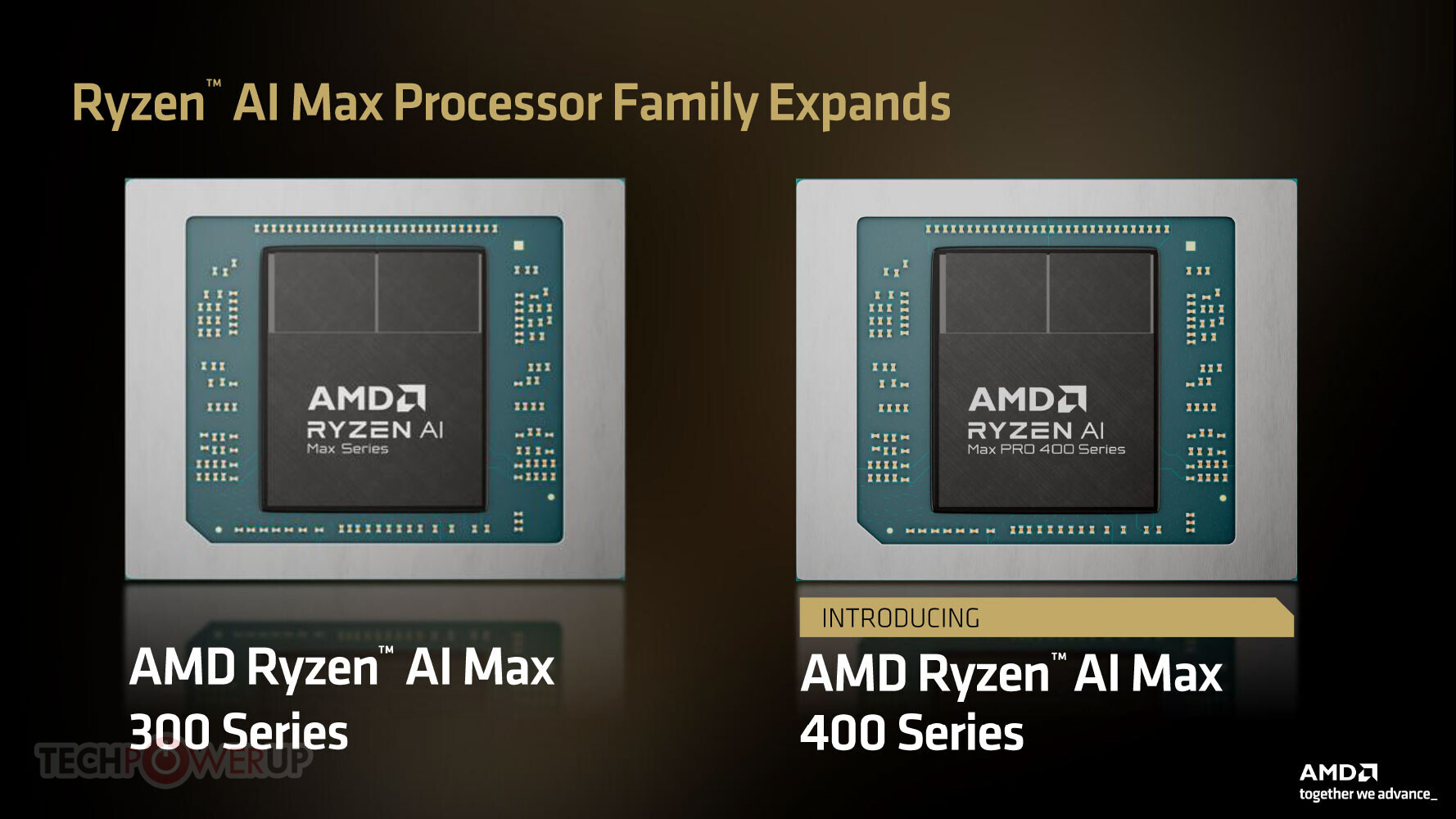
AMD’s Ryzen AI MAX 400 processor is breaking new ground in local AI processing by supporting up to 192GB of DDR5 memory—a capability that blurs the line between desktop and server-grade performance. The integration of a high-bandwidth NPU alongside this memory capacity enables desktops to run large language models with over 300 billion parameters, a feat that until recently was reserved for cloud infrastructure or specialized hardware. However, the practical implications of this leap remain uncertain.
Memory has always been the limiting factor in AI workloads, often overshadowed by advances in compute efficiency. The Ryzen AI MAX 400 addresses this head-on with a design that pairs an 8 TOPS NPU with DDR5 support up to 192GB. This configuration is optimized for low-precision acceleration, allowing for sustained performance without the thermal or power constraints seen in traditional high-end setups. The processor’s 120W TDP suggests it can handle prolonged AI tasks without requiring aggressive cooling, a notable departure from past attempts at pushing desktop hardware into server-like territory.
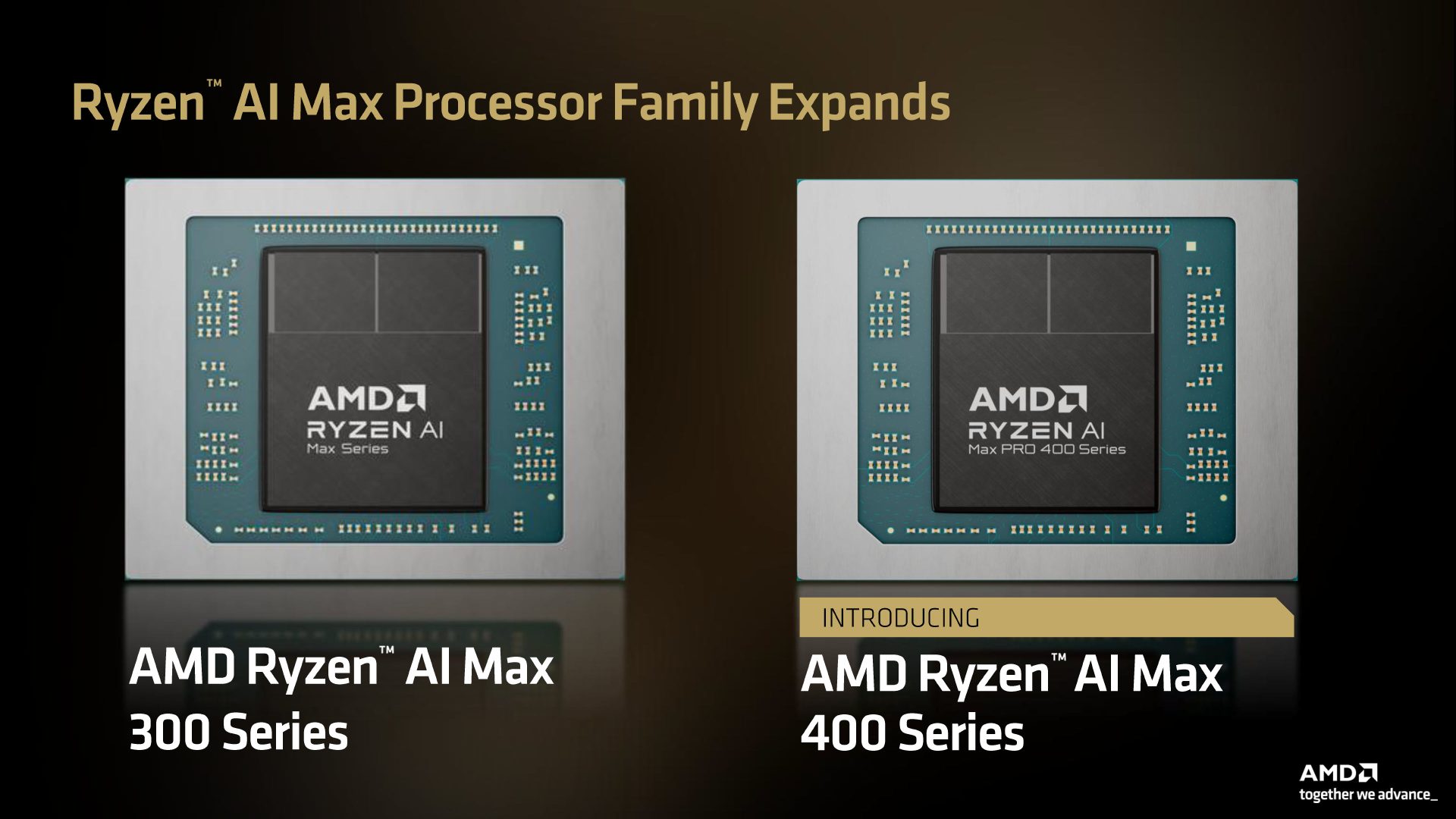
- Memory: Up to 192GB DDR5 (configurable as 2x 64GB or 4x 32GB).
- NPU Performance: 8 TOPS with low-precision support for AI acceleration.
- Power Efficiency: 120W TDP, designed to minimize thermal throttling in sustained workloads.
- Package: PFM4, enabling high-bandwidth communication between CPU and memory.
The 192GB specification is a major milestone, but it comes with practical hurdles. High-capacity DDR5 modules are expensive, and not all motherboards or chipsets are equipped to handle such large single-channel configurations. While the NPU can process heavy AI tasks efficiently, the CPU cores remain general-purpose, meaning that latency-sensitive applications may still require a balanced system for optimal performance. This positions the Ryzen AI MAX 400 as more of an experimental platform than a mainstream solution—ideal for researchers or power users with specialized needs rather than casual AI enthusiasts.
The processor’s true potential will be measured by software adoption. Local AI inference is still in its infancy, and frameworks optimized for high-memory scenarios are only beginning to emerge. If developers can harness this capacity without sacrificing usability, the Ryzen AI MAX 400 could redefine what desktops can achieve. However, until then, it remains a high-stakes experiment—one that promises to push boundaries but leaves unanswered whether those boundaries will translate into tangible benefits for everyday users.