Qualcomm is poised to adopt Samsung’s Heat Path Block (HPB) technology in its next-generation Snapdragon processor, according to leaked schematics. The integration—first spotted in packaging diagrams for the speculative Snapdragon 8 Elite Gen 6 Pro—mirrors a design already implemented in Samsung’s upcoming Exynos 2600, a 2 nm chipset expected to set new performance benchmarks.
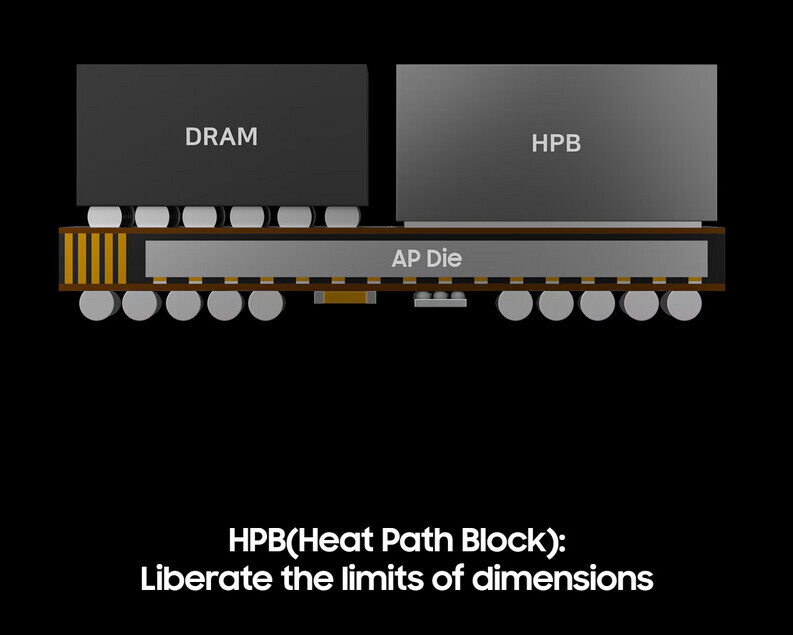
This development marks a significant pivot for Qualcomm, which has historically relied on vapor chamber cooling to mitigate thermal throttling in its flagship chips. The HPB technology, pioneered by Samsung Foundry, repositions the DRAM stack to the side of the die rather than above it, creating a direct heat dissipation path without obstruction. Early reports indicated Apple and Qualcomm as the most likely adopters of HPB outside Samsung’s own lineup.
Why This Matters
The shift could address a long-standing challenge for high-performance mobile processors: heat. Even with advanced cooling solutions, Qualcomm’s latest chips have struggled to sustain peak performance under sustained workloads. By borrowing Samsung’s approach—already validated in the Exynos 2700 engineering samples—the Snapdragon 8 Elite Gen 6 Pro may achieve more efficient thermal management, potentially improving battery life and sustained performance in demanding applications.
Industry Implications
- Thermal Efficiency: HPB’s design eliminates the thermal bottleneck caused by DRAM layers, allowing heat to escape more freely. This could be particularly critical for AI-driven workloads and extended gaming sessions.
- Collaboration Over Competition: The adoption of Samsung’s proprietary technology signals a rare instance of cross-brand cooperation in an industry often defined by rivalry. It also underscores the growing importance of foundry-level innovations in semiconductor design.
- Performance vs. Power Trade-offs: If successful, this integration could reduce the need for bulky cooling solutions in premium devices, aligning with trends toward thinner, lighter smartphones without sacrificing performance.
While Qualcomm has yet to confirm the schematics’ accuracy, the move aligns with broader industry trends. Earlier this year, leaks suggested Samsung’s HPB technology was being eyed by multiple Android chip manufacturers, including MediaTek and others. The Exynos 2600, slated for mass production on Samsung’s 2 nm GAA node, will serve as a reference point for this thermal architecture.
The potential adoption of HPB by Qualcomm also comes as the company faces pressure to close the performance gap with competitors like Google’s Tensor G5, which has shown impressive benchmark results despite trailing in raw single-core performance. For Qualcomm, this could be a strategic play to reclaim leadership in both efficiency and thermal management.
A Glimpse at the Future
The leaked diagrams suggest Qualcomm’s next-gen chipset will retain the SM8975 designation, a nod to its evolutionary lineage while incorporating Samsung’s thermal innovations. If the integration holds, it could set a new standard for mobile processors—one where thermal constraints no longer dictate performance limits.
For now, the focus remains on whether Qualcomm can translate HPB’s benefits into tangible improvements for consumers. With the Snapdragon 8 Elite Gen 6 Pro expected to debut later this year, the answer may not be far off.