NVIDIA has taken a decisive step toward reshaping the data center landscape with its Vera CPU architecture, marking a departure from conventional x86 designs. The platform, codenamed Olympus, is engineered specifically for AI workloads, leveraging custom Armv9.2 cores to deliver performance gains that could redefine how cloud infrastructure handles compute-intensive tasks.
The Vera architecture introduces 88 custom cores capable of supporting up to 176 threads through physical resource partitioning. This design includes native FP8 processing, which allows certain AI operations to execute directly on the CPU with improved efficiency. Additionally, a second-generation Scalable Coherency Fabric provides 3.4 TB/s of bisection bandwidth, addressing latency issues that are common in chiplet-based systems.
Market projections suggest NVIDIA could generate up to $20 billion in annual sales from the Vera CPU, positioning it as a major player in the data center market. This potential revenue would come from a Total Addressable Market (TAM) of $200 billion, placing NVIDIA in direct competition with Intel and AMD. For context, Intel's data center group reported $5.1 billion in Q1 2026 revenue, while AMD's data center segment brought in $5.8 billion—though these figures also include GPU and networking sales.
The memory subsystem of the Vera platform is designed to support up to 1.5 TB of LPDDR5X memory in the SOCAMM2 format with 1.2 TB/s bandwidth. This high-capacity design ensures seamless integration into hyperscale deployments, where memory bandwidth and capacity are critical for AI training and inference tasks.
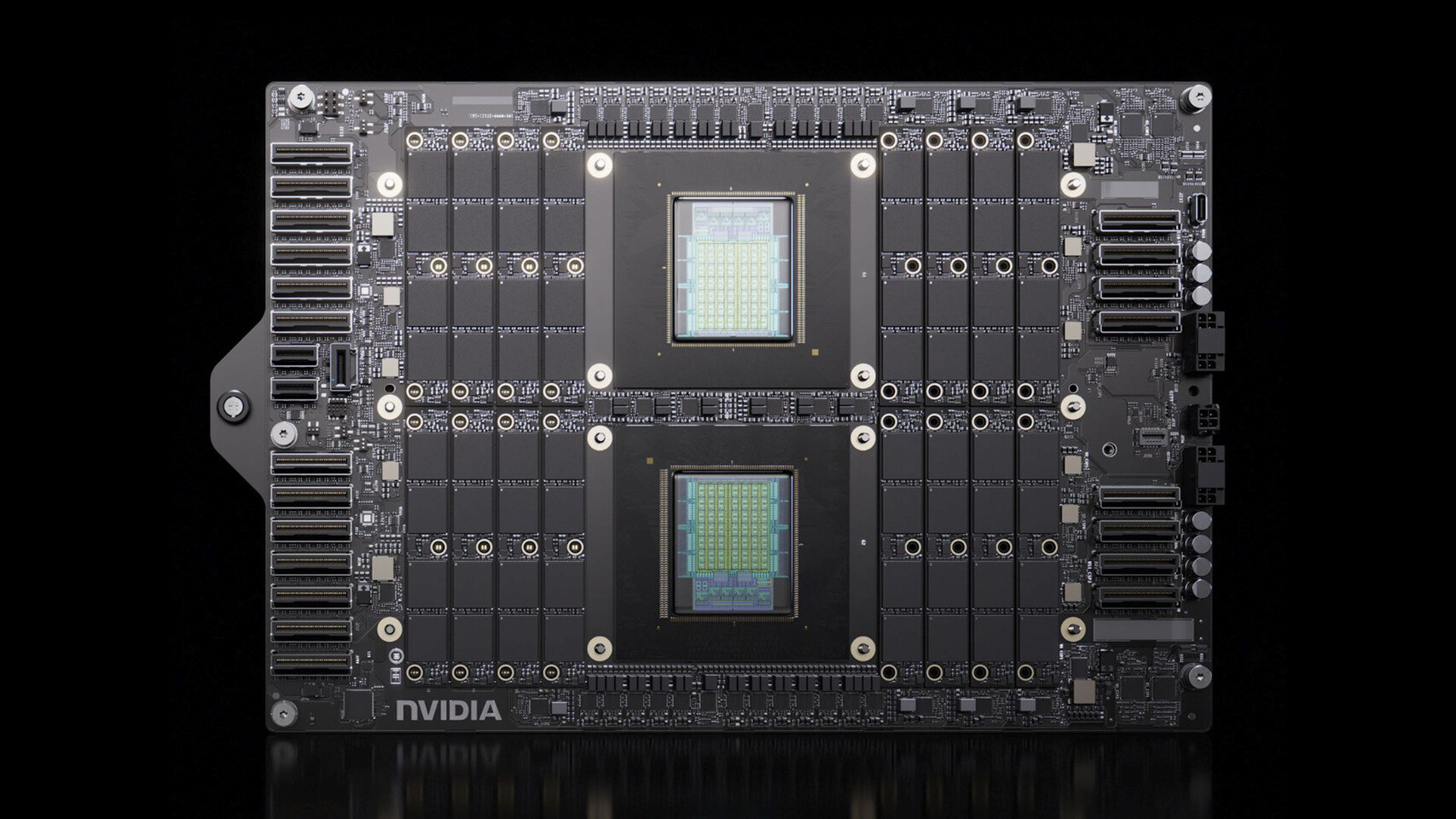
NVIDIA's approach to partnerships with major hyperscalers is a key differentiator in its strategy. By supplying entire CPU racks tailored to the specific needs of cloud providers, NVIDIA is embedding itself deeply within data center ecosystems. This vertical integration contrasts sharply with traditional CPU vendors, who often cater to broader market segments rather than focusing on large-scale deployments.
For developers and system architects, the Vera platform represents more than a technical upgrade—it is a foundational shift that could accelerate AI workloads without relying solely on GPUs. The native FP8 support and cohesive fabric architecture suggest a future where CPUs handle more complex tasks, potentially reducing the need for GPU offloading in certain scenarios.
The implications for NVIDIA are substantial. If Vera achieves its projected sales, it would not only solidify the company's position in data centers but also challenge the long-standing dominance of Intel and AMD. For users, this could mean a shift toward more efficient, AI-optimized compute solutions that reshape cloud infrastructure design.
While Vera is still in its early deployment phase, its architecture sets a new benchmark for CPU performance in AI-driven environments. The focus on memory scalability, fabric bandwidth, and specialized cores positions NVIDIA to lead in next-generation data center workloads—provided it can maintain momentum against established competitors. The confirmed specifications underscore the platform's potential, including support for up to 16 GB of memory per core, a 2 nm process node, and integration with LPDDR5X technology.