NVIDIA has quietly advanced its DLSS 4.5 feature set with the introduction of a second-generation transformer-based ray reconstruction system, completing an initiative that began three years ago.
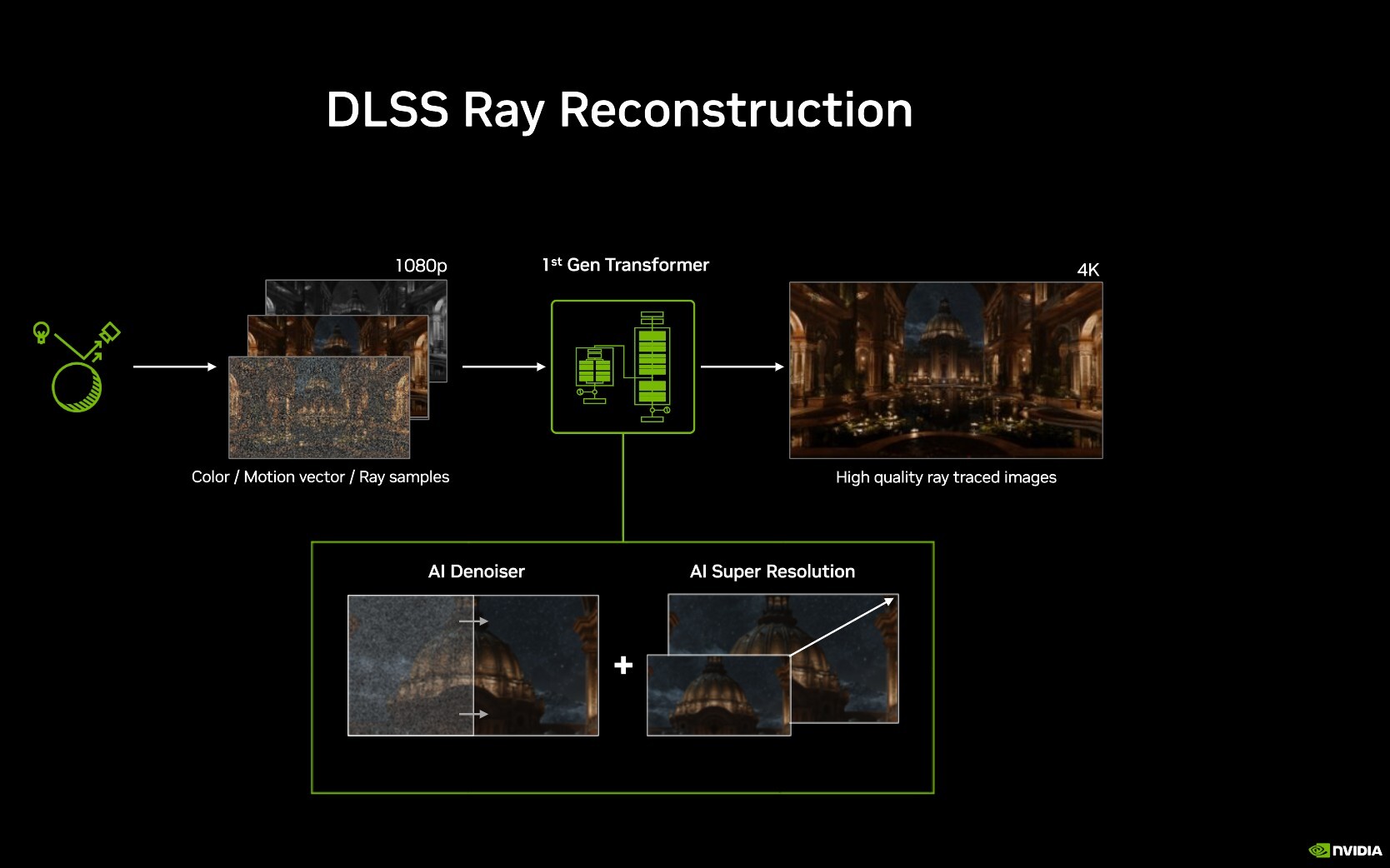
The new component, now part of DLSS 4.5, replaces older convolutional neural network (CNN) models with a more sophisticated transformer architecture. This update is designed to improve lighting accuracy and reduce artifacts in ray-traced shadows and reflections—a persistent challenge for real-time rendering since the technology's debut.
Unlike previous iterations, which relied on smaller datasets and less efficient denoising techniques, DLSS 4.5's ray reconstruction leverages a larger training dataset and a more streamlined AI denoiser. The result is said to be sharper, more accurate lighting without sacrificing performance—a critical balance for enterprise applications where rendering quality directly impacts workflow efficiency.
What remains unclear is how this update will integrate with NVIDIA's broader roadmap, particularly in light of recent speculation about the RTX 60-series and potential disruptions from AI-driven GPUs. While DLSS 4.5 marks a clear step forward, its long-term impact on enterprise workflows hinges on whether NVIDIA can sustain this level of innovation without introducing new tradeoffs.
For now, the update is another piece in NVIDIA's strategy to future-proof real-time rendering for industries that demand both precision and performance. Whether it delivers on those promises remains to be seen, but the move is undeniably a calculated one.