The NVIDIA RTX 5090 represents a notable leap forward in GPU technology, particularly in AI workloads. With its GDDR7 memory and refined architecture, the card is designed to handle complex tasks more efficiently than previous generations. This shift is part of a broader trend where GPUs are increasingly optimized for AI applications, moving beyond traditional gaming performance.
One of the most striking features of the RTX 5090 is its ability to reduce VRAM usage significantly in certain scenarios. For example, NVIDIA's Neural Texture Compression technology can cut VRAM consumption from 6.5 GB to just 970 MB, a reduction that could be game-changing for developers working with high-resolution textures or large datasets. This efficiency is not just about raw performance; it also translates to lower operational costs, which is a critical factor for businesses and institutions deploying AI solutions at scale.
When compared to other GPUs in its class, the RTX 5090 stands out due to its specialized hardware for AI tasks. While alternatives like the RTX 40-series also offer strong performance, the 5090's architecture is more finely tuned for emerging AI workloads. This includes support for advanced features such as voice-controlled actions through integrations with platforms like Stream Deck, which allows users to trigger complex workflows with simple voice commands.
For developers, the RTX 5090 introduces new possibilities in how AI agents interact with physical hardware. The integration of Model Context Protocol (MCP) support means that AI tools can now execute real-world actions beyond just screen-based interactions. This is a significant step forward, as it moves AI from being confined to chat windows or text fields into a more tangible, action-oriented space. The user-centric permission model ensures that only predefined actions are accessible, addressing one of the biggest challenges in deploying AI agents—balancing functionality with security.
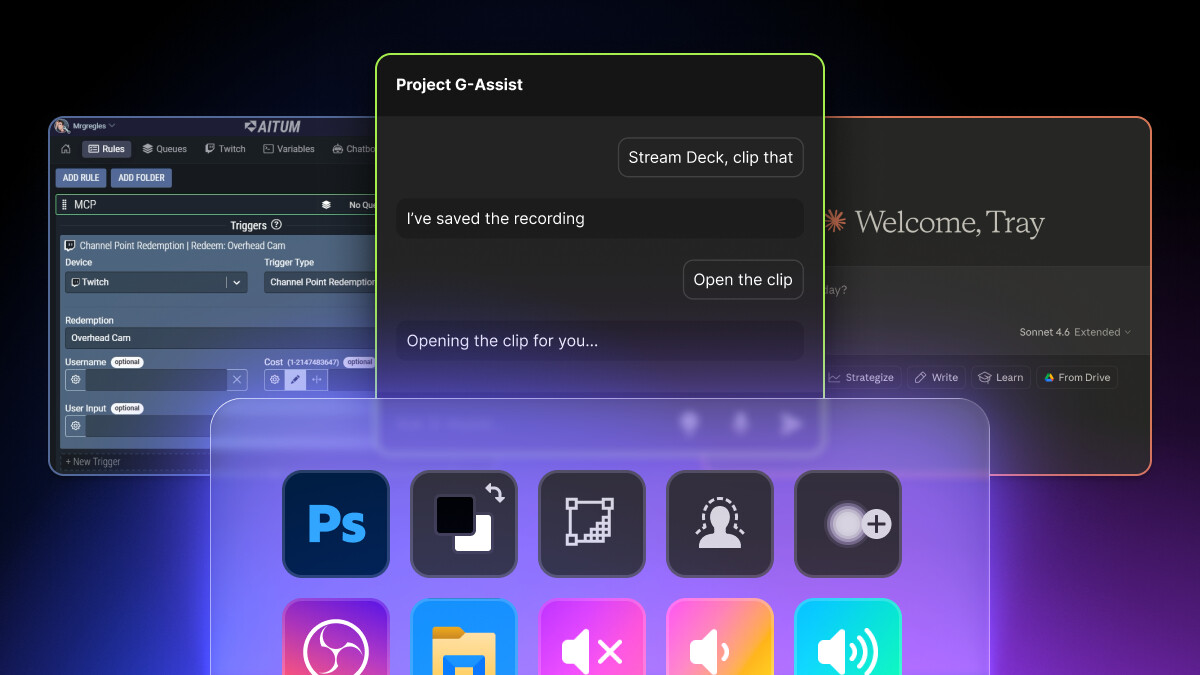
The practical implications for developers are substantial. For instance, a developer working on a streaming application could use the RTX 5090 to automate tasks like clipping segments from a live stream or adjusting lighting effects based on voice commands. This level of automation not only saves time but also reduces the cognitive load on users, making complex workflows more intuitive and efficient.
- Key Specs:
- GPU: NVIDIA RTX 5090
- Memory: GDDR7, 16 GB
- VRAM Reduction: Up to 970 MB with Neural Texture Compression
- AI Acceleration: Optimized for on-device AI tasks
- Connectivity: PCIe 5.0 support
The RTX 5090 is not just about raw power; it's also about redefining how GPUs interact with AI agents. The integration with NVIDIA Project G-Assist, an on-device AI assistant, allows users to manage their system through voice commands, extending the functionality of Stream Deck beyond traditional use cases. This synergy between hardware and AI software creates a seamless experience where actions are triggered not just by pressing buttons but also by natural language input.
For businesses and developers, the operational cost savings are a key consideration. The RTX 5090's efficiency in VRAM usage means that systems can handle more complex tasks without proportionally increasing hardware costs. This is particularly relevant for AI workloads, where memory requirements can quickly become a bottleneck. Additionally, the card's optimized architecture ensures that it remains competitive in performance benchmarks, making it a strong contender for those looking to future-proof their setups.
As the market continues to evolve, the RTX 5090 sets a new benchmark for what GPUs can achieve in AI-driven environments. Its focus on both performance and efficiency positions it as a critical tool for developers and enterprises alike. The next steps will involve seeing how widely this technology is adopted and whether it sparks further innovations in GPU-AI integration.