The push for efficiency in AI video generation has taken a significant leap forward. NVIDIA's latest optimizations for ComfyUI introduce a streamlined interface that simplifies complex workflows while leveraging advanced data formats to cut VRAM demands by up to 60%. These changes position the platform as a more accessible yet powerful tool for creators, though real-world performance will ultimately depend on hardware capabilities and industry adoption.
Simplifying Creation Without Sacrificing Power
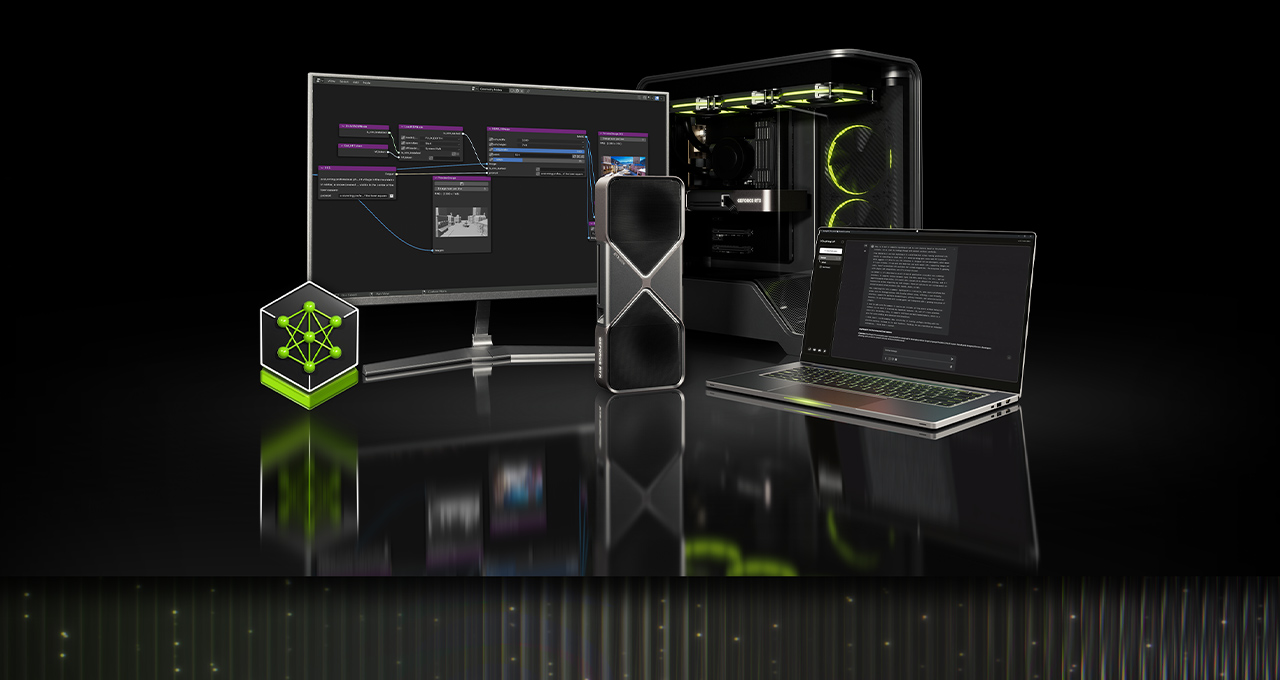
The core of NVIDIA's approach is a shift away from traditional node-based workflows. The new App View in ComfyUI replaces the intricate graph system with an intuitive panel-based interface, allowing users to generate AI video content more efficiently without losing flexibility. Advanced users can still access the original Node View when needed.
- App View: A panel-driven alternative to node graphs, designed for faster iteration and reduced cognitive load.
- NVFP4 & FP8 Formats: Native support for NVIDIA's optimized data representations, delivering up to 2.5x speed improvements while reducing VRAM usage by 60% on RTX GPUs.
- RTX Video Super Resolution: A real-time upscaler integrated directly into ComfyUI workflows, transforming 10-second clips from minutes to seconds at 4K resolution.
The performance gains are substantial. NVFP4, when paired with RTX 50 Series GPUs, can reduce memory consumption by 60% while maintaining speed. FP8 offers a 1.7x speedup with 40% less VRAM usage. These formats were previously demonstrated in models like Lightricks' LTX-2.3 and Black Forest Labs' FLUX.2 Klein, now fully supported within ComfyUI.
Challenges on the Horizon
Despite the advancements, significant hurdles remain. The optimizations are tightly coupled with RTX GPUs featuring Tensor Cores, which may limit their effectiveness for users without compatible hardware. While a Python package provides programmatic access to upscaling technology, widespread integration will require broader third-party support and community adoption.
A Broader Industry Movement
NVIDIA's focus on efficiency reflects a growing trend in AI development. The industry is increasingly prioritizing memory optimization without compromising performance, but the transition may not be seamless for all users. The question remains: will these formats become standard, or will they remain niche tools for RTX owners?