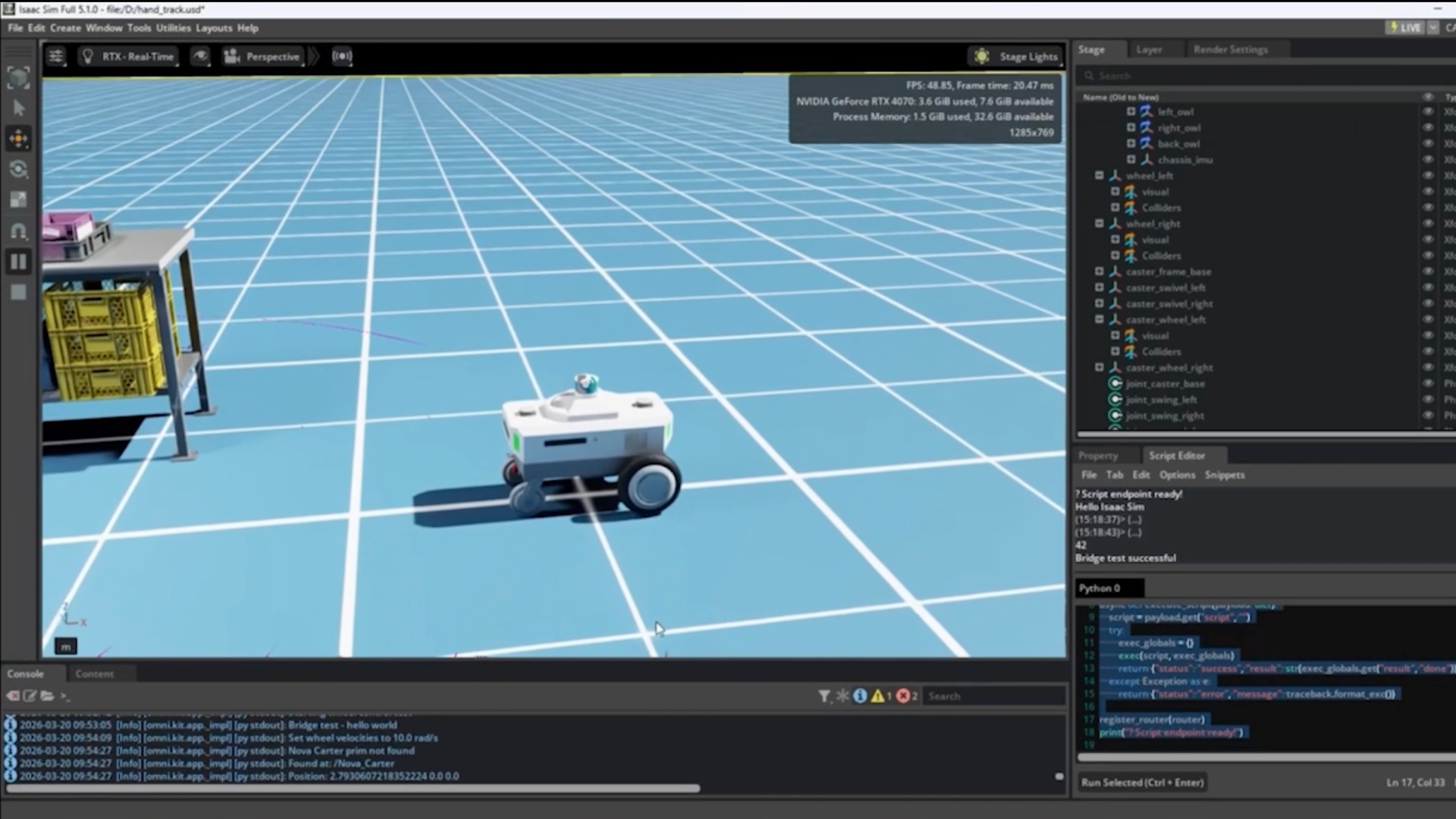
NVIDIA has announced major advancements in AI-driven robotics, autonomous systems, and agent training, setting new benchmarks for efficiency and performance. The latest research focuses on enhancing robotic manipulation, improving autonomous driving safety, and scaling agent training—key areas that could redefine how AI interacts with the physical world.
The breakthroughs span three core domains: advanced grasping techniques for robots, smarter decision-making in autonomous vehicles, and improved methods for training large-scale AI agents. These developments aim to address longstanding challenges in robotics and autonomous systems, potentially accelerating adoption in industrial and consumer applications.
Key Developments in Robotics and Autonomous Systems
One of the most notable advancements is in robotic grasping, where NVIDIA's research introduces techniques that enable robots to handle a wider variety of objects with greater precision. This includes adapting to tools or environments they have not encountered before, which could significantly improve efficiency in manufacturing and logistics.
Simultaneously, progress in autonomous driving focuses on improving the reasoning capabilities of self-driving systems. The goal is to enhance their ability to navigate complex scenarios safely, reducing reliance on pre-mapped data and improving real-time decision-making.

Scaling Agent Training for AI Efficiency
The third major area of advancement involves scaling agent training, which could lead to more efficient and capable AI models. This research aims to optimize the training process, making it feasible to deploy larger, more complex agents in practical applications without proportional increases in computational cost.
While the details are still emerging, early results suggest these advancements could have a substantial impact on industries relying on automation and AI-driven systems. The focus now shifts to refining these techniques for real-world deployment, with an emphasis on balancing performance gains against resource constraints.
The most immediate implication for IT teams is the potential to integrate more advanced AI capabilities into existing workflows, but adoption will depend on how quickly these research breakthroughs transition from labs to production environments. The next phase will likely involve testing scalability and addressing any limitations in hardware or software infrastructure.