NASA’s flight simulator systems, which demand millisecond-level precision in visual fidelity and responsiveness, are on the cusp of adopting CapFrameX—a benchmarking utility originally designed for gaming workloads—as part of its performance validation pipeline. The agency has entered the final stages of government software approval, a process that underscores the tool’s growing credibility beyond traditional benchmarks.
CapFrameX, built atop Intel’s open-source PresentMon framework, distinguishes itself with granular frame-rate analysis, real-time latency tracking, and extensive customization for hardware diagnostics. While widely used by enthusiasts and developers to stress-test GPUs and APIs, its deployment in NASA’s simulators signals a shift toward leveraging consumer-grade tools for mission-critical applications where stability and repeatability are non-negotiable.
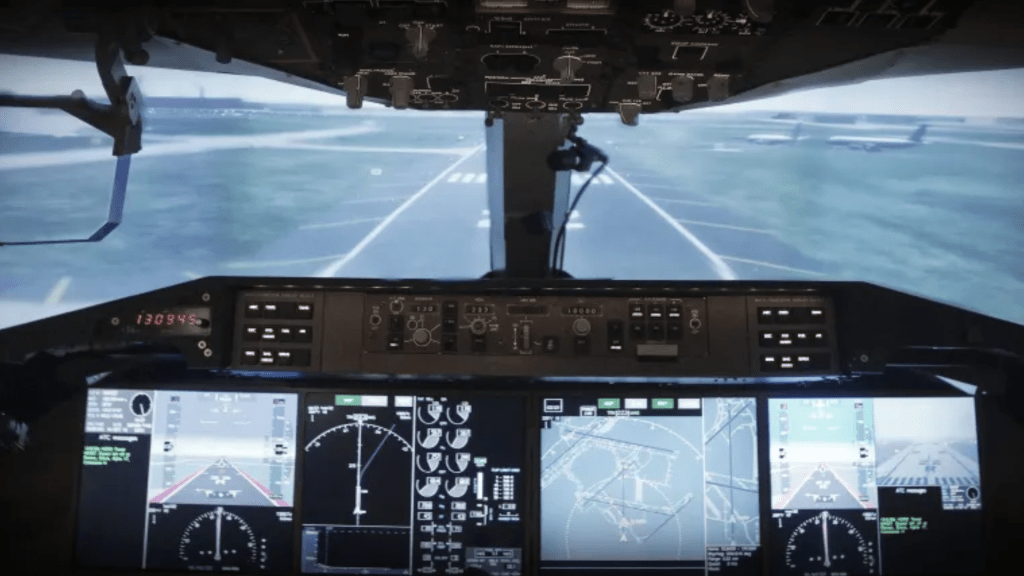
For administrators managing NASA’s simulator clusters—many of which replicate full-motion cockpits with six-degrees-of-freedom dynamics—the integration could streamline performance audits. Current workflows rely on a mix of proprietary and commercial software, but CapFrameX’s ability to log frame drops, rendering bottlenecks, and API-level inefficiencies in real time may offer a more transparent alternative. The tool’s lightweight footprint also reduces overhead compared to traditional profiling suites, a critical factor in environments where every millisecond counts.
Beyond the technical merits, the adoption reflects a broader trend: the blurring of lines between consumer and enterprise-grade performance monitoring. Tools like CapFrameX, originally niche, are now being scrutinized for roles in sectors where reliability is paramount. For developers in the open-source community, the validation from an organization like NASA could accelerate refinements—particularly in areas like multi-GPU synchronization and DirectX/Vulkan compliance—where aerospace-grade workloads push hardware to its limits.
What remains unclear is whether NASA will extend CapFrameX’s use to other divisions, such as its Mars rover simulations or exoplanet visualization projects. Given the tool’s focus on frame-rate consistency, its immediate value lies in ensuring that pilot trainees—who log thousands of simulated hours before ever touching a real aircraft—experience a stable, latency-free environment. The stakes are higher than in gaming: a stutter in a simulator could translate to a misjudged maneuver in orbit.
For IT teams responsible for maintaining these systems, the transition may require recalibrating baseline metrics. CapFrameX’s output, which includes per-frame latency histograms and GPU utilization heatmaps, could redefine what constitutes ‘acceptable’ performance in a NASA context. Early adopters in the agency’s simulator labs will likely serve as test beds for broader implementation, with an eye toward standardizing the tool across training facilities.
The move also raises questions about the future of open-source benchmarking. If CapFrameX’s precision meets NASA’s rigorous validation standards, it could pave the way for similar tools to enter other high-assurance domains—from defense to autonomous systems—where traditional enterprise solutions fall short. For now, the focus remains on ensuring the tool’s compatibility with NASA’s existing hardware stack, including high-end workstations and specialized rendering pipelines.
One detail stands out: the approval process itself. Government software adoption is rarely swift, and the fact that NASA has reached this stage suggests CapFrameX’s developers have addressed concerns around reproducibility, audit trails, and hardware agnosticism. The tool’s ability to generate exportable logs—critical for compliance and post-mortem analysis—may have been a deciding factor.
As for the broader implications, this adoption could serve as a case study for how open-source projects, often dismissed as hobbyist tools, can evolve into mission-critical infrastructure. For CapFrameX’s team, the endorsement is a rare validation in a field where benchmarks are typically measured by bragging rights rather than life-or-death reliability.
What’s next? If the approval clears, NASA’s simulator engineers will likely begin phased rollouts, starting with the most demanding training rigs. The tool’s success could also prompt updates to its feature set—such as support for NASA’s custom rendering APIs or integration with motion-platform synchronization systems. For the open-source community, it’s a reminder that even the most esoteric projects can have an outsized impact when they meet the right need at the right time.