A senior product manager at Microsoft published a now-deleted blog post in late 2024 that walked developers through building a generative AI system using Azure, leveraging an openly available—yet legally questionable—dataset containing all seven Harry Potter* novels in text format. The post, which has since been taken down from Microsoft’s official channels, pointed readers to a Kaggle-hosted collection of the books, marked (incorrectly) as public domain, to train a question-answering or fan-fiction-generating AI tool. The incident has resurfaced attention on how tech companies source training data, particularly when copyrighted works are involved without permission or licensing.
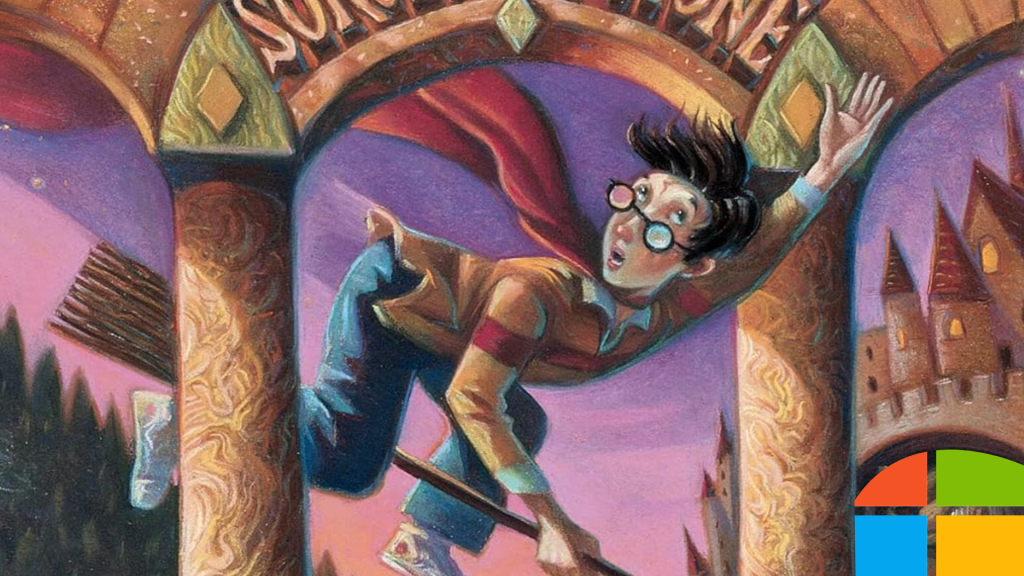
The post, authored by Pooja Kamath, a Microsoft Senior Product Manager, framed the exercise as a way to create an interactive Harry Potter-themed AI assistant. It included a step-by-step guide for developers to integrate Azure’s AI services with the dataset, even suggesting applications like auto-generating fan stories. The post concluded with an AI-generated image of two children—clearly inspired by Harry Potter and Ron Weasley—with the Microsoft logo superimposed between them, reinforcing the commercial tie-in.
The legal implications are stark. All Harry Potter novels remain under copyright protection, with a complete ebook collection available on platforms like Amazon for $70. Distributing or using the books without authorization violates copyright law in nearly every jurisdiction. The Kaggle dataset, which was downloaded roughly 10,000 times before being removed, had been mistakenly labeled as public domain, a common misclassification that complicates accountability.
This is not an isolated case. The broader AI industry has faced mounting legal pressure from authors and publishers suing companies like Meta, OpenAI, Nvidia, Google, and Microsoft over the use of copyrighted books in training large language models. Courts have delivered mixed rulings: some cases argue that AI outputs are ‘transformative’ enough to qualify as fair use, while others emphasize that the initial act of scraping or distributing copyrighted material remains illegal. The Microsoft post, though removed, remains accessible via archival platforms, serving as a case study in how easily such practices can slip through corporate oversight—especially when datasets are mislabeled or assumed to be freely available.
The incident also highlights a growing tension between innovation and intellectual property. While AI developers argue that training on vast datasets is necessary for creating advanced models, copyright holders contend that such use amounts to uncompensated exploitation. The Harry Potter* example, though seemingly low-stakes compared to other lawsuits, underscores how even well-intentioned technical demonstrations can inadvertently cross legal lines. As lawsuits continue to pile up, tech companies are being forced to re-examine their data sourcing practices, balancing the need for diverse training material against the risks of copyright infringement.
The blog post and associated dataset were published in late 2024 but only gained wider attention after a recent thread on a developer forum drew scrutiny to the issue. Microsoft has not publicly commented on the matter, though the removal of the post suggests an acknowledgment of the legal and reputational risks involved.