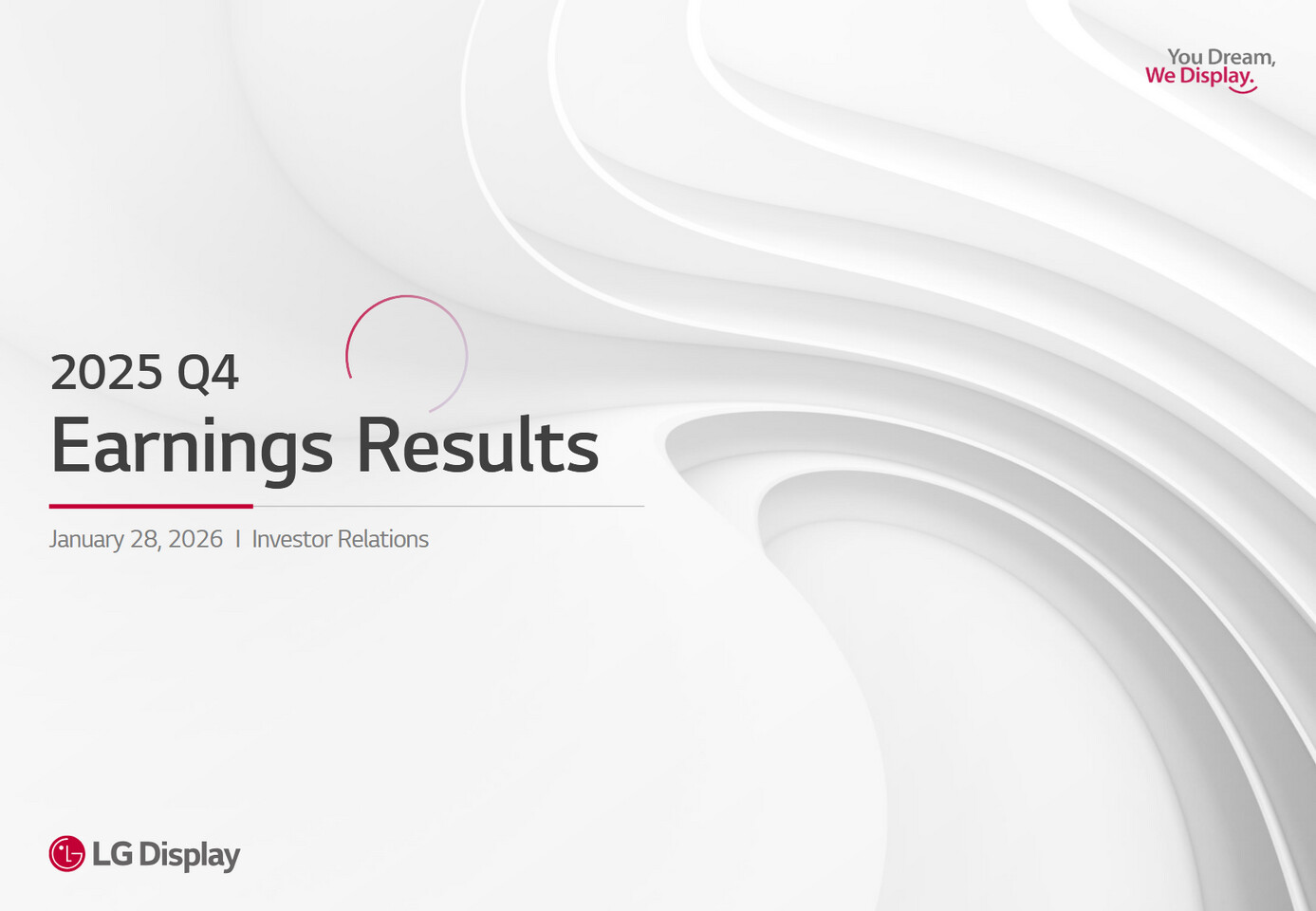
LG Display has posted its first full-year operating profit in four years, marking a dramatic turnaround fueled by a deliberate shift toward OLED technology. Annual revenues reached KRW 25.8 trillion, while operating profit climbed to KRW 517 billion—a recovery that underscores the company’s aggressive restructuring and its dominance in premium display markets.
The fourth quarter of 2025 saw revenues rise 4% sequentially to KRW 7.2 trillion, though they remained 8% below the same period in 2024. Despite this dip, the company’s net loss narrowed significantly to KRW 351 billion, a stark improvement from the KRW 839 billion loss recorded in late 2024. More importantly, LG Display’s exit from large-sized LCD production has accelerated its transition, with OLED now representing 61% of total revenues—up from just 32% in 2020.
This strategic pivot is paying off in key segments. In the TV panel market, LG Display is doubling down on high-refresh-rate and gaming-focused OLED displays, including a 27-inch gaming panel capable of 720Hz—double the industry standard—and the upcoming CES 2026 reveal of its Primary RGB Tandem 2.0 technology, which promises deeper blacks and brighter colors. Meanwhile, IT displays (monitors, laptops, and tablets) accounted for 37% of annual revenue, while mobile and automotive panels contributed 36% and 8%, respectively.
What This Means for the Display Industry
The numbers reflect more than just financial recovery—they signal a broader realignment in the display market. LG Display’s decision to abandon LCD in favor of OLED wasn’t just about cost efficiency; it was a bet on premium segments where OLED’s superior contrast, brightness, and energy efficiency command higher margins. The company’s push into automotive displays, where it holds a market-leading position, further diversifies its revenue streams away from volatile consumer electronics cycles.
Looking ahead, LG Display plans to leverage AI-driven optimization to strengthen its cost competitiveness while expanding its lineup of high-end panels. At CES 2026, the company is expected to showcase innovations like its 240Hz RGB stripe OLED panel—a first in the industry—and monitors featuring its Ultragear GX7 Dual Mode technology, designed for professional gamers and content creators.
The turnaround also highlights the challenges of transitioning legacy businesses. While LG Display has reduced losses by nearly KRW 2 trillion since 2023, the path to sustainable profitability will depend on maintaining its technological edge in OLED, particularly as competitors like Samsung Display and BOE ramp up their own OLED production.
For consumers, the shift could mean more affordable high-end displays, as LG Display’s cost innovations trickle down to products like monitors and TVs. The company’s focus on gaming and automotive panels suggests a future where OLED isn’t just a luxury feature but a standard in performance-driven markets.