As remote work persists, users increasingly demand seamless transitions from productivity tools to entertainment devices. Lenovo’s latest ThinkPad headset aims to satisfy both needs with spatial audio that mimics real-world soundscapes, but the question is whether such advanced features will translate into everyday usability.
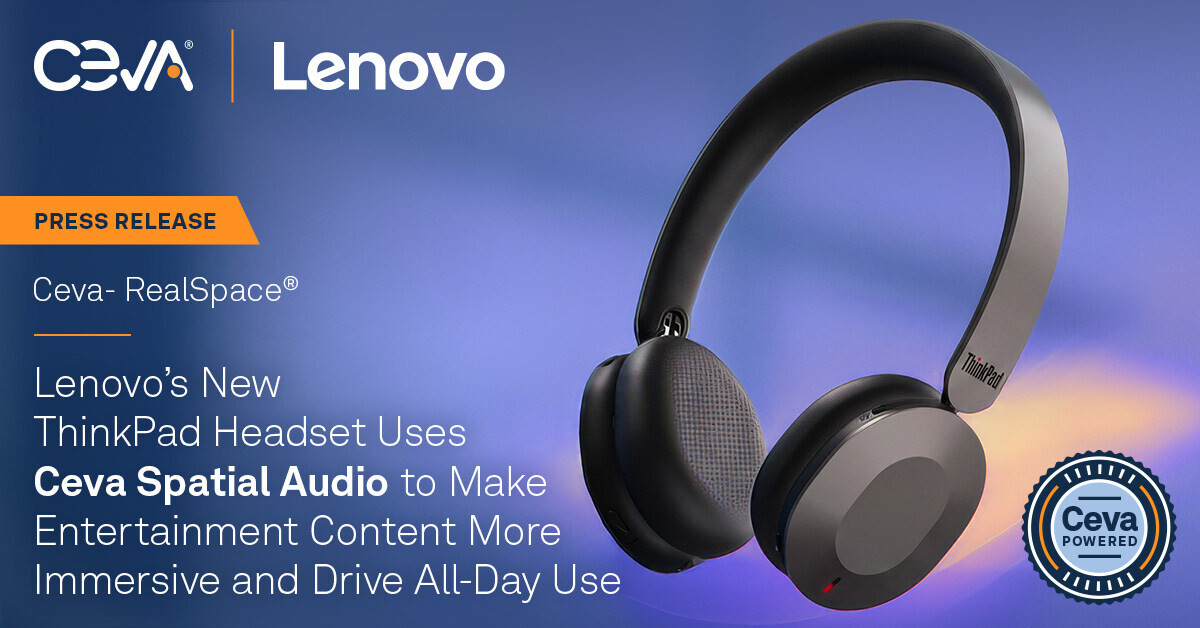
The ThinkPad Dual-Mode Wireless ANC Foldable Headset 8550 (Aura Edition) leverages Ceva’s RealSpace technology to render audio in a virtual 3D space, keeping sounds anchored regardless of head movement. This creates a more natural listening experience—whether for calls, movies, or gaming—but relies on precise head tracking and low-latency processing.
Performance and Adaptability
The headset combines RealSpace spatial audio with Sound by Bose tuning, delivering balanced performance across use cases. Movies gain a wider soundstage, music becomes more immersive, and games benefit from directional cues like footsteps. However, the technology’s effectiveness depends on consistent hardware integration, which Lenovo claims is optimized for low power consumption.
Key Specs
- Bluetooth: 5.3
The headset supports Bluetooth 5.3, ensuring stable connectivity with PCs, tablets, and smartphones without requiring a proprietary ecosystem. This flexibility is a selling point for professionals who need seamless compatibility across devices.
Challenges Ahead
While spatial audio enhances immersion, its practicality in professional environments remains unproven. Users may still prefer traditional stereo setups for clarity during calls or focused work tasks. Additionally, the headset’s foldable design adds portability but could introduce durability concerns over time.
The 8550 Aura Edition reflects a broader trend of integrating high-end audio features into productivity hardware. Whether it succeeds in bridging work and entertainment remains to be seen, but Lenovo’s approach suggests a future where such hybrid use cases become the norm.