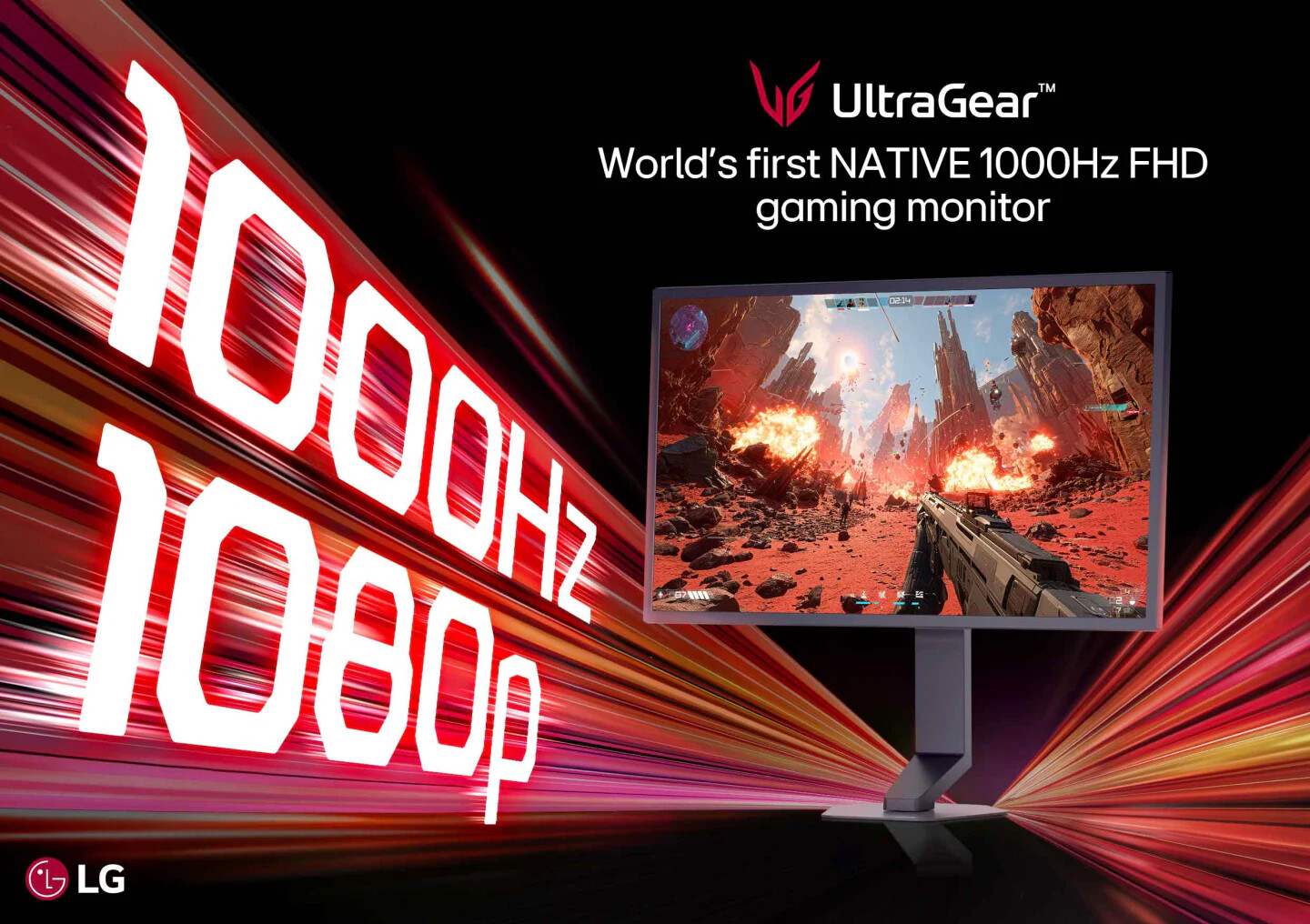
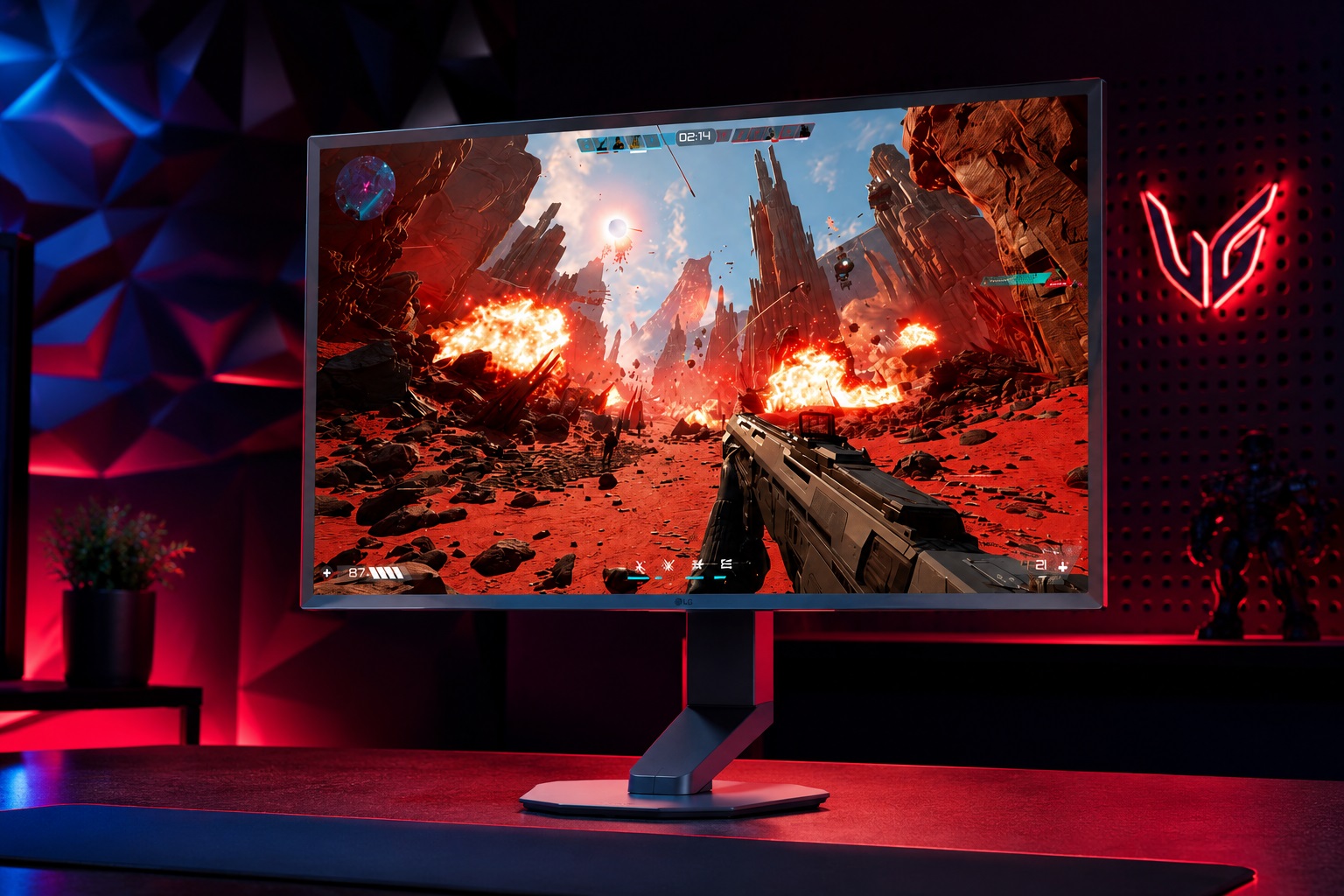
For years, the upper limit for mainstream gaming monitors was 240 Hz at 1080p. That ceiling has just been shattered by LG’s UltraGear 25G590B, which now delivers a native 1000 Hz refresh rate on a 24.5-inch panel. The jump is not just about raw speed—it’s about redefining what high-refresh displays can do in real-world workloads.
Most 1080p monitors today struggle to exceed 165 Hz without sacrificing image quality or brightness. LG’s achievement here is twofold: it has engineered a panel that sustains 1000 Hz without overdriving the backlight, and it has paired that with hardware capable of processing such extreme refresh rates without thermal throttling. The result is a display that doesn’t just push numbers—it delivers a smooth, flicker-free experience even in fast-paced scenarios like competitive gaming or high-frequency data visualization.
The UltraGear 25G590B’s panel measures 24.5 inches diagonally and runs at 1080p resolution. It features a 360 Hz overclocking mode, but the native 1000 Hz is where it truly stands out. This isn’t just about gaming; IT teams managing simulation or real-time analytics will find immediate value in the monitor’s ability to render rapid updates without stutter.
- Native 1000 Hz refresh rate at 1080p (24.5-inch IPS panel)
- 360 Hz overclock mode for additional performance headroom
- 1 ms (MPRT) response time, 90% GtG
- 170 cd/m² peak brightness, 800:1 contrast ratio
- HDR400 support with 350 nits
- Two 2.5W KBMs, 165 Hz USB hub, 90W Power Delivery
The monitor’s hardware is built to match its display. It includes two 2.5-watt keyboard-and-mouse (KBM) ports, a 165 Hz USB hub for peripherals, and 90-watt Power Delivery to support high-power GPUs without external brick. The combination of low input lag (1 ms MPRT, 90% GtG) and high brightness (170 cd/m² peak) ensures that the display remains legible even in bright environments.
Why It Matters for Workloads
For IT teams managing workstations or competitive setups, the UltraGear 25G590B isn’t just a gaming monitor—it’s a tool designed to handle extreme workloads. The native 1000 Hz refresh rate means no adaptive sync artifacts, unlike lower-refresh monitors that rely on overdrive to simulate higher speeds. This is critical for applications where every millisecond counts, such as esports training or real-time data processing.
What to Watch
The monitor will be available in select regions starting next month at a price point that reflects its extreme specifications. While 1080p may seem modest compared to higher resolutions, the focus here is on raw refresh rate—a first for this resolution tier. Future iterations could expand this tech to larger panels or higher resolutions, but for now, the UltraGear 25G590B sets a new benchmark for what’s possible at 1080p.