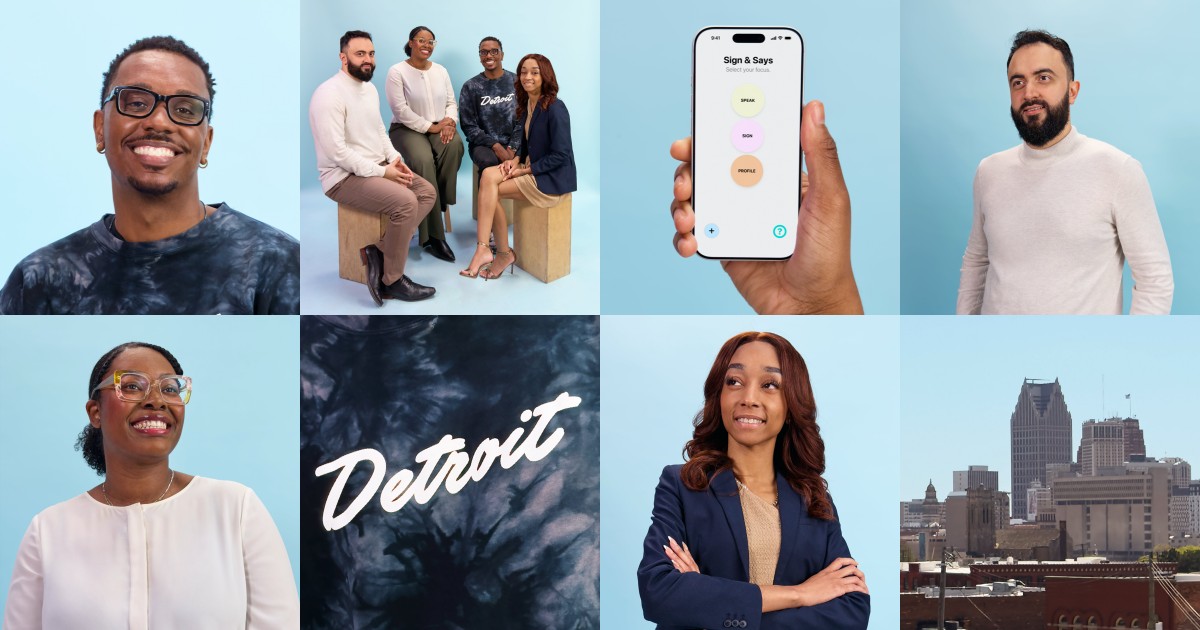
The Apple Developer Academy in Detroit is not just educating students—it’s building an ecosystem where technology meets community needs. The latest phase of this initiative introduces deeper integration with local institutions and organizations, creating a more robust pipeline for developers who are ready to tackle real-world challenges while contributing to Detroit’s growth.
One of the key additions is the Renaissance program, which now offers 50 second-year students an accelerated path to advanced training. This includes mentorship from industry professionals and collaboration with local nonprofits like DevsCreate313, a nonprofit that focuses on hands-on learning for underrepresented groups in tech. The program’s structure ensures that students gain not only technical skills but also the soft skills needed to lead projects and mentor others.
From Coding to Community Solutions
The academy’s approach has always been rooted in practical application, but recent partnerships have amplified this focus. Students are now working on projects that directly address Detroit’s economic and social challenges, such as improving accessibility for the deaf community or developing tools for local businesses. For example, a team of graduates developed BeAware Deaf Assistant, an app that uses Apple’s Neural Engine to provide real-time transcription and translation. This project has since been adopted by educational institutions, demonstrating how the academy’s curriculum translates into scalable solutions.
Another significant development is the expansion of the foundation program, which now includes a four-week course designed to introduce students to core coding concepts while also exploring emerging technologies like AI. Over 70% of students who enroll in this program complete it, reflecting its balance between rigor and accessibility. The academy’s ability to adapt to evolving tech trends—such as integrating AI tools without losing sight of foundational skills—sets it apart from other training programs.
Admin and Deployment Considerations
For administrators and organizations collaborating with the academy, the focus has shifted toward deployment strategies that ensure long-term sustainability. This includes providing students with the resources to maintain and scale their projects post-graduation, such as access to cloud infrastructure or partnerships with local tech hubs. The academy’s collaboration with Michigan State University (MSU) ensures that these deployment challenges are addressed systematically, with MSU offering additional support in areas like project management and business development.
Administrators also play a crucial role in fostering a culture of innovation within the academy. This involves creating spaces for students to experiment with new tools and technologies while adhering to best practices in software development. For instance, the academy’s emphasis on offline-capable solutions—like ConferenceCaptioning, which prioritizes reliability for live events—highlights the need for developers to consider deployment constraints from the outset.
Looking Ahead: A Model for Sustainable Talent Development
The Apple Developer Academy in Detroit is more than a training program; it’s a blueprint for how academic and industry partnerships can drive meaningful change. By combining technical education with real-world problem-solving, the academy ensures that graduates are not just skilled developers but also innovators who understand the broader implications of their work.
As the program continues to expand, its focus on sustainability will be critical. This includes ensuring that students have access to the latest tools and technologies while also addressing deployment challenges in a way that aligns with Detroit’s economic goals. The academy’s ability to adapt—whether through new partnerships or by refining its curriculum—will determine its long-term success and influence.
For now, the academy remains a testament to what can be achieved when education, industry, and community come together. With over 1,800 graduates and a growing network of alumni driving innovation across Detroit, it’s clear that this model has the potential to reshape not just local tech landscapes but also the way we think about talent development in the digital age.