The ASUS NUC 16 Pro mini PC is set to make its debut in the coming months, promising high performance with Intel’s Panther Lake Core Ultra Series 3 processors and Arc B390 integrated graphics. While initial details point to a launch window in March, IT professionals and businesses will need to weigh its capabilities against unanswered questions about thermal behavior under sustained workloads and compatibility with future Arrow Lake processors.
Leaked pricing from China suggests the device will carry a premium tag, with configurations starting around RMB 10,999 (approximately $1,600). This includes 32 GB of LPDDR5X-9600 RAM, 1 TB NVMe storage, and an Intel Core Ultra X7 CPU. While the original product listing hinted at a higher-tier Ultra X9 CPU, the leaked details confirm the X7 as the top option, leaving room for potential post-launch adjustments in marketing or configurations.
Key Highlights
- Display: Arc B390 integrated graphics capable of 4K output
- CPU: Intel Core Ultra Series 3 (Panther Lake) with X7 and potentially X9 variants
- Memory: 32 GB LPDDR5X-9600 RAM, expandable to DDR5 in some models
- Storage: 1 TB NVMe SSD with upgrade slots
- Power Delivery: Reinforced PCIe slot supporting up to 250 W power draw
The reinforced PCIe slot is a notable feature, designed to handle high-performance workloads by delivering up to 250 W of power. This addresses a common limitation in compact form factors—thermal throttling during sustained tasks like rendering or AI processing. However, real-world testing will determine whether this translates into stable performance under prolonged loads.
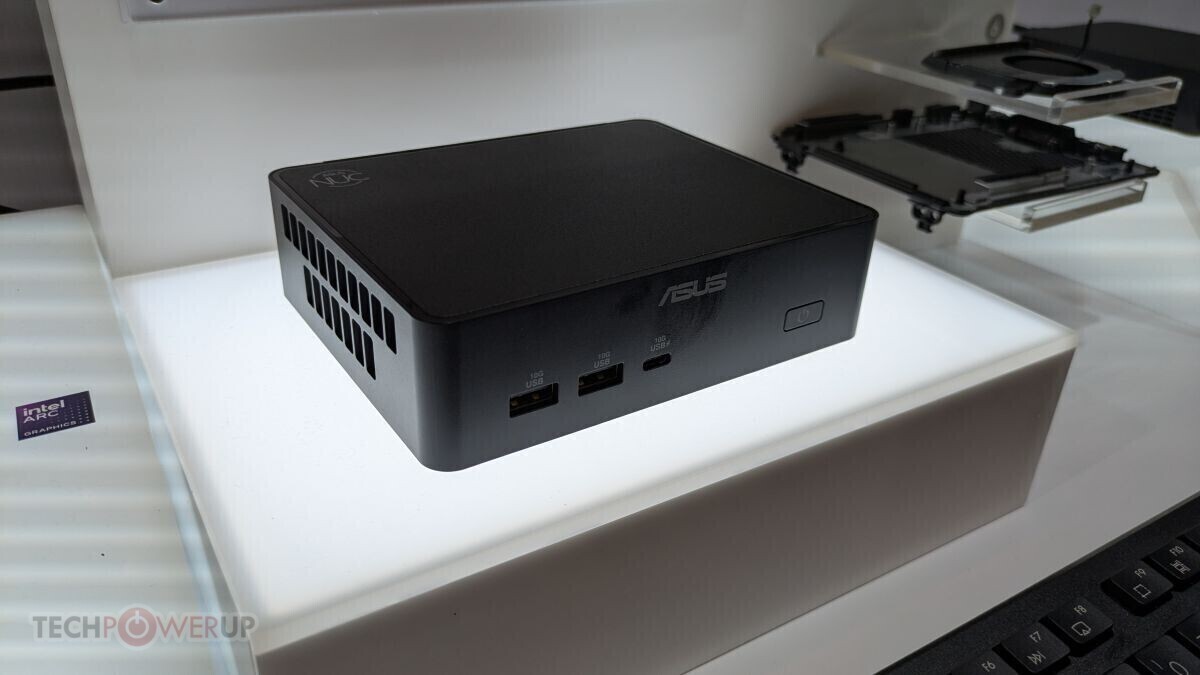
For IT buyers, the NUC 16 Pro’s appeal lies in its balance of performance and compact design. The use of LPDDR5X memory offers faster speeds than standard DDR5 but may impact power efficiency and thermal output over time. Organizations will need to assess whether the device’s performance-per-watt ratio justifies its premium pricing, especially in data center or workstation deployments.
Uncertainties Ahead
One major question is whether future Arrow Lake processors will be compatible with the existing NUC 16 Pro chassis. If not, businesses planning multi-year lifecycles may face earlier upgrade costs than anticipated. Additionally, while China’s launch date is targeted for March, international availability remains unconfirmed, leaving procurement teams without clear timelines.
Despite these uncertainties, the ASUS NUC 16 Pro presents itself as a strong contender in the high-performance mini PC market. Its combination of powerful graphics, ample memory, and robust power delivery positions it well for tasks requiring significant processing power. However, whether it can maintain that performance over time—and how it adapts to future processor generations—will ultimately determine its long-term success.