The Orion capsule will slam into Earth’s atmosphere at 24,500 miles per hour tonight, a speed that turns reentry from a controlled descent into an extreme survival test. That figure—24,500 mph—is not just a number; it is the moment where physics and engineering collide in ways that have not been faced since Apollo. The capsule’s heat shield must deflect enough energy to turn that velocity into a survivable landing, while its systems navigate a reentry path that balances thermal stress, aerodynamic forces, and precise splashdown location.
This is the first time a crewed spacecraft designed for deep-space missions will attempt such a high-speed return. The mission’s success hinges on how well Orion handles the combination of hypersonic reentry, the transition from plasma blackout to stable descent, and the final splashdown in the Pacific. For NASA, this is not just about proving technology—it is about setting the foundation for missions that will carry humans beyond Earth orbit and toward Mars.
Specs and Limits
- Reentry speed: 24,500 mph (39,400 km/h)
- Heat shield material: Avcoat, a phenolic epoxy designed to withstand 1,600°C temperatures
- Plasma blackout duration: Approximately 2 minutes during peak deceleration
- Splashdown location: Pacific Ocean, roughly 400 miles off the Baja California coast
The Avcoat heat shield on Orion’s service module is engineered to shed ablation material at a precise rate. At 24,500 mph, the friction with air molecules generates enough heat to vaporize the outer layers of the shield, creating a protective plasma layer that insulates the crew module. The challenge lies in maintaining this balance: too little ablation and the capsule overheats; too much and structural integrity is compromised. NASA’s ground tests have simulated these conditions, but real-world data during reentry will be critical for refining models used in future missions.
Context and Roadmap
The Artemis II mission is a direct successor to uncrewed flights that tested Orion’s systems in Earth orbit and lunar flybys. This time, four astronauts—Commander Reid Wiseman, Pilot Victor Glover, Mission Specialist Christina Koch, and Mission Specialist Jeremy Hansen—will spend 10 days in space, including a loop around the Moon before the high-speed return. The mission is scheduled to conclude with splashdown at approximately Pacific Time tonight.
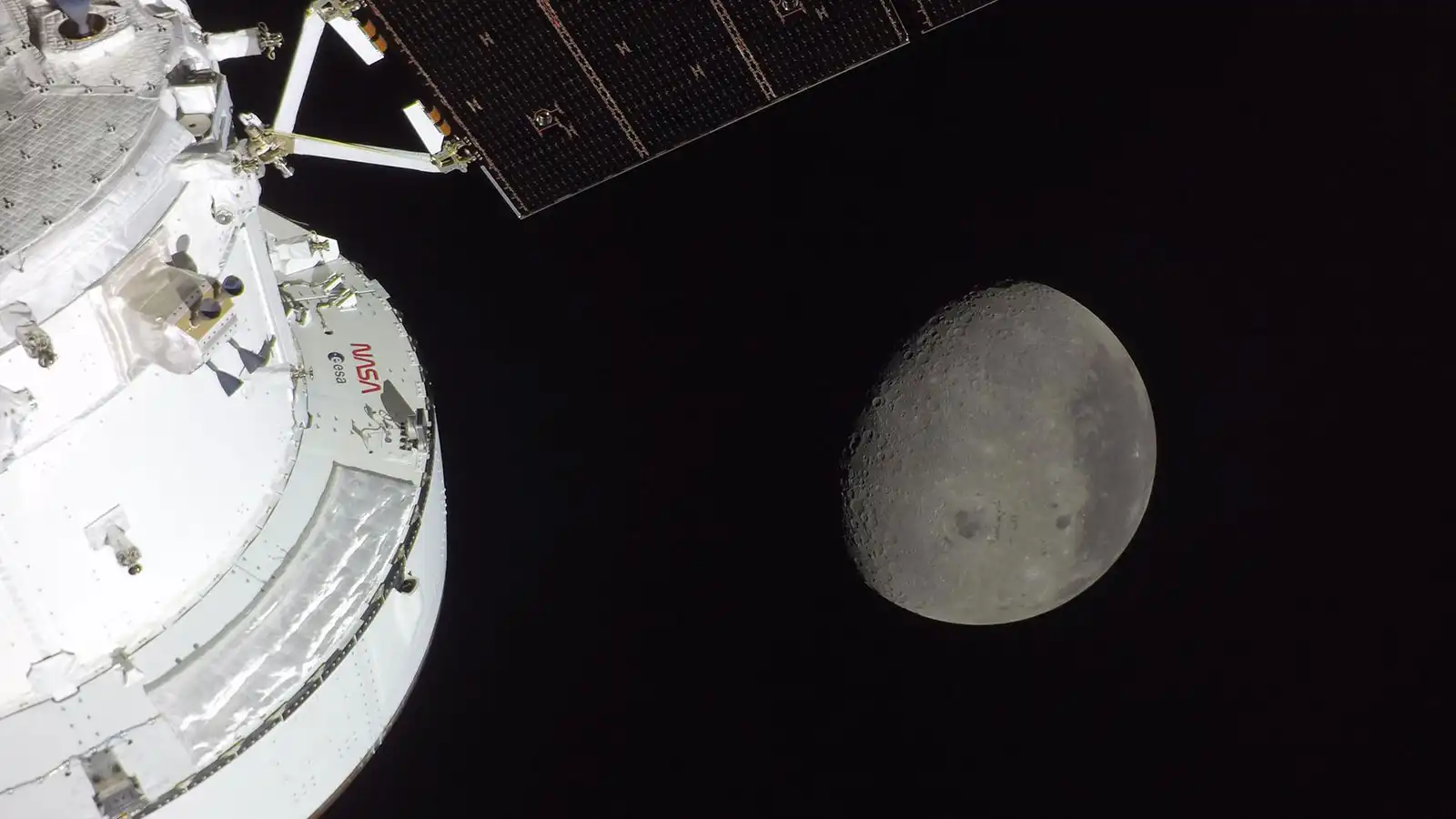
What makes this reentry distinct from past missions is the combination of speed and trajectory. Apollo capsules returned at roughly 25,000 mph after lunar missions, but Artemis II’s path is designed to simulate the higher velocities expected when returning from Mars. The data collected during this reentry—thermal performance, aerodynamic loads, and system behavior—will directly inform the design of Orion capsules for future Mars missions.
Implications
The success of this reentry will validate key assumptions about Orion’s thermal protection system and structural resilience. If the heat shield performs as expected, it paves the way for longer-duration deep-space missions where reentry speeds could exceed 26,000 mph due to higher gravitational potentials. Conversely, any anomalies—whether in ablation rates, guidance stability, or post-landing recovery—could delay or reshape NASA’s Mars timeline.
For enterprise buyers and system integrators, the implications extend beyond spacecraft design. The technologies tested on Artemis II—advanced thermal materials, autonomous navigation during blackout, and high-speed splashdown recovery—are precursors to systems that may be integrated into future commercial space infrastructure. Companies developing next-generation reentry vehicles for cargo or crew transport will closely monitor how Orion handles these extreme conditions.
What’s Confirmed vs Unknown
Confirmed: The mission profile, reentry speed, heat shield composition, and splashdown location are all part of NASA’s published plan. The capsule is equipped with redundant systems to manage thermal stress and deceleration forces.
Unknown: Real-time performance of the heat shield under actual hypersonic conditions, the precise duration of plasma blackout, and how well Orion’s guidance system recovers after reemerging from the plasma layer. These variables are critical for future mission planning but cannot be fully predicted without in-flight data.
As the capsule descends tonight, the focus will shift from velocity to precision. The final minutes of reentry will determine whether Orion can transition from a high-speed entry into a controlled descent, followed by a splashdown accurate enough for rapid crew recovery. This is where the mission’s engineering tradeoffs—between speed, thermal protection, and guidance stability—will be put to their ultimate test.