A developer testing a new game engine pauses mid-code, squinting at the screen. The image shifts—deep blacks, vibrant colors—then snaps back. That flicker isn't a bug; it's the AGON PRO AG326UZD2 in action, leveraging AOC's latest 4th-gen QD-OLED panel to redefine what a gaming monitor can do on paper and in practice.
This isn't just another high-end display. The AGON PRO AG326UZD2 is the first to pair that 4th-gen QD-OLED technology with a 32-inch diagonal, 4K resolution, and a peak brightness of 1,000 nits. That brightness matters more than raw numbers suggest: it means HDR games render without banding, even in bright rooms, while the contrast ratio—officially listed at 5,000,000:1—ensures that black levels stay true whether a scene is set in a moonlit forest or a pitch-black dungeon.
But those specs come with a catch. The monitor's 4K panel isn't just high resolution; it's a different beast from traditional LCD or even previous-gen OLED panels. It demands more bandwidth, which translates to higher system requirements. A mid-range GPU might struggle to push sustained 120 Hz at 4K, let alone the 240 Hz peak refresh rate the panel supports. That’s the upside—here’s the catch: developers who rely on older engines or lower-tier hardware will need to rethink their workflows.
What's New and What Stays the Same
The AGON PRO line isn't new, but this model is a first in several ways. It's the first AOC monitor to use a 4th-gen QD-OLED panel, which improves color volume by nearly 50% compared to previous generations. That matters for developers working on titles that require wide gamut support or accurate skin-tone rendering. However, it doesn't come with adaptive sync technologies like G-Sync or FreeSync Premium Pro—features that have become table stakes in the high-end market.
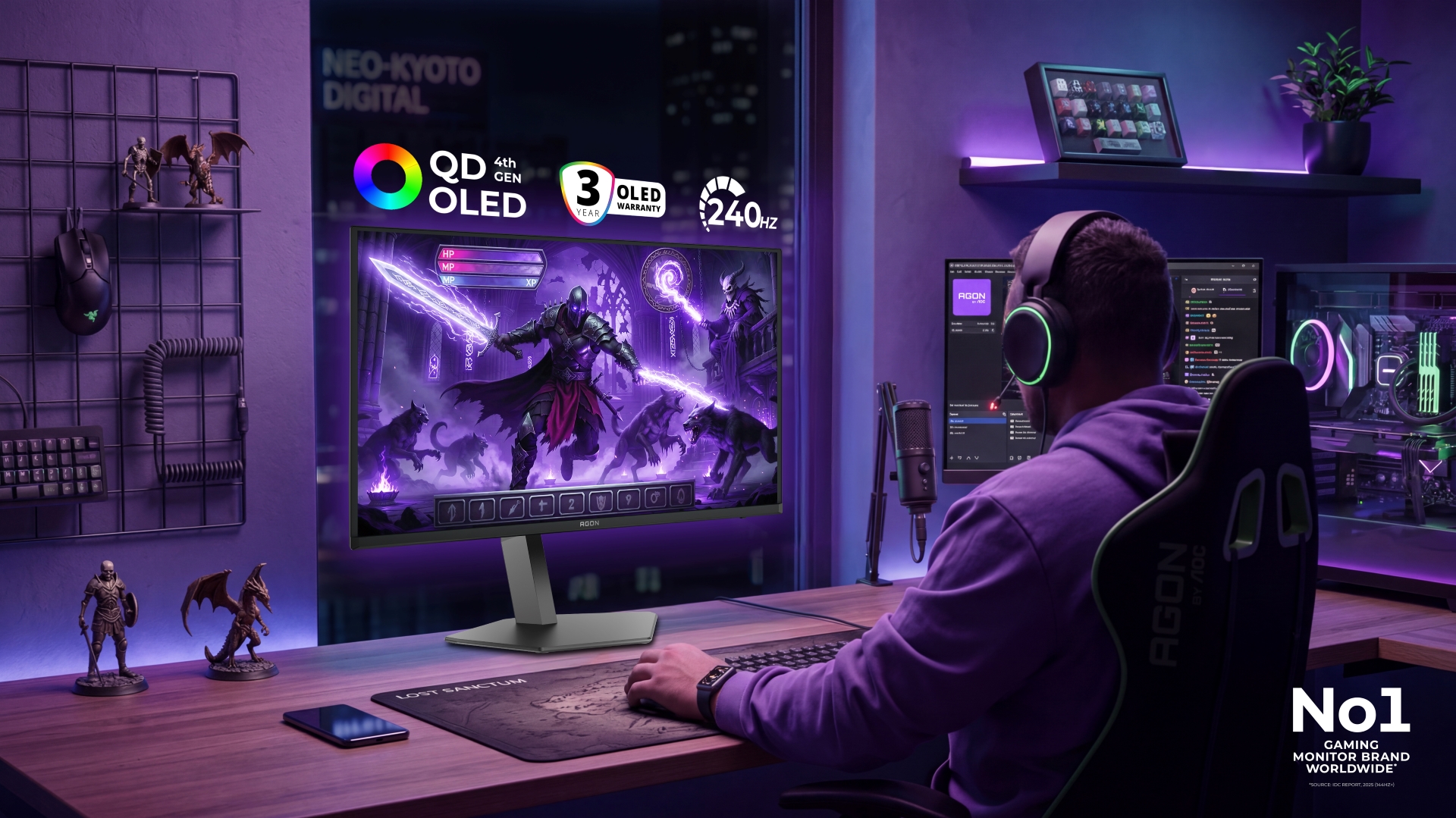
- 32-inch diagonal, 4K UHD (3840 × 2160) resolution
- 4th-gen QD-OLED panel with 5,000,000:1 contrast ratio
- Peak brightness of 1,000 nits (HDR10 compatible)
- DCI-P3 98% coverage, Rec. 709 sRGB 120%
- 144 Hz to 240 Hz over DisplayPort 2.1 and HDMI 2.1
- 1 ms (GTG) response time, 0.15 ms (MPRT)
- 4 × 30W speakers with DTS:X Ultimate support
The inclusion of four 30W speakers with DTS:X Ultimate support is notable, but it’s not a game-changer for most development workflows. The real standout is the panel itself—its ability to handle high dynamic range without sacrificing color accuracy or black-level uniformity.
Decision Guide for Developers
For teams already invested in modern engines and high-end hardware, the AGON PRO AG326UZD2 could be a game-changer. Its 4K resolution at 120 Hz (or higher) is ideal for iterating on complex scenes without sacrificing visual fidelity. But compatibility isn't guaranteed. Older engines may not fully utilize the panel's capabilities, leading to wasted performance or even artifacts if the software isn't optimized.
There’s also the question of ecosystem fit. The monitor supports DisplayPort 2.1 and HDMI 2.1, which means it pairs well with newer GPUs, but older setups—especially those relying on HDMI 2.0 or below—will face limitations. Developers should verify their hardware's bandwidth before committing.
What Remains Unclear
The long-term reliability of QD-OLED panels is still unproven at scale, particularly in high-refresh-rate scenarios. While AOC has a track record with OLED monitors, this generation’s panel may behave differently under sustained load. There's also no word on whether future AGON PRO models will adopt adaptive sync, which could leave this one feeling outdated as the market evolves.
Despite these uncertainties, the AGON PRO AG326UZD2 is a strong contender for studios prioritizing visual accuracy and performance. It confirms that 4K OLED is no longer a niche choice but a viable path forward—for those willing to adapt their workflows.