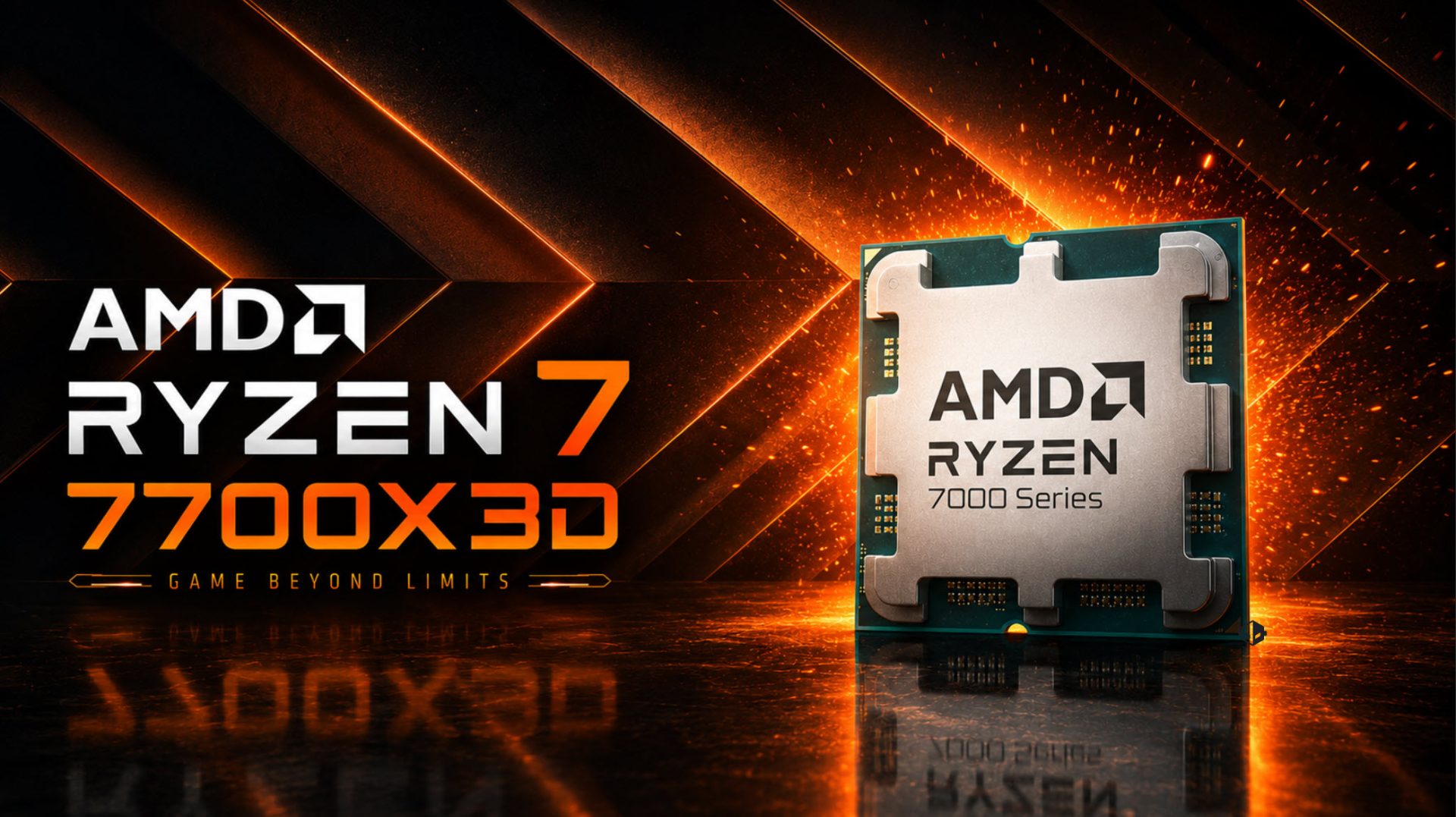
AMD is set to introduce a lower-priced alternative to its flagship Ryzen 7 7800X3D, keeping the same core architecture but reducing cost. The move targets budget-conscious users who demand high-performance computing without sacrificing performance.
The new CPU, codenamed 'Ryzen 7 7700X3D,' retains all 8 cores and a full 96 MB of 3D V-Cache, matching the 7800X3D in raw processing power. However, it operates at a lower clock speed of 4.5 GHz compared to the 7800X3D's 4.5 GHz boost, hinting at a more conservative power budget and potential thermal constraints.
Performance vs. Cost
The primary advantage of the 7700X3D is its price, expected to be significantly lower than the 7800X3D while delivering nearly identical performance in single-threaded workloads. This positions it as a strong contender for users who prioritize cost without compromising on core performance.
- Cores: 8 cores, 16 threads (SMT enabled)
- 3D V-Cache: 96 MB L3 cache
- Base Clock: Not specified (likely similar to 7800X3D)
- Boost Clock: 4.5 GHz
- TDP: 120W (estimated, based on similar models)
- Socket: AM5
A user running demanding AI workloads would notice minimal difference between the two chips in terms of raw performance, but the 7700X3D's lower price could make it a more accessible option for those building high-end systems. However, this comes with tradeoffs: the reduced clock speed may impact sustained performance under heavy loads, and the higher TDP could require more robust cooling solutions.
Industry Implications
The introduction of the 7700X3D reflects AMD's strategy to segment its high-end CPU market more aggressively. While it doesn't introduce groundbreaking innovations, it reinforces the importance of cache and core count in performance-driven applications. For data centers and AI workloads, where single-threaded performance is critical, this chip could find a niche without competing directly on price with lower-tier models.
However, the tradeoff between cost and power efficiency remains a challenge. Users who rely on sustained high clock speeds for tasks like rendering or heavy multitasking may still prefer the 7800X3D, despite its higher price. The 7700X3D's value proposition hinges on balancing these factors without sacrificing core performance.
Key Considerations
- Target Audience: Budget-conscious users who need high single-threaded performance for gaming, AI, and productivity tasks.
- Tradeoffs: Lower clock speed may limit sustained workload performance; higher TDP could increase cooling costs or power consumption.
- Platform Fit: Designed for AM5 motherboards, ensuring compatibility with the latest DDR5 memory and PCIe 5.0 support.
The Ryzen 7 7700X3D is a calculated move by AMD to capture more of the mid-to-high-end CPU market without disrupting its existing product stack. While it doesn't redefine performance benchmarks, it solidifies AMD's position in the high-end segment by offering a compelling alternative for users who prioritize value over raw clock speeds.
For those who can afford the 7800X3D, the incremental gains may still justify the premium. But for the majority seeking high performance without breaking the bank, the 7700X3D could become a standout choice in the coming months.